





West Bengal's Tight Contest
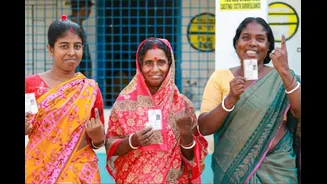
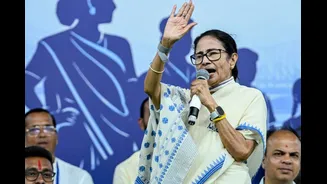
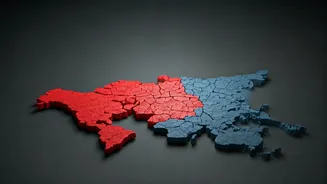
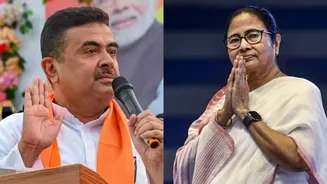
The West Bengal Assembly elections are shaping up to be an intensely close battle, with multiple exit polls indicating a near tie between the incumbent
Trinamool Congress (TMC) and the Bharatiya Janata Party (BJP). Projections suggest the BJP could secure around 143 seats, while the TMC is projected to win approximately 142 seats in the 294-member assembly. The Congress and Left parties are expected to secure minimal representation, with each possibly winning just one seat, and 'Others' accounting for about seven seats. This tight race suggests a dramatic outcome when the final votes are counted, reflecting a highly competitive electoral environment in the state. Historically, exit polls in West Bengal have correctly identified the winning party but often struggled to accurately predict the margin of victory, as seen in the 2021 elections where forecasts significantly underestimated the TMC's win and the BJP's gains.
Tamil Nadu's Shifting Tides
In Tamil Nadu, exit polls are presenting a varied picture for the 2026 Assembly elections. While some earlier projections hinted at a potential victory for the AIADMK, with one survey suggesting they might secure between 128 and 147 seats, contrasting predictions from Axis My India indicate a strong performance from actor-turned-politician Vijay's Tamilaga Vettri Kazhagam (TVK). Axis My India's forecast places TVK between 98-120 seats, potentially challenging the ruling DMK, which is projected by the same pollster to win 92-110 seats. The AIADMK, according to Axis My India, might secure 22-32 seats. The state's electoral contest is notable for this three-way dynamic, involving the DMK, AIADMK, and the emerging TVK. The DMK's potential retention of power is also supported by People's Pulse, which predicts 125-145 seats for the party. This complex scenario highlights the significant role of new political entrants and shifting voter allegiances in Tamil Nadu's political landscape.
Kerala's UDF Surge
The political narrative in Kerala appears to be leaning towards a victory for the United Democratic Front (UDF), potentially ending a decade of Left Democratic Front (LDF) rule. Several exit polls, including those from Axis My India and Peoples Pulse, predict a substantial seat share for the UDF, ranging between 78-90 and 75-85 seats, respectively, out of the total 140 seats. This projection suggests a decline for the incumbent LDF, with its seat share falling from a majority of 91 seats in the 2021 elections to an estimated 55-65 seats. Axis My India's gender-wise survey indicates that both male and female voters are favoring the UDF, hinting at a potential shift in the state's political equilibrium. The historical trend in Kerala has often seen a change of government every five years, and the current exit poll data suggests this pattern might continue, with the anti-incumbency wave favoring the UDF.
Assam and Puducherry Outlook
In Assam, exit polls strongly suggest a dominant performance by the BJP-led National Democratic Alliance (NDA). Axis My India predicts the NDA securing a massive victory, with the BJP likely to win between 70 to 80 seats, and its allies AGP and BPF potentially bagging up to 9 and 11 seats respectively, leading to a total NDA tally of 88-100 seats. The Congress alliance is expected to secure a considerably lower number of seats, with projections suggesting up to 36 seats for the alliance and up to 30 for the Congress itself. Meanwhile, in the Union Territory of Puducherry, the N. Rangaswamy-led NDA alliance is anticipated to retain power. Predictions indicate the alliance could secure up to 20 seats, building on their simple majority in the 2021 elections. These forecasts point towards a continuation of the current political establishment in Assam and Puducherry.
Understanding Exit Polls
Exit polls are essentially post-voting surveys designed to provide an early indication of election outcomes by gauging public sentiment immediately after voters cast their ballots. Polling agencies meticulously select a diverse sample of polling booths and voters from various demographics, including urban and rural populations, different age groups, income levels, and communities, a process known as sampling. Participants are then asked about their voting choices, along with basic demographic information. The collected data undergoes a weighting and adjustment process to reflect the actual voter distribution in the state, considering factors like caste, region, gender, and historical voting patterns. Expert analysis using statistical methods is then applied to predict seat allocations for each party. Finally, a margin of error is calculated to quantify the uncertainty of the prediction, which is then presented to the public as an estimate of the election results.