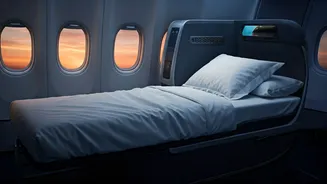







Sleep in Economy
A significant advancement in air travel for economy passengers has been introduced by Air New Zealand with their pioneering 'Skynest' sleeping pods. This
innovative concept is set to debut on the airline's Boeing 787-9 Dreamliner fleet, specifically catering to those on extensive international routes. The primary objective behind the Skynest is to dismantle the notion that a comfortable sleep is an exclusive luxury reserved for premium cabin flyers. These pods provide a private sanctuary where travelers can genuinely rest, significantly alleviating the fatigue often associated with lengthy flights. The airline's commitment to enhancing the passenger experience is vividly demonstrated through this forward-thinking design, promising a more pleasant and revitalizing journey for a broader segment of travelers. It marks a pivotal moment in making long-haul travel more accessible and enjoyable for everyone, irrespective of their booking class.
Pod Features & Access
Each 'Skynest' unit is meticulously designed to offer a private and serene environment for rest, featuring six dedicated lie-flat beds. Within these individual spaces, passengers will find essential amenities including a plush pillow, comfortable bedding, and earplugs, all contributing to an optimized sleep experience. Recognizing the demand and to ensure equitable utilization, these sleeping pods operate on a time-slot system. This means each passenger is allocated a specific period to utilize the pod, guaranteeing that more travelers get a chance to benefit from this unique offering during their journey. This efficient allocation strategy is crucial for maximizing the availability of the Skynest on flights where rest is paramount, transforming what was once a challenge into a manageable and comfortable part of the travel itinerary.
Route Rollout Plans
The introduction of the 'Skynest' is initially slated for specific, high-demand long-haul routes operated by Air New Zealand. Passengers embarking on journeys between Auckland and New York, as well as those flying between Auckland and Chicago, will be among the first to experience this novel comfort innovation. These particular routes were likely chosen due to their extended flight durations, where the benefits of a dedicated sleep space are most pronounced. While these initial deployments are crucial for testing and gathering passenger feedback, the airline has expressed optimism regarding a potential expansion of the Skynest service. The success and passenger reception on these inaugural routes will undoubtedly influence decisions to integrate this game-changing feature into other long-distance flight paths across the network, further broadening its reach.