
Market Overview
The gold market saw some shifts on January 15th, with prices adjusting after recent highs. International factors, duties, and currency exchange impacts
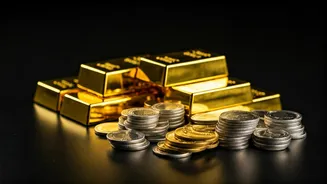
played a significant role. In global markets, spot gold experienced a drop of 0.8% to reach $4,584.03 per ounce as of 0322 GMT, following a previous record high of $4,642.72. US gold futures for February delivery also decreased, falling by 1% to $4,587.70. This volatility shows how global events and economic factors can influence gold's value, which is closely watched by investors. The day's market behavior reflected reactions to various developments, including geopolitical events and economic data releases. These factors influenced trading decisions and price adjustments throughout the day. Investors were closely monitoring market dynamics to understand short-term and long-term trends and adjust their strategies accordingly.
Factors Affecting Prices
Multiple factors significantly affect gold prices in India. One primary influence includes international market rates, which set a global benchmark for gold's value. Import duties, levied by the government, add to the cost, subsequently affecting the final price for consumers. Taxes also play a role, contributing to the overall price structure of gold in India. Additionally, fluctuations in exchange rates between the Indian Rupee and other currencies impact the cost of gold, as imports are typically priced in US dollars. The interplay of these forces determines the daily gold rates across different regions of India. Traders and investors closely follow these factors, adjusting their strategies based on real-time market changes. Changes in international markets, import policies, and currency values create a dynamic environment, making it crucial to stay informed about these influences.
Gold and Silver Dip
On January 15th, both gold and silver prices experienced declines after reaching historic highs. Spot silver saw a significant drop of 5.6% to $87.46 per ounce, following its peak at $93.57 earlier in the session. In Mumbai, the rate for 24k gold was set at Rs 1,43,180 per 10g. Silver in the city hit Rs 2,95,000 per kg. These drops were observed amid increased global market volatility. Market observers and participants responded to these fluctuations by adjusting their trading strategies, attempting to anticipate future price trends. The overall trend on January 15th pointed to a period of consolidation after the initial rally. As such, the market exhibited a degree of uncertainty, highlighting the importance of understanding the multifaceted factors that determine precious metal prices.
Geopolitical Uncertainty
Geopolitical and economic uncertainty often drives demand for gold. In periods of global instability, such as heightened tensions or economic downturns, investors often turn to gold as a safe-haven asset. Developments in international relations and economic announcements can significantly impact gold prices. For example, during times of uncertainty, the demand for gold typically increases, driving up prices. Conversely, when stability returns, gold prices may experience a correction. The situation in Iran, along with reactions from world leaders, was closely watched, influencing investor sentiment and market trends. These events highlighted the dynamic relationship between global events and gold prices, and the role of gold as a barometer of market confidence.
Interest Rate Impact
The prevailing interest rate environment plays a key role in influencing gold prices. Historically, low-interest-rate periods tend to favor assets that do not yield interest, like gold. As interest rates decline, the opportunity cost of holding gold decreases, making it more attractive to investors. Conversely, when interest rates rise, the appeal of gold may decrease as investors find higher returns in interest-bearing assets. Traders and investors continuously assess the monetary policy of central banks, such as the Federal Reserve, to anticipate changes in interest rates. Anticipated interest rate cuts were a focus, with predictions of two such cuts influencing market dynamics. This creates a link between market expectations for monetary policy and gold price movements.
India's Cultural Significance
In India, gold holds deep cultural and financial significance. It is a preferred choice for investment and is integral to celebrations, particularly weddings and festivals. This cultural association drives consistent demand for gold, making it a key component of the Indian economy. The Indian market's response to fluctuations in gold prices is also driven by cultural trends and consumer behavior. During festive seasons and weddings, demand typically rises, influencing price movements. This contrasts with Western markets, where investment decisions are influenced by economic factors. The interplay of cultural practices, financial strategies, and market conditions in India makes the gold market particularly dynamic and relevant.
Market Volatility Outlook
Market participants are consistently focused on various economic indicators to assess labor market conditions. The US weekly jobless claims report is closely watched for insights into monetary policy. As the market navigates dynamic conditions, investors monitor the latest trends to adjust their strategies. The anticipated interest rate cuts in the current year, and their timing, remain a focal point. Market participants must stay informed on these issues to make informed choices. The ongoing developments emphasize the importance of understanding market dynamics for effective strategies.