








Interest Rate Cut
The US Federal Reserve recently made a significant move by announcing an interest rate cut. This decision, led by Chair Jerome Powell, has initiated considerable
debate about future monetary policy directions. While the announcement itself is a straightforward event, its implications ripple across several markets. The Fed's actions often signal shifts in economic outlook and have a direct bearing on global financial conditions, impacting everything from currency valuations to the prices of commodities. This rate cut is a key indicator of the current economic assessment made by the Federal Reserve and is a crucial point for investors to consider for future investment strategies.
Impact on Gold
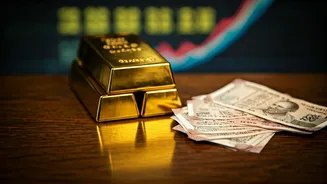
Gold prices are closely linked to interest rates. Historically, when interest rates are lowered, the attractiveness of holding gold often increases. This inverse relationship arises because lower interest rates decrease the opportunity cost of holding non-yielding assets like gold. Simultaneously, a rate cut can weaken the US dollar, making gold more affordable for buyers using other currencies, thereby potentially driving up demand. Consequently, the recent decision by the US Federal Reserve to reduce interest rates could trigger an upward movement in gold prices. Investors often see gold as a safe haven during times of economic uncertainty, which further adds to its appeal. Therefore, the implications of this rate cut should be closely monitored by anyone with an interest in gold.
Impact on Silver
Silver, much like gold, frequently demonstrates a positive correlation with interest rate movements. When the Federal Reserve lowers interest rates, silver prices tend to benefit from the same factors that boost gold prices. The lowered opportunity cost and the potential weakening of the US dollar contribute to increased demand for silver as an investment. However, silver prices can also be affected by industrial demand, which is sometimes less sensitive to interest rate changes compared to gold. The reaction of silver prices to a rate cut can be complex, influenced by a blend of investment sentiment and the performance of various industrial sectors. It’s crucial to watch trends in both precious metals and industrial applications to accurately forecast potential price fluctuations in the silver market.
Impact on Rupee
The interest rate cuts by the US Federal Reserve can also significantly affect the Indian Rupee. Lower US interest rates can sometimes lead to a weaker dollar, which may, in turn, affect the value of other currencies, including the Rupee. A weaker dollar could make the Rupee relatively stronger, potentially improving the cost of imports and affecting foreign exchange rates. However, various other economic factors, such as India's economic growth rate, inflation, and trade balances, also influence the Rupee's value. The Rupee's response to the Fed's decision may be multifaceted, shaped by a combination of global market dynamics and India's economic fundamentals. Therefore, understanding the interplay of these factors is key to predicting the Rupee’s movements in the coming months.
FII Flows Impact
Changes in US interest rates can influence Foreign Institutional Investors (FIIs). When the Fed cuts rates, it can sometimes make investments in other markets, like India, more attractive. Investors may seek higher returns in emerging markets, leading to increased FII inflows into Indian stocks and bonds. These inflows can bolster the Indian stock market and boost the value of the Rupee. However, the exact impact of interest rate changes on FII flows depends on a multitude of factors, including risk appetite, the economic health of both the US and India, and global market conditions. The FII flows are a key indicator of market sentiment, so it’s important to monitor their fluctuations in response to such policy decisions.
Impact on Markets
Stock markets are often sensitive to changes in interest rates. A rate cut by the Federal Reserve is frequently seen as a positive sign, as it can indicate an effort to stimulate economic growth. Lower interest rates can reduce borrowing costs for companies, potentially leading to increased investment and higher earnings. This optimistic outlook may boost stock market valuations, leading to a rise in market indices. However, the stock market's reaction can be complex, and other economic factors play a role. Investors watch several signals, including the inflation rate, corporate profits, and investor confidence. The overall effect on the markets depends on these factors and how they influence each other. Market analysts continuously assess these elements to understand their impact.