






Hottest Cities Revealed
The nation is experiencing a severe heatwave, with Uttar Pradesh and West Bengal emerging as the most affected states. Cities like Banda and Prayagraj
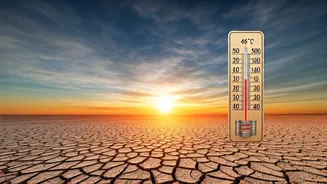
in UP, alongside Bankura in West Bengal, have recorded a blistering 46 degrees Celsius, marking them as the country's hottest urban centers. These alarming temperatures have prompted the India Meteorological Department (IMD) to issue widespread heatwave advisories across numerous states, urging residents to adopt critical safety measures. The prevailing dry weather patterns, coupled with a distinct lack of moisture-carrying winds, are identified as the primary culprits behind this extreme heat phenomenon. Individuals in these regions are strongly encouraged to maintain adequate hydration, minimize direct sun exposure, and opt for lightweight, loosely fitting attire to combat the oppressive heat.
Dominance of UP Cities
On a recent Monday, a remarkable ten cities in India were identified as experiencing the most extreme heat, with a staggering nine located in Uttar Pradesh and one in West Bengal. All these locations registered a sweltering 46°C, earning them the 'Extreme Hot' classification on the AQI Live Weather Ranking. The IMD's forecast indicated that these intense heatwave conditions were expected to continue across northwestern and central India for at least the next three days. Banda, a city in Uttar Pradesh, led this list, but it was joined by several other UP locations including Bindki, Auraiya, Fatehpur, Etawah, Moradabad, Kripalu Dham Mangarh, Prayagraj, and Allahabad, all reporting the same formidable 46°C. This concentrated heat across a single state highlights the significant impact of the current weather patterns.
West Bengal's Heat
The inclusion of Bankura, West Bengal, in the list of top ten hottest cities at 46°C is a notable development, especially considering that the state was simultaneously forecast to experience thunderstorms and rain around May 2. This suggests localized yet intense heat pockets even amidst broader weather system predictions. Further reinforcing the severity, IMD data revealed that the highest maximum temperature recorded on the preceding Sunday was a staggering 47.4°C in Banda, Uttar Pradesh. This figure aligns with Banda's position at the top of the daily rankings and points to consistently high temperatures in the Bundelkhand region for an extended period, underscoring the persistent nature of this heatwave.
IMD's Heatwave Warnings
The India Meteorological Department (IMD) issued a clear warning on Sunday, forecasting that heatwave conditions would likely persist in isolated to scattered areas across northwest and central India for the subsequent three days. The alert specifically mentioned that heatwave to severe heatwave conditions were prevalent in isolated pockets of East Uttar Pradesh. Furthermore, heatwave conditions were observed at several locations in Punjab, Haryana, West Uttar Pradesh, and Rajasthan. Adding to the discomfort, isolated pockets of West Uttar Pradesh experienced severe warm night conditions, indicating a lack of overnight relief for residents who faced high temperatures even after sunset, significantly impacting their ability to recover from the day's heat.
Causes of the Heat
The current intense heatwave is a result of a confluence of meteorological factors. Strong solar heating during the pre-monsoon season is rapidly increasing land surface temperatures. The skies have remained largely cloudless, allowing for prolonged and direct exposure to the sun's intense rays. Compounding these issues, reduced snowfall across the Himalayan ranges during winter has diminished the natural cooling effects that typically help moderate temperatures in the plains. These combined elements create a perfect storm for extreme heat, leading to the record-breaking temperatures being observed across several parts of the country and contributing to the discomfort and health risks faced by millions.
Health and Safety Advice
Health authorities are strongly advising residents in the affected areas to take stringent precautions. It is recommended to stay indoors, particularly during the peak heat hours between noon and 3 p.m. Maintaining adequate hydration by drinking plenty of water is crucial. Wearing lightweight, light-colored, and loose-fitting clothing can significantly help in staying cool. Special attention should be paid to vulnerable groups, including outdoor workers, the elderly, young children, and individuals with pre-existing health conditions, as they are at the highest risk of heat-related illnesses like heat exhaustion and heatstroke. Prompt recognition of symptoms and seeking medical help are vital during this period of extreme heat.