







Budget's Rail Vision
The Union Budget 2026-27 prioritized the advancement of India's railway network by unveiling plans for seven high-speed rail corridors. These projects
are engineered to significantly enhance the country's transportation infrastructure, facilitating swifter and more efficient travel between major cities and regions. The initiative showcases the government's commitment to modernizing the railway system, offering passengers enhanced speed and comfort. This bold step aims to not only improve connectivity but also to stimulate economic growth by fostering trade and commerce across different states. The focus on high-speed rail underscores a commitment to integrating India's infrastructure with global standards, potentially attracting investments and driving technological advancements within the sector. It is a substantial investment that is expected to transform how people and goods move across the nation.
Corridor Routes Defined
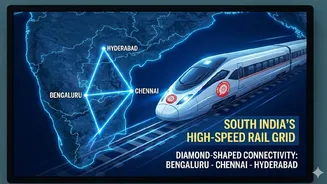
The proposed high-speed rail corridors have specific routes designed to connect key economic and population centers. The announcement detailed that these corridors will traverse various states, increasing accessibility and promoting economic integration. Detailed route maps and designs are crucial for the efficient execution of these projects. The corridors are aimed at reducing travel times significantly, providing commuters with a faster mode of transportation, and thereby boosting overall productivity. The precise routes are carefully planned to optimize the potential benefits of the rail infrastructure, while also taking into consideration factors such as population density, existing infrastructure, and environmental impact. The strategic placement of these high-speed rail lines has the potential to reshape urban and rural landscapes, impacting development along their routes.
Southern State Outcomes
The allocation of the high-speed rail corridors shows varied outcomes for different states. Surprisingly, Kerala did not receive a direct corridor in this phase. This exclusion raises questions about regional development balance. The absence of Kerala from the initial project list can be viewed as an issue of resource allocation. Southern states, however, have not been left out entirely, as the focus remains on enhancing connectivity within the region. Despite the lack of a dedicated high-speed corridor, Southern states may still benefit through improved rail connections to the new corridors. This strategic approach ensures that the advantages of high-speed rail are enjoyed across the entire country, thus facilitating balanced regional growth and better infrastructure for all states.
Economic Impact Explained
The introduction of the high-speed rail corridors is expected to bring widespread economic benefits. The new infrastructure will create jobs in construction, operation, and maintenance. This increased connectivity will spur trade and investment opportunities, encouraging economic activities in the areas along the rail lines. Further, the reduction in travel times will lead to increased efficiency, enhancing business operations. The high-speed rail lines will also facilitate the easier movement of goods, cutting down on logistical costs, which can significantly enhance the profitability of businesses. These factors will collectively support economic expansion, benefiting local communities and the national economy. The long-term impact is anticipated to promote economic integration, increase regional development, and create a more interconnected and productive India.
Future Rail Developments
The unveiling of these high-speed rail corridors is not a standalone event but rather a component of a larger national railway modernization strategy. There are plans to add more high-speed rail corridors, integrating cutting-edge technologies and focusing on passenger comfort and safety. This is a continuous process of evolution and improvement. The government plans to continue focusing on integrating digital technologies, signaling systems, and enhanced safety measures. The focus will be on sustainability, with efforts to lessen the environmental impact through efficient energy use and eco-friendly construction practices. The future direction of the Indian railways will be towards enhanced efficiency, safety, and a much better travel experience, making railways a pillar of India's progress and infrastructure development.