








Kochi's Functional Island
While globally recognized for colossal projects like Dubai's Palm Islands, India harbors its own significant man-made island, Willingdon Island, established
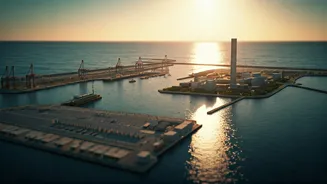
in the 1930s. This engineering feat, named after Viceroy Lord Willingdon, emerged not from a desire for opulence, but from a pressing need to enhance Kochi's maritime capabilities. In its early days, Kochi, despite its potential as a port city, lacked a harbor deep enough to accommodate large international vessels. The existing natural harbor was too shallow and unreliable for burgeoning global trade, hindering India's export potential. The British colonial administration opted for an innovative solution: instead of relocating the port, they engineered new land. Dredged materials from the harbor's silting were used to reclaim a substantial area from Kochi's backwaters, creating Willingdon Island. This 775-acre expanse was meticulously designed to house essential infrastructure, including docks, warehouses, rail links, administrative buildings, and naval facilities, all purpose-built to facilitate robust maritime trade and solidify Kochi's position as a vital commercial hub.
Island's Evolution and Impact
Over the decades, Willingdon Island evolved into a self-sufficient nexus for maritime activities. It became the operational heart for port authorities, customs departments, and shipping agencies. Later, it housed the Southern Naval Command of the Indian Navy, underscoring its strategic importance. Seamlessly integrated with the mainland via bridges and rail connections, and further linked to Kochi's water network through ferries, the island functioned as a vital artery for commerce and defense. Unlike tourist-centric islands, Willingdon Island maintains a low profile, characterized by quiet roads, historic colonial architecture, and institutional campuses. Its primary function remains unchanged: efficiently managing the flow of goods into and out of India. Today, it hosts significant entities like the Kochi Naval base, the Central Institute of Fisheries Technology, and the Port of Kochi itself. This unassuming island, often overlooked on postcards, played an indispensable role in transforming Kochi into the prominent port city it is recognized as today.
Toyota's Luxury Ambition
The popular notion that 'Lexus' stands for 'Luxury Export to the United States' is a myth, though it touches upon a core truth of Toyota's strategic intent in the 1980s. At that time, the United States represented the world's largest automotive market, and Toyota, already a significant player, enjoyed immense trust for its reliable, fuel-efficient, and sensible vehicles. However, this very reputation created a ceiling; while consumers readily purchased affordable Toyotas, they were hesitant to invest in a premium-priced vehicle bearing the Toyota badge. Toyota recognized that to penetrate the lucrative luxury segment abroad, particularly in the US, it could not leverage its existing identity. This led to a bold decision: rather than altering its current image, Toyota opted to build an entirely new brand from the ground up, one completely detached from its economical counterpart. This new marque would eventually be named Lexus.
Crafting the Lexus Identity
Prior to launching Lexus, Toyota adopted a distinct approach, embracing the philosophy of 'Genchi Genbutsu,' which translates to 'go and see for yourself.' This involved dispatching engineers, designers, and planners to the United States years before the brand's debut. Their mission extended beyond competitor analysis; they were tasked with deeply understanding American perceptions of luxury. This included discerning what consumers valued in a high-end automobile, their definition of comfort, the nuances of a 'premium' silence, and the design aesthetics that conveyed authority without ostentation. This meticulous groundwork culminated in the creation of Lexus's first flagship sedan, the LS 400. Introduced in 1989, it stunned the automotive world with its exceptional build quality and a price point significantly lower than its European rivals. The LS 400's quiet operation was famously demonstrated by stacking champagne glasses on its hood, showcasing the engine's minimal vibration. Crucially, buyers perceived it not as an expensive Toyota, but as a genuine luxury brand, signifying a major shift in Japan's export narrative.
Japan's Economic Evolution
The creation of Lexus symbolized a broader evolution in Japan's post-World War II economic trajectory. Following the war, Japan's industrial and economic landscape was heavily influenced by US occupation policies. Early and substantial demand from the United States provided Japanese exporters with a critical external market for growth. This was partly by design; American banker Joseph Dodge, sent to Japan during the occupation to stabilize its economy, introduced the 'Dodge Line' policies. These measures imposed fiscal discipline, including budget balancing and credit tightening, and crucially, fixed the exchange rate at 360 yen to the US dollar. This deliberately weak yen made Japanese exports highly cost-efficient for decades, focusing on value, efficiency, and reliability. However, the advent of Lexus marked a pivotal change, demonstrating Japan's transition from exporting mere cost-effectiveness to exporting aspiration. By the late 1980s, Japanese companies had gained enough confidence to compete on brand, emotion, and identity, moving beyond price and quality alone. This diversification of markets and products, while maintaining a central economic relationship with the US, highlights how the 'spirit' of 'Luxury Export to the United States,' though not official, captures the essence of this significant shift. It illustrates that sometimes, success in selling premium products hinges less on altering the product itself and more on reshaping the narrative and perception surrounding its purchase.