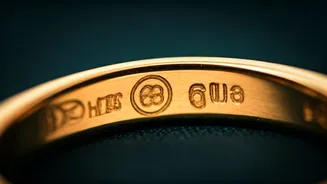








The BIS Hallmark Explained
When acquiring gold jewelry in India, ensuring it bears the Bureau of Indian Standards (BIS) hallmark is paramount, as it's now a mandatory requirement.
This certification guarantees that the gold content meets specific purity standards. The BIS, a national agency for quality control, issues this hallmark to assure buyers of the proportionate amount of pure gold in their purchase, safeguarding them from deceptive practices. It also secures a fair value when reselling the jewelry, as its purity is officially recognized nationwide. The evolution of hallmarking signs has seen the introduction of a 6-digit Hallmark Unique Identification (HUID) number, which replaced older markings, bolstering consumer trust and transparency in the gold market.
Decoding Hallmarking Symbols
Understanding the symbols imprinted on gold jewelry is key to verifying genuine hallmarking by authorized BIS centers. The first indicator is the BIS Standard Mark, typically a triangular shape, signifying that the gold's purity has been assessed at a BIS-certified facility. Following this is the Purity or Fineness Grade, which precisely states the gold content. This is often represented in karats (e.g., 22K, 18K) or as a fineness number (e.g., 916 for 22K, meaning 91.6% pure gold). BIS permits hallmarking in categories like 14K, 18K, 20K, 22K, 23K, and 24K. For instance, a '22K916' stamp confirms 91.6% gold content, with the remaining percentage comprising other metals like zinc or copper. This fineness directly influences the jewelry's price, with higher karat gold commanding a greater value due to its increased gold proportion.
The Crucial HUID Code
The third, and most critical, symbol on modern hallmarked gold jewelry is the 6-digit Hallmark Unique Identification (HUID) number. This alphanumeric code is unique to each individual piece of jewelry, serving as a distinct identifier. Consumers can leverage the BIS Care App to verify this HUID code, which not only confirms the jewelry's authenticity but also its stated purity. It's important to note that each component of a pair or any detachable part of the jewelry should ideally bear a separate HUID to prevent potential misuse. The BIS emphasizes that customers should meticulously check for hallmarking and fineness details on every article. This code replaced older identification marks like the assay center's identification number and the jeweller's identification number, which were part of hallmarking prior to July 1, 2021.
Hallmarking Charges and Old Marks
When purchasing hallmarked jewelry, buyers are subject to hallmarking charges, which are levied per article irrespective of its weight. Currently, this charge is set at Rs 45 per article, with a minimum charge of Rs 200 for a consignment, in addition to applicable taxes. A consignment is defined as a collection of articles of the same fineness from which a sample is drawn for testing. If you possess hallmarked gold jewelry acquired on or before June 30, 2021, it might display older hallmarking signs. These could include the BIS logo, purity/fineness grade, the assay center's identification mark, and the jeweller's identification number. While these older marks are valid for jewelry purchased before the HUID mandate, there's no obligation to get them re-hallmarked with the new six-digit code.