






Understanding Gold Purity
When you examine your gold ornaments, you might spot small inscriptions such as 916, 750, or 585. Far from being mere identification marks, these numbers
are crucial indicators of the gold's intrinsic value, specifically its purity level. Recognizing these symbols empowers you to make astute choices when acquiring gold items, ensuring you receive genuine worth for your investment. This guide will demystify these essential markings, providing clarity on what each number signifies about the gold content in your beloved pieces. It's a fundamental aspect of appreciating your jewellery beyond its aesthetic appeal.
916: India's Gold Standard
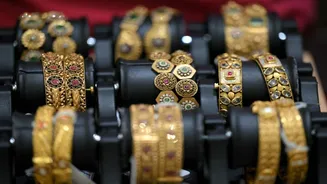
In India, the '916' marking is a prevalent hallmark, signifying that a piece of jewellery is composed of 91.6 percent pure gold. This translates to 22-karat gold, a common choice for traditional Indian designs. The remaining 8.4 percent comprises other metals, such as copper, silver, or zinc, which are alloyed with the gold to enhance its durability and workability, making it suitable for intricate craftsmanship. This particular purity level strikes a balance between the softness of pure gold and the need for a robust metal that can withstand daily wear and intricate design execution, making it the go-to standard for a vast array of ethnic and contemporary Indian gold pieces.
750: The Gemstone's Best Friend
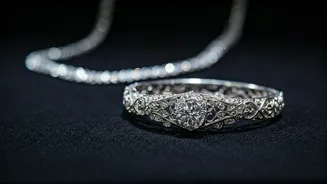
Jewellery bearing the '750' stamp indicates a gold content of 75 percent, which corresponds to 18 karats. This blend of gold offers a greater degree of hardness and resilience compared to its 22-karat counterpart. Consequently, 18-karat gold is frequently chosen for setting precious and semi-precious gemstones. Its enhanced durability ensures that the stones remain securely in place, minimizing the risk of damage or loss. This makes '750' marked jewellery an excellent choice for those seeking pieces that combine the richness of gold with the sparkle of diamonds and other valuable gems, offering both beauty and longevity for elaborate designs.
585: Everyday Elegance
A '585' inscription on your gold piece denotes a composition of 58.5 percent pure gold, equivalent to 14 karats. This purity level results in a more robust alloy, making it ideal for crafting lighter, more contemporary jewellery designs. The increased strength allows for thinner profiles and more intricate modern aesthetics without compromising structural integrity. It's a popular choice for everyday wear, fashion jewellery, and modern minimalist designs that aim for a sleek appearance and comfortable fit, offering a good balance of gold content and practical durability for a wider range of styles.
999: The Purest Gold
The '999' marking represents the zenith of gold purity, indicating a staggering 99.9 percent pure gold, or 24 karats. While this is the most unadulterated form of gold, its extreme softness makes it impractical for most jewellery applications, as it can easily bend or get damaged. Therefore, 24-karat gold is predominantly found in investment forms like coins and bars, where its purity is the primary selling point, rather than its suitability for intricate adornments. It's the benchmark for gold's intrinsic value, recognized globally as the purest standard available.
Hallmarking: A Mark of Trust
In India, the Bureau of Indian Standards (BIS) governs the hallmarking system, a crucial process that certifies the verified purity of gold jewellery. A BIS hallmark on your ornament is an assurance that its gold content has undergone independent testing and meets specified standards. Modern hallmarked items typically feature the BIS logo, the purity designation (like 916 or 750), and a unique six-digit Hallmark Unique Identification (HUID) code. This HUID offers an additional layer of transparency, allowing consumers to trace and verify the authenticity of their purchase, thereby building trust and confidence in the gold market.