




Unpacking Hidden Charges
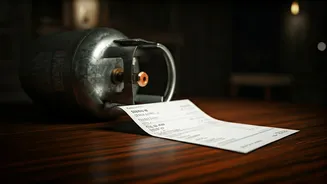
The government has issued a clear and unwavering directive that no hotel or restaurant is permitted to add extra charges for LPG, gas, or any other similar
fee by default to your bill. This move aims to protect consumers from deceptive billing practices. Such surcharges, regardless of how they are named or presented, are considered by regulatory bodies to be essentially a form of service charge or an unjustified additional fee. Imposing these automatically is a direct contravention of consumer protection guidelines, specifically those established on July 4, 2022. Failure to comply with these regulations can lead to significant repercussions under the Consumer Protection Act of 2019, underscoring the seriousness with which these practices are being viewed by authorities nationwide.
Consumer Action Plan
If you find yourself in a situation where a restaurant or hotel is insisting on including an LPG charge in your bill, and they refuse to remove it upon your request, it's important to know how to proceed without escalating the conflict unnecessarily. While you should avoid engaging in arguments, it is advisable to pay the full amount, including the disputed charge. Crucially, preserve all your bills and any related documentation as concrete evidence. Immediately inform the establishment about their error. Subsequently, you can report this issue by contacting the National Consumer Helpline (NCH) at 1915 or by sending a message via WhatsApp to 8800001915. The NCH acts as a conduit, relaying your complaint to the relevant restaurant authorities and other concerned bodies, which often results in a refund or a formal warning being issued.
Gathering Essential Proof
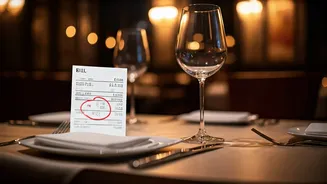
Apurva Agarwal, the Founder of Universal Legal, emphasizes the paramount importance of documentation when dealing with unfair billing practices. To empower consumer protection groups to take action and to safeguard your rights, it is vital to collect irrefutable proof. This includes obtaining a clear photograph of your bill, obtaining a copy of the menu that explicitly lists these extra costs, and securing any written confirmation from the restaurant stating they will not apply such charges going forward. This meticulous approach to evidence collection ensures that you have the necessary ammunition to contest incorrect charges and seek redressal, allowing for effective intervention by consumer advocacy organizations.
Lodging Your Complaint
For consumers who encounter these unauthorized charges, a structured grievance redressal process is available. Initially, you should politely request the hotel or restaurant management to remove the charge from your final bill. If this fails, you have several avenues to lodge a formal complaint. You can call the National Consumer Helpline at 1915 or utilize the NCH mobile application. For a more formal dispute resolution, you can file a complaint with the appropriate Consumer Commission via the e-Jagriti portal. Alternatively, you may submit your grievance directly to the District Collector or approach the Central Consumer Protection Authority (CCPA) itself.
Official Monitoring and Action
The Central Consumer Protection Authority (CCPA) is actively keeping a close watch on these types of malpractices occurring across the country. The CCPA has affirmed its commitment to ensuring fair trade practices and safeguarding consumer interests. Any establishment found in violation of these directives, particularly through the imposition of unfair or unauthorized charges on unsuspecting consumers, will be subjected to appropriate and necessary action. The CCPA is prepared to invoke the provisions of the Consumer Protection Act to address such infringements and uphold the rights of all consumers.