
WASHINGTON (AP) — At a time of tightening immigration restrictions, the Department of Homeland Security is attempting to make it easier for visa-holding religious workers to serve their U.S. congregations
with less disruption.
DHS announced on Wednesday a regulatory change aimed at reducing visa wait times abroad for the foreign nationals many U.S. religious communities depend on to serve as pastors, priests, nuns, imams and rabbis. These religious workers face a yearslong backlog to obtain legal permanent U.S. residency, but congregations can bring them into the country on temporary visas called R-1.
DHS introduced a fix to one issue affecting clergy that advocates had requested — removing the requirement for R-1 religious workers to leave the U.S. for one year after reaching their five-year visa maximum. That visa time used to be plenty to get a green card, but in 2023 the government made a change in processing that lengthened it so much most had to leave the country. Now, they will still need to depart the U.S. but can apply to re-enter right away.
“We are taking the necessary steps to ensure religious organizations can continue delivering the services that Americans depend on,” the DHS statement said. “Pastors, priests, nuns, and rabbis are essential to the social and moral fabric of this country. We remain committed to finding ways to support and empower these organizations in their critical work.”
The DHS rule loosens an immigration restriction at a time when the Trump administration has tightened many other immigration pathways. The DHS statement emphasized a commitment to protecting religious freedom and minimizing disruptions to faith-based communities.
“It’s a huge deal,” said Lance Conklin, a Maryland immigration attorney who represents evangelical churches with R1 visa holders. “It would potentially allow people not to disrupt the organization by having someone have to leave for a year, because that’s a major imposition now.”
The U.S. Conference of Catholic Bishops called it a “truly significant step to support essential religious services in the United States.”
In a joint statement, Archbishop Paul Coakley, the USCCB president, and Bishop Brendan Cahill, chair of the USCCB committee on migration, expressed their gratitude for the administration's work on the issue. “The value of the Religious Worker Visa Program and our appreciation for the efforts undertaken to support it cannot be overstated."
“Hallelujah!” said Olga Rojas, immigration counsel for the Archdiocese of Chicago. “We’re happy the administration made this change. It is helpful to us so we don’t have to lose valued religious workers that are contributing so much to our parishes and schools.”
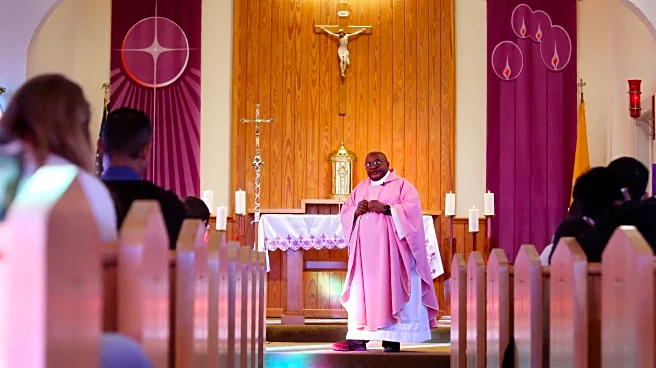
The U.S. Catholic Church has long relied on foreign-born clergy amid a priest shortage. Other traditions, ranging from Buddhism to Pentecostal Christianity, also recruit foreign-born clergy to serve growing non-English-speaking congregations or because they have specialized training from international institutions steeped in the religion’s history.
The five-year R1 visa used to provide enough time for congregations to petition for green cards under a special category called EB-4, which would allow the clergy to become permanent residents.
Congress sets a quota of green cards available per year divided into categories, almost all based on types of employment or family relationships to U.S. citizens. In most categories, the demand exceeds the annual quota.
Citizens of countries with especially high demand get put in separate, often longer “lines,” where it can take decades to process applications.
Also in a separate line were migrant children with “Special Immigrant Juvenile Status” — neglected or abused minors — from Guatemala, Honduras and El Salvador. Hundreds of thousands sought humanitarian green cards or asylum after illegally crossing into the U.S. since the mid-2010s, though the Trump administration recently cracked down on the program.
In March 2023, the State Department under President Joe Biden suddenly started adding the minors to the general green card queue with the clergy.
It created new backlogs that threatened the ability of religious workers to remain in the United States. No exact numbers exist, but it is estimated that thousands of religious workers are backlogged in the green card system or haven’t been able to apply yet.
In summer 2024, the Catholic Diocese of Paterson, New Jersey, and five of its affected priests sued DHS, the Department of State and the U.S. Citizenship and Immigration Services. The lawsuit argued that the 2023 change “will cause severe and substantial disruption to the lives and religious freedoms” of the priests and the faithful they serve. The lawsuit was voluntarily dismissed in fall 2025 “to allow for Agency action and/or rulemaking that will render moot the relief Plaintiffs sought from the Court,” according to court documents.
In spring 2025, a bipartisan bill was introduced in the U.S. Senate and House calling for a small fix similar to Wednesday’s DHS rule, allowing for an extension of religious workers’ visas as long as their green card application is pending.
___
Dell'Orto reported from Minneapolis.
___
Associated Press religion coverage receives support through the AP’s collaboration with The Conversation US, with funding from Lilly Endowment Inc. The AP is solely responsible for this content.