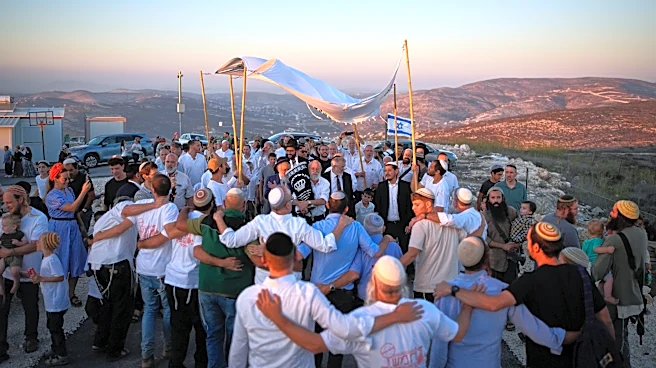



HOMESH, West Bank (AP) — Israeli settlers, some carrying rifles, sang, danced and carried Torah scrolls as they inaugurated a synagogue at the newly revived settlement of Homesh.
For those attending the event Wednesday, it was a celebration. For Palestinians living nearby, the return of settlers to the site carried a very different meaning.
Homesh lies deep in the northern occupied West Bank, near the Palestinian village of Burqa. Israel dismantled
the settlement in 2005 but formally approved its reestablishment last year, allowing settlers to live there and connect to Israel’s water and electricity networks.
Palestinian residents of Burqa say the settlement restricts access to privately owned farmland around the site. Israel’s Supreme Court has acknowledged that land at the original settlement belonged to Palestinians from the village.
Homesh is part of a broader expansion of Israeli settlements and outposts that has further restricted Palestinian movement and access to land. The expansion has also coincided with a sharp rise in settler attacks against Palestinians and their property. Rights groups say such violence is rarely prosecuted.
Most of the international community considers all Israeli settlements in the occupied West Bank illegal under international law. Israel disputes this, citing security concerns and historical and religious ties to the territory.
For the settlers, the synagogue represents a return. For Palestinians living nearby, it represents the continuing loss of land, free movement and the dwindling hopes of one day governing themselves.
This is a photo gallery curated by AP photo editors.