

Israel has struck southern Lebanon, Beirut and an oil storage facility in Tehran as the war in the Middle East keeps escalating, and Prime Minister Benjamin Netanyahu promised “many surprises” for the next phase of the conflict.
Iran also hit a desalination plant in Bahrain. Iran’s Foreign Minister Abbas Araghchi said a U.S. airstrike damaged an Iranian desalination plant on Qeshm Island, warning that in doing so “the U.S. set this precedent, not Iran.”
Such infrastructure is critical for drinking water supplies in the parched deserts of the Gulf.
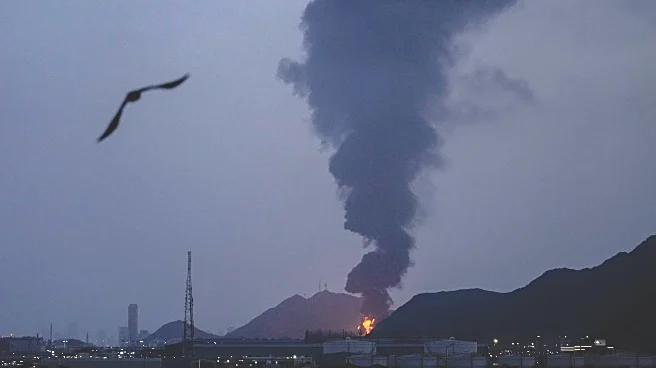
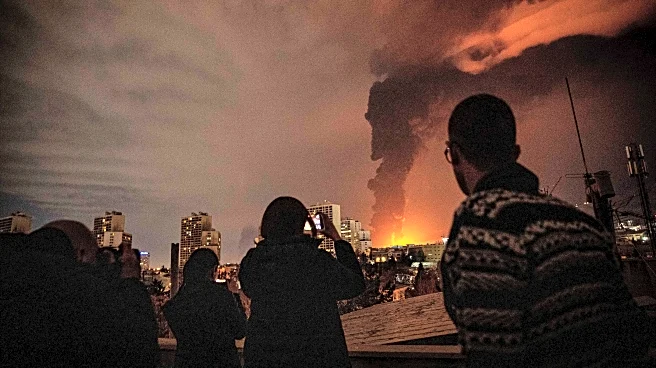
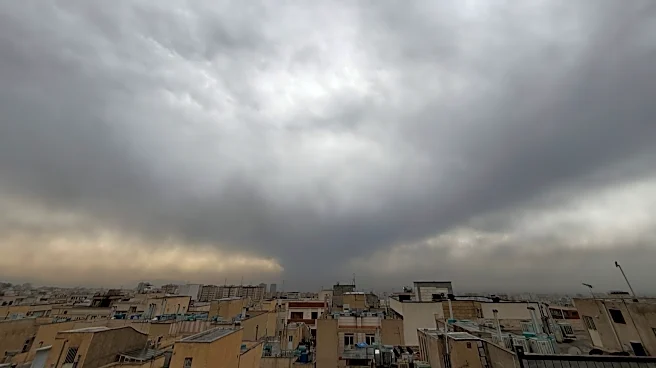
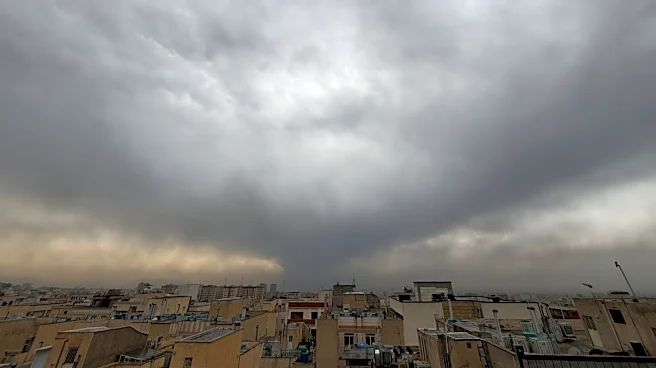
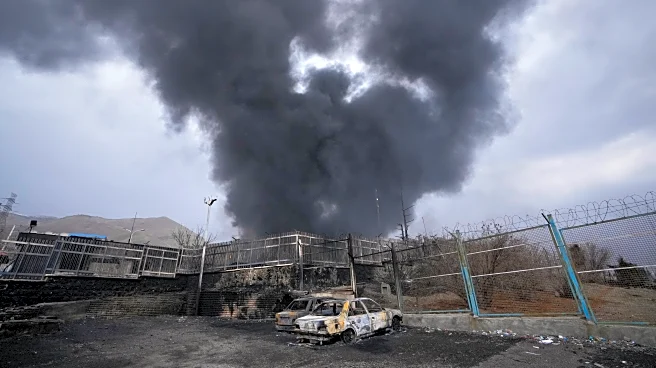
An Israeli attack on an oil storage facility in Tehran sent up pillars of fire that could be seen in Associated Press video as a glow against the Saturday night sky. It appeared to be the first time a civil industrial facility has been targeted in the war.
The conflict has rattled global markets, disrupted air travel and left Iran’s leadership weakened by hundreds of Israeli and American airstrikes.
Here is the latest:
The president in an ABC News interview reiterated that he wants a say in who comes to power in Iran once the war is over, warning anew that the new leader “is not going to last long” if the person doesn’t have his approval.
Trump also expressed openness to someone with ties in the current regime.
“I would, in order to choose a good leader I would, yeah, I would,” Trump said. “There are numerous people that could qualify.”
He did not specify any Iranian figures who fit his criteria.
Trump has faced blowback in Washington after the Treasury Department announced it would allow India to buy Russian oil until April 4.
The move, which temporarily gives Russia a stream of revenue to fund its war against Ukraine that the U.S. only recently managed to cut off, -comes even as Moscow is reportedly sharing information with Iran that could help it target U.S. troops and assets in the Mideast.
But top Trump administration officials say the waiver is motivated by pragmatism.
Energy Secretary Chris Wright said Russian oil being sold to India had been expected to go to Chinese refineries but had been idling at sea.
“Instead of having it wait six weeks to unload there, let’s just pull that oil forward, have it land at Indian refineries and tamp this fear of shortage of oil, tamp the price spikes and the concerns we see in the marketplace,” Wright said in an appearance on CNN’s “State of the Union.”
Ambassador Mike Waltz, the U.S. envoy to the United Nations, said on NBC’s “Meet the Press” that “it was kind of common sense” to let the oil on idling ships go to India.
Michael Leiter, Israeli’s ambassador to the United States, has laid out a vision for a post-theocracy Iran, with Jerusalem and Washington providing “guidance” for a pluralistic transitional government.
“What we’re hoping for is that we move into a period of a transitional government where the minorities come together, where the majority of the people come together, all the various opposition parties come together for a transitional government where they can lead the country for a year or so together with the guidance from the United States and Israel and other regional allies,” Leiter told CBS’ “Face the Nation” Sunday morning.
Leiter said Israel has cultivated relations with Iranian ethnic minorities, such as the Kurdish and Baluchi communities. But he said the country’s ethnic Persian majority would need to buy in as well.
“We want a united Iran,” he said. “What we’re encouraging them to do is to coalesce.”
Leiter hailed the Israeli-American alliance that launched the ongoing unilateral war, saying, “We’ve reached a level of collaboration that we’ve never seen between our two countries and between our two militaries.”
Trump has floated the idea of having a say in the selection of Iran’s next supreme leader. The country’s foreign minister is having none of it.
“We allow nobody to interfere in our domestic affairs. This is up to the Iranian people to elect their new leader,” Araghchi told NBC’s “Meet the Press.” He adds: “It’s only the business of the Iranian people, and nobody else’s business.”
Trump has been quoted as saying “we want someone that will bring harmony and peace to Iran” and that he wants to be involved in the appointment, as was the case in Venezuela after U.S. forces captured then-President Nicolás Maduro in January.
Israel says it has begun another round of airstrikes on Iran.
It was the second wave of strikes announced by the Israeli military on Sunday.
Pirhoussein Koulivand, head of Iran’s Red Crescent Society, said 65 schools and 32 medical facilities, hospitals and pharmacies have been targeted in the war. They are part of the almost 10,000 civilian sites that Red Crescent claimed earlier Sunday had been damaged in the country.
AP could not independently verify the figures.
It came after the Israeli military said Sunday that it had struck more than 3,400 targets in Iran.
U.S. Navy Capt. Tim Hawkins, CENTCOM spokesman, denied targeting civilians in a comment to AP Sunday and accused Iran of deliberately doing so.
The Israeli military said it has completed another round of airstrikes in Teheran, in which it “dismantled” the space agency headquarters, affiliated with the Iranian Revolutionary Guard.
It said the site was “used by the IRGC to advance terrorist activities and monitor the State of Israel and its residents.”
Targets also included the Guard’s Internal Security’s command center and 50 of its ammunition bunkers, a compound belonging to its Ground Forces, and a base of the Guard’s volunteer Basij force, the army said.
The Israeli military says Iran has launched a new barrage of missiles toward Israel.
It says air defenses have been activated to intercept the incoming fire.
Sirens warning of incoming missiles sounded in central Israel, including Tel Aviv and parts of Jerusalem.
Swiss Defense Minister Martin Pfister, one of Switzerland’s federal council members, said the government believes the attack on Iran constitutes a violation of international law.
The U.S. and Israel — as well as Iran for its counter attacks — broke international law’s prohibition on the use of force, Pfister said in comments to SonntagsZeitung that were published Sunday. Switzerland is famously neutral.
Switzerland is governed by a seven-member federal council, who each hold portfolios as government ministers and take turns each year holding the top job of president. Pfister is part of the council and can speak on its behalf.
Energy Secretary Chris Wright said there’s currently a “ fear premium in the marketplace” but sought to assure Americans that surging fuel prices are a short-term problem.
“We never know exactly the timeframe of this,” Wright said in an appearance on CNN’s “State of the Union. “But in the worst case, this is a weeks, this is not a months thing.”
White House press secretary Karoline Leavitt in a Sunday appearance on Fox News call the rising “a short-term disruption” that will benefit consumers in the long term.
“But ultimately taking out the rogue Iranian regime is going to be a good thing for the oil industry,” Leavitt added. “And those prices are going to come back down just like they have over the course of the past year, because of President Trump’s American energy dominance agenda.”
Araghchi says Tehran has intentionally limited itself to a range of 2,000 kilometers (1,240 miles) for its ballistic missiles “because we don’t want to be felt as a threat by anybody else in the world.”
Araghchi tells NBC’s “Meet the Press” says Iran hasn’t begun any plan to increase that range and that there’s no evidence or intelligence indicating that his country “is going to long-range missiles, let alone those missiles who can reach the United States soil.”
The current range puts all of the Mideast and some of Eastern Europe in range.
Sen. Mark Warner questioned what he says are the administration’s shifting justifications for the attacking Iran.
“We have had four different answers as to the reasons for the war,” the Virginia Democrat told “Fox New Sunday.”
The vice-chairman of the Senate Intelligence Committee, Warner added, “This is a war of choice … There was no imminent threat. There was not even an imminent threat to Israel.”
Warner questioned repeated Trump administration claims that the war would be brief and involve no U.S. ground forces. He asked what would happen mass protests took place in Iran, as Trump has called for, and the Revolutionary Guard slaughtered thousands of protestors.
“That would put an obligation on us that I don’t think Americans want,” he said.
He criticized Trump’s diplomatic approach, saying the president had ignored the warnings of both European and Arab allies to join with Israel and launch a unilateral war.
“We are always better with allies,” Warner said. “Unfortunately, this president has insulted virtually all of our allies.”
Ukraine will send experts to advise the United States and other Middle Eastern countries on repelling Iranian drone attacks next week, President Volodymyr Zelenskyy said Sunday.
Speaking at a press conference in Kyiv alongside Dutch Prime Minister Rob Jetten, Zelenskyy said that Ukrainian experts would be “on site” to assess the situation, but did not specify where they would be located or the exact date of their arrival.
Zelenskyy said Ukraine would help Washington and other countries with all “necessary means — first and foremost expertise and the experience of our military in defending against Shahed drones, cruise missiles, and so on.”
The Ukrainian leader said that he wished for the move to be “an opportunity for both sides.”
“You know what capabilities we have, and we understand what capabilities the Gulf countries lack,” he said.
The Israeli military said on Sunday it had struck more than 3,400 targets in Iran and more then 600 in Lebanon since the Middle East war began last week.
Military spokesperson Lt. Col. Nadav Shoshani added that Israel believes it has destroyed 60% of the missile launchers across Iran, which he said is causing a bottleneck of launches and dramatically reducing firepower.
Strikes also destroyed Iran’s two major missile production sites that created the missiles with range to reach Israel, he said.
U.S. Central Command says the Iranian government “blatantly disregards the safety of innocent people” in its own country.
Central Command says Iran is using areas with high civilian populations for military operations, including launches of drones and ballistic missiles.
“This dangerous decision risks the lives of all civilians in Iran since locations used for military purposes lose protected status and could become legitimate military targets under international law,” according to the statement.
Central Command says the U.S. military “takes every feasible precaution to minimize harm to civilians but cannot guarantee civilian safety in or near facilities used by the Iranian regime for military purposes.”
Arab foreign ministers on Sunday have strongly condemned Iran attacks on its Arab neighbors as a “grave threat to international peace and security.”
In a final communique following their virtual meeting, the ministers expressed support to Gulf states along with Jordan and Iraq in the “measure they take to deter and respond to these aggressions.”
Iran has said it targets U.S. assets in Arab countries in response to U.S. and Israeli strikes which triggered the war on Feb. 28. However, Iranian attacks hit civilian facilities and disrupted life across the Gulf states.
The ministers called for Iran to immediately stop its attacks and cease “provocative acts or threats to neighboring countries.” They urged the U.N. Security Council to condemn Iran and force it to “immediately and unconditionally halt its attacks” on Arab countries.
The ministers also voiced support to Lebanese government in its efforts to disarm Hezbollah, and urged the international community to pressure Israel to immediately cease its attacks on Lebanon.
The communique didn’t mention U.S. and Israeli strikes, which triggered the war.
Araghchi says Iranian forces are ready if ground troops were to enter his country.
“For the time being, we are capable enough,” Araghchi told NBC’s “Meet the Press.” He said Iran has “very brave soldiers who are waiting for any enemy” and would “destroy” those who come on to Iranian soil.
“We have a great civilization. We have defended our land for thousands of years and we continue to,” he said.
Araghchi is taking issue with President Donald Trump’s comment accusing Iran of a school explosion on Feb. 28 that killed more than 165 people — most of them children — when evidence suggests it was likely a U.S. airstrike.
Iran’s foreign minister told NBC’s “Meet the Press” that “’it is funny. It is our school, these are our students and our girls and they are attacked by an American fighter, a jet fighter and they have been killed. Why (is) Iran responsible?”
Asked for evidence that it was an American warplane, Araghchi said “if it was not U.S., then who was that? Maybe Israelis. But who else is attacking us?”
Satellite images, expert analysis, a U.S. official and public information released by the U.S. and Israeli militaries have suggested that the explosion was likely caused by U.S. airstrikes that also hit an adjacent compound associated with the government’s Revolutionary Guard.
U.S. intelligence officials believe Russia has provided Iran with information to target U.S. troops and assets in the Middle East.
Iran’s foreign minister isn’t going into detail about how Moscow may be helping Tehran, but says that “military cooperation between Iran and Russia is not something new.”
Araghchi told NBC’s “Meet the Press” that “it’s still there and will continue in the future.”
Asked whether Russia was helping Iran locate American forces, he said he did not have “exact military information. As far as I know we have a very good partnership with Russia.”
In response to a question about Russia providing intelligence, he said “they are helping us in many different directions. I don’t have any detailed information.”
▶ Read more
Araghchi says his country isn’t attacking other countries in the region, but rather American bases, installations and assets “which are unfortunately located in the soils of our neighbors.”
“We are retaliating,” Araghchi told NBC’s “Meet the Press.”
Asked about the apology Saturday by Iran’s president for attacks on “neighboring countries,” Araghchi says an apology “in our culture is a sign of dignity and strength.”
He says the apology from President Masoud Pezeshkian was for “the inconveniences they have faced because of this aggression by the United States and retaliation by us.”
Araghchi says it’s the president of the United States “who should apologize to the people of region and Iranian people for the killings and destruction.”
But before Tehran might even consider a ceasefire, Abbas Araghch said “they have to explain why they started this aggression.” Araghch did not specify about whom he was speaking.
Araghchi also told NBC’s “Meet the Press” that “there should be a permanent end of the war and unless we get to that, I think we need to continue fighting for the sake of our people and our security.”
He says the war “was imposed on us” by the United States and Israel, and that “what we are doing is legal acts of self-defense and we have every right to do that.”
The State Department says more than 32,000 Americans have left the Middle East since the start of the Iran war last week.
Although most of them departed on commercial flights without government assistance, the department said Sunday that it had organized nearly two dozen charter flights that had carried several thousand U.S. citizens from the Mideast to destinations in Europe and the United States.
The department said in a statement that more than half of Americans who requested assistance in leaving have declined offers of seats on government-paid charter flights, some of whom have decided to remain in the Middle East and some who prefer to make their own travel plans.
It did not give a number of those who have turned down charter flights but said more than 19,000 Americans had sought information from the State Department about security or transportation options.
The Israeli military announced that two soldiers were killed in fighting in southern Lebanon on Sunday.
They are the first military fatalities since the start of the war with Iran last week.
One of the soldiers was identified as 38-year-old Maher Khatar, from the Druze village of Majdal Shams in the Israeli-annexed Golan Heights. The military has not published the name of the second soldier as his family is still being notified.
Israeli military says 2 soldiers have been killed in Lebanon, first military fatalities since Iran war began
An Iranian official deplored the U.S.-Israeli strikes on oil facilities in Iran, saying they pushed the war into a “dangerous phase.”
“These attacks on fuel storage facilities amount to nothing less than intentional chemical warfare against the Iranian citizens,” Foreign Ministry spokesman Esmaeil Baqaei said in a social media post.
He said such attacks will have “devastating the environment, and endangering lives on a massive scale” because of hazardous materials and toxic substances they release into the air.
“The consequences of this environmental and humanitarian catastrophe will not be confined within Iran’s borders,” he said.
Lebanon’s top diplomat has condemned a drone attack apparently launched from Lebanese territory that hit a British airbase on the southern coast of Cyprus.
Youssef Rajji’s remarks Sunday come after his Cypriot counterpart Constantinos Kombos said an exploding drone that hit the British Royal Air Force’s Akrotiri on Monday originated from Lebanese territory, where the Hezbollah militant group is at war with Israel. Hezbollah’s arsenal notably includes exploding drones, similar to the ones used by Iran.
“I called on our Cypriot friends not to confuse the Lebanese state with those acting outside its authority and legal framework,” Rajji, a staunch opponent of Hezbollah said, referring to a Lebanese government decision that ordered security agencies to crack down on non-state groups carrying out attacks.
As Beirut scrambles to make amends, French President Emmanuel Macron will visit the European Union island nation Monday. The attack puts Lebanon in a predicament, as Macron is leading the only diplomatic endeavor to try to halt the conflict, which has killed almost 400 people in Lebanon and displaced hundreds of thousands.
Israel’s rescue services said three Israelis were injured in a missile barrage from Iran on Sunday afternoon.
Rescue services said they responded to impact sites in central Israel and treated a 40-year-old man in serious condition, a 25-year-old man in moderate condition, and a 56-year-old man who was slightly injured.
The impact made a meters-deep hole in the ground and thrust a car over a small wall.
President Abdel-Fattah el-Sissi of Egypt on Sunday expressed concerns about the war in the Middle East and its “grave repercussions, including rising energy prices and disruptions to supply chains and air and maritime traffic.”
He warned of the dangers of the conflict expansion which he said could plunge the entire region into chaos, the Egyptian president said.
He called for intensified international efforts to stop the war which was triggered by U.S. and Israeli strikes against Iran on Feb. 28.
El-Sissi’s comments came in a phone call with French President Emmanuel Macron.