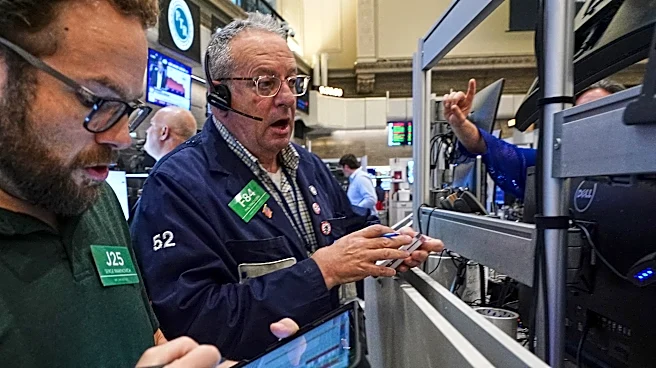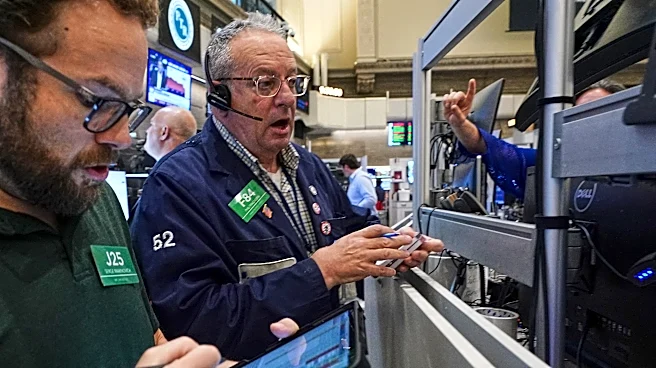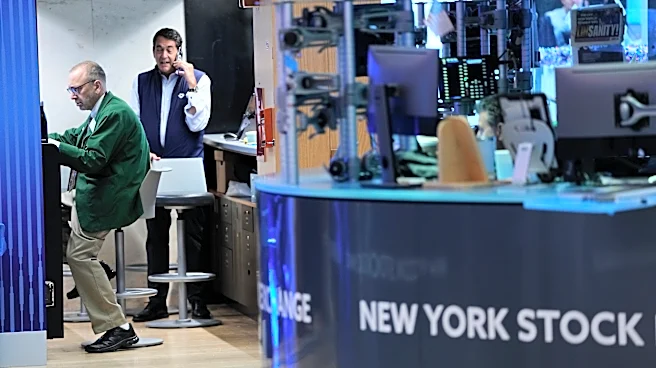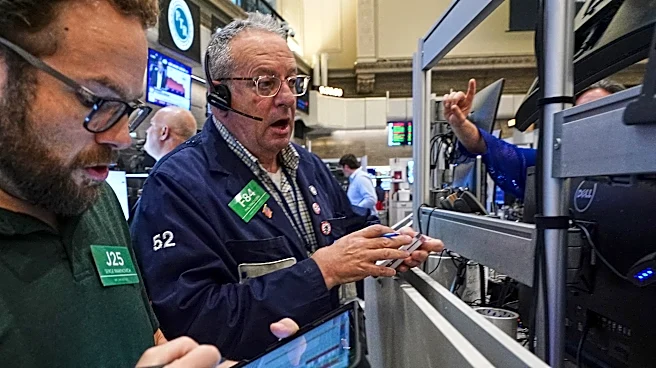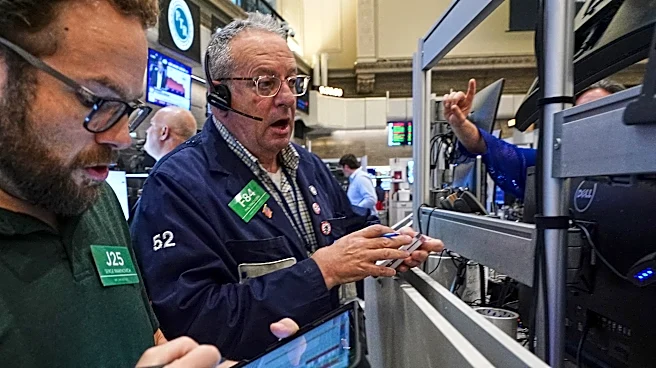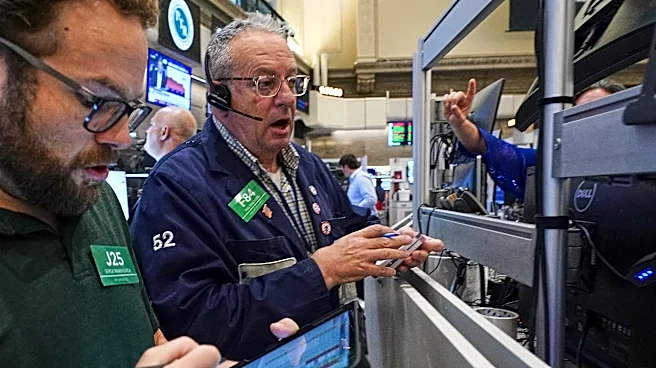








NEW YORK (AP) — Stocks rose on Wall Street and oil prices slipped Thursday in the wait to see what will come next after President Donald Trump raised doubts about the temporary truce in the war with Iran.
The S&P 500 rose 0.7%, erasing its loss from the day before, even though the United States launched new airstrikes against Iran, which responded by targeting U.S. allies in the Middle East. The Dow Jones Industrial Average was up 198 points, or 0.4%,
as of 12:33 p.m. Eastern time, and the Nasdaq composite was 0.9% higher.
In the oil market, prices gave back some of their jumps from the day before. The price for a barrel of Brent crude, the international standard, fell 2.1% to $76.39. That’s down from $78.02 the day before but still above its $71.80 price from the end of last week.
The worry is that a return to full-blown war will block oil tankers from the Strait of Hormuz and prevent the delivery of crude from the Persian Gulf to customers worldwide. That could worsen inflation, which economists expected would ease with oil prices, and in turn force the Federal Reserve and other central banks to raise interest rates.
Higher rates can keep a lid on inflation, but they also slow the economy and hurt prices for all kinds of investments.
But Trump also said Wednesday that the latest back-and-forth fighting would not result in “long-term” military action, raising uncertainty about just what will happen.
The swings for oil prices have halted what had been a steady decline in gasoline prices, and the cost for a gallon climbed a nickel overnight, according to motor club AAA. The average price for a gallon of regular gasoline was $3.85 Thursday, up 68 cents from a year earlier.
In the meantime, renewed strength for makers of computer chips and other winners of the boom around artificial-intelligence technology is helping to support stock markets worldwide.
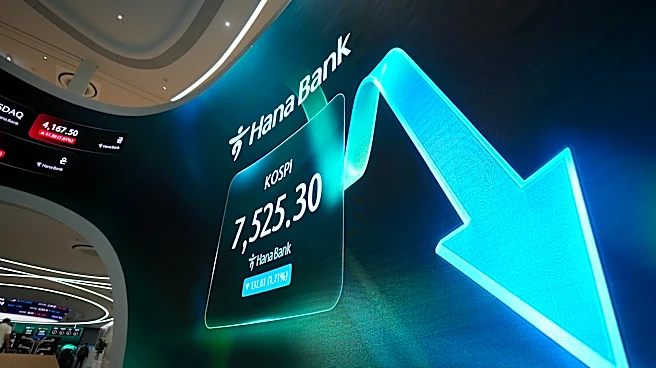
In South Korea, whose stock market is dominated by two companies that make semiconductors, the Kospi index rose 0.6% after tumbling 5.3% the day before. SK Hynix, which is preparing to sell shares of its stock that will trade in the United States, jumped 5.3% in Seoul.
On Wall Street, Micron Technology’s rise of 6.8% was the strongest force pushing upward on the S&P 500. Micron cited “surging demand for memory in the AI era” as it gave a progress update on construction in central New York of what it says is the largest semiconductor manufacturing site in U.S. history.
Such stocks have become some of Wall Street’s most influential after growing so big in the euphoria around AI. But AI stocks have also come under pressure recently because of worries their prices shot too high and that AI may not create enough productivity and profits to make all the investments in chips and data centers worth it.
Stocks broadly got some help from stabilizing yields in the bond market. The yield on the 10-year Treasury edged down to 4.54% from 4.56% late Wednesday.
It had been climbing on worries about high oil prices and the potential for higher interest rates, which cranked up the pressure on stocks and prices for other investments.
Besides the war with Iran, another big event for Wall Street is the upcoming start of earnings reporting season for companies. Next week, the biggest banks are set to unveil how much profit they made from April through June. Companies across industries will need to report strong growth to justify the big moves their stock prices have made.
PepsiCo fell 3.1% even though it reported slightly better revenue for the latest quarter than analysts expected. Numbers released by the company behind Gatorade and Doritos showed weakening trends in its North American food and drinks businesses.
In stock markets abroad, indexes rose across much of Europe and Asia.
Besides Seoul’s climb, stock indexes rose 1.7% in Shanghai and 0.9% in Paris.
On the losing end was Hong Kong’s Hang Seng, which slipped 0.7% as shares of Apple supplier Luxshare fell 1.5% in its trading debut.
___
AP Business Writers Chan Ho-him and Matt Ott contributed to this report.