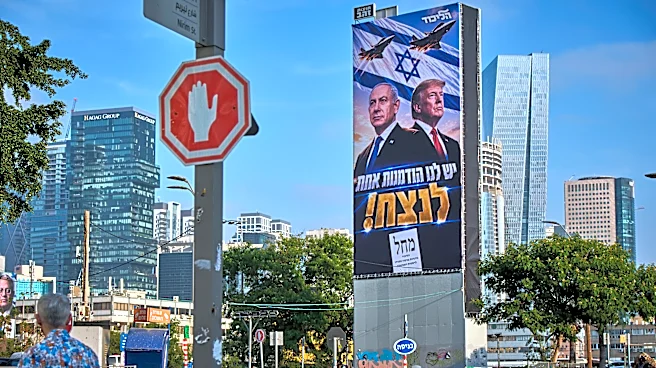






JERUSALEM (AP) — No clear winner has emerged in Israel’s national elections as vote-counting continues, and weeks of negotiations may lie ahead as Prime Minister Benjamin Netanyahu and his main rival, Gadi Eisenkot, will scramble to build a governing coalition.
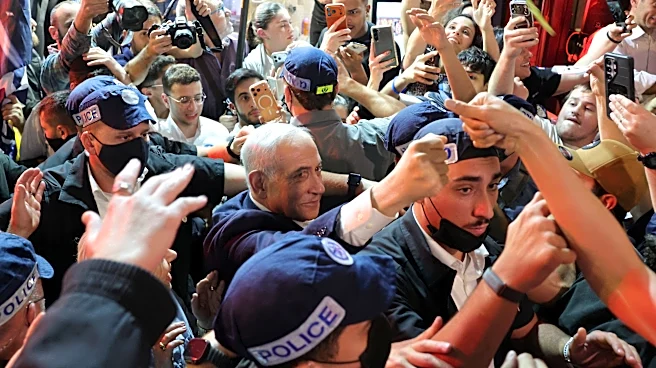
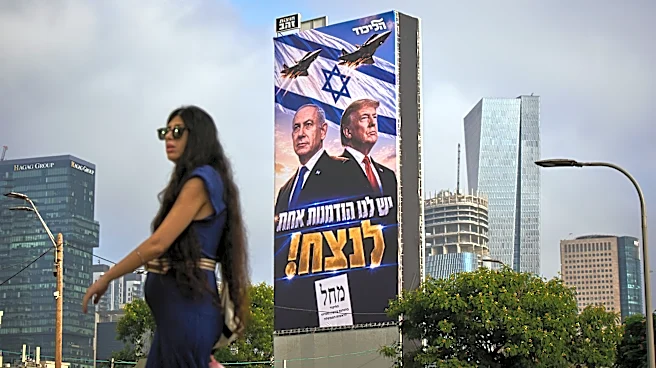
The election was widely seen as a referendum on Netanyahu, the country’s longest-serving prime minister, who gave a defiant speech to his supporters just after 3 a.m. on Wednesday in Jerusalem
despite the unclear results.
With around 70% of the votes counted on Wednesday afternoon, his party, Likud, appears to have gotten the most votes, capturing around 20% of the popular vote. This was a dip from the previous election in 2022, when Likud won 23.4% of the popular vote.
But initial results indicate that support for other parties in Netanyahu's current coalition with far-right parties dropped significantly, putting his bloc below the 61 seats needed to form a government.
Netanyahu’s chief rival, Gadi Eisenkot, has obtained nearly 16% of the popular vote. The count from Israel’s Central Elections Committee does not indicate how many seats each party will have in parliament, the 120-seat Knesset, but projections show Eisenkot would also struggle to form a majority coalition among the opposition parties.
Arab-led parties were the clear winners in Tuesday's elections, with the two parties garnering 14% of the popular vote. Eisenkot has left the door open to partnering with Arab parties under certain conditions, but some of his other likely partners have ruled it out.
It will likely take weeks of haggling or possibly new elections to determine Israel's next prime minister.
Here are some key points to know on Wednesday, the day after the polls closed in Israel.
In Israel, voters choose not individuals but parties. Since no party has ever captured a parliamentary majority on its own, party leaders must agree to come together in a governing coalition.
Initial voting results show that both Netanyahu and Eisenkot's coalition blocs are close, with a slight lead for Netanyahu. But both sides seem to be below the 61 seats needed to form a government with a parliamentary majority.
Final voting results aren’t expected until Thursday and are likely to shift slightly from the initial count.
With no clear winner emerging, the Arab-led parties could play a decisive role in selecting Israel's next prime minister.
In his election night speech, Netanyahu repeated his refusal to create a government relying on Arab parties. Eisenkot has signaled he is ready to work with them under certain conditions, including if they recognize Israel as a Jewish state.
But that could risk alienating some of Eisenkot's partners in the opposition bloc who have vowed not to sit with Arab-led parties under any circumstances.
Israelis are largely opposed to a Palestinian state. No major candidate advocated a return to the long-moribund peace process.
Even Mansour Abbas, a Palestinian Arab politician who leads Ra’am, the first Arab-led party to join a governing coalition in 2021, focused his campaign on concerns about crime in Arab communities.
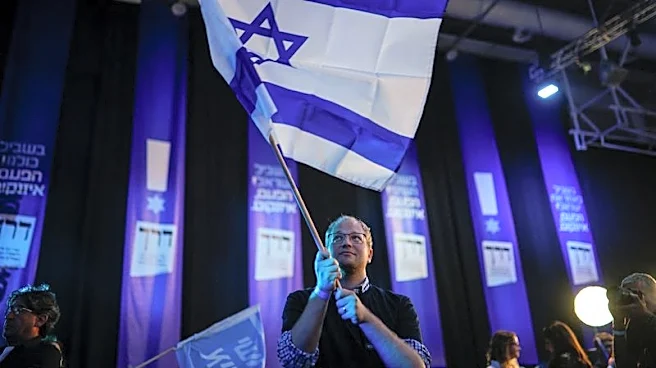
As exit polls were shown on a screen at an Abbas election night event in Sakhnin, an Arab city in northern Israel, Ra'am supporters erupted in celebration.
This election was held against the background of the enduring trauma of the Hamas-led attack on Oct. 7, 2023, when militants killed 1,200 people, mostly civilians, and abducted 251 others, and the ensuing wars in Gaza and beyond.
The deadliest day in Israel’s history featured prominently in the campaigns. Israelis have focused on the security failures surrounding Oct. 7 and the enormous burden on their society, rather than on the humanitarian situation in war-devastated Gaza.
Netanyahu has rejected an investigation into Oct. 7 and blamed the army for the failures that day. His supporters say he led the country back from that difficult day and scored important achievements in wars in Gaza, Lebanon and Iran.
Netanyahu’s opponents said he should be held accountable for the security failures on his watch and have demanded a commission of inquiry.
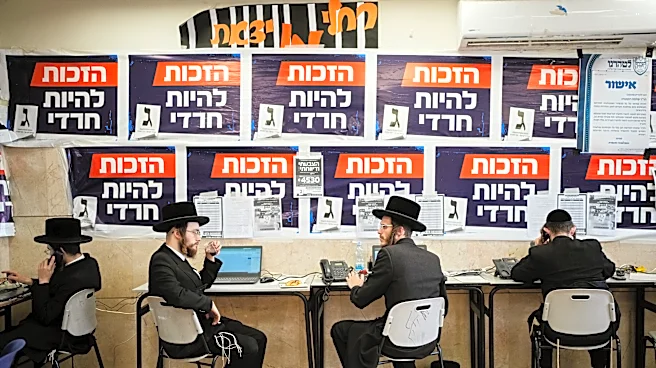
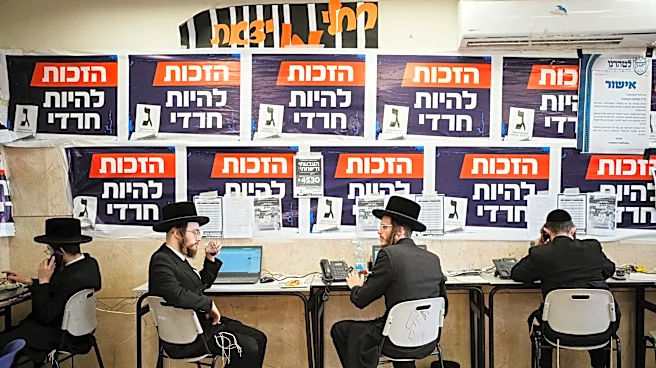
The country has also been deeply divided by exemptions from military service granted to ultra-Orthodox males. These exemptions are especially contentious after three years of wars.
Netanyahu’s governing coalitions have long relied on ultra-Orthodox Jewish parties that have demanded these exemptions remain in place.
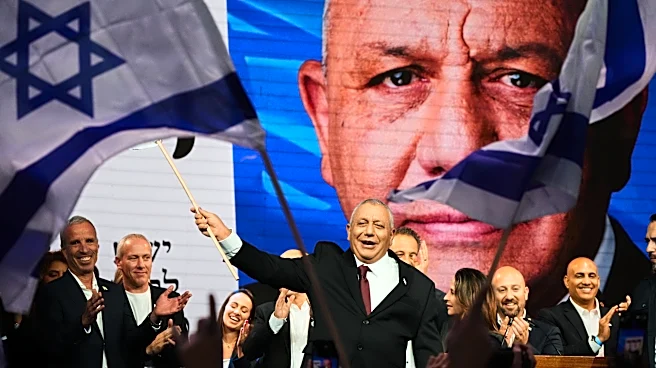
Eisenkot — who lost his son and two nephews to combat in Gaza — has vowed to end the de facto exemptions. He repeated that promise speaking to supporters on Wednesday morning.
The exit polls, which also indicated a drop in support for ultra-Orthodox parties, signaled voter unhappiness over these exemptions.
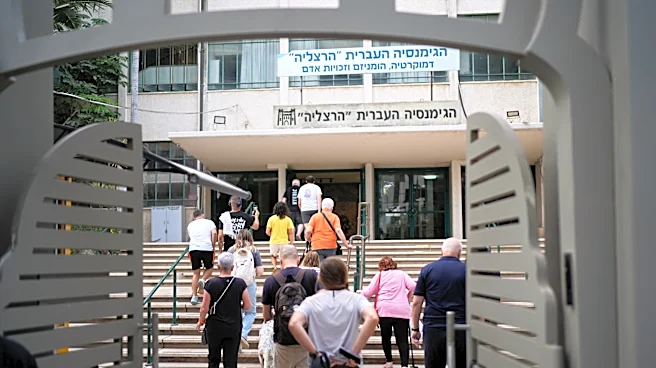
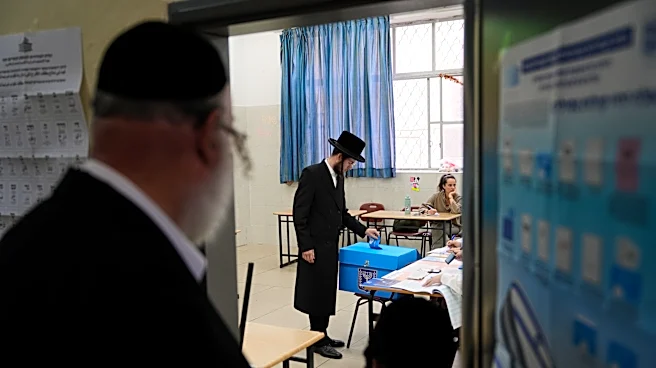
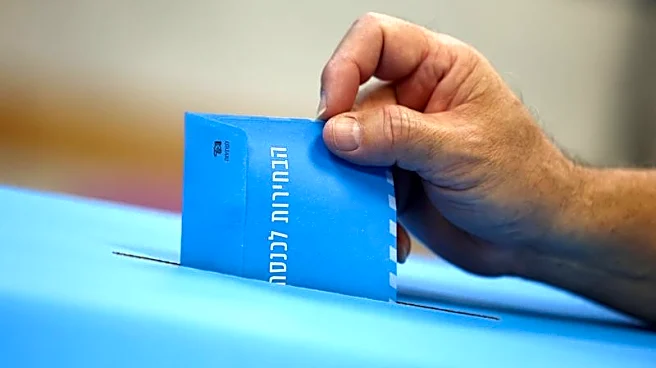
The final update from Israel’s Central Elections Committee put voter turnout at 77.7% of eligible voters as polls closed Tuesday night.
That’s the highest turnout since 1999, and just over seven percentage points higher than in the previous election in 2022, reflecting the high stakes of the election. __
Associated Press writer Melanie Lidman contributed from Tel Aviv, Israel.