



The Plymouth County Sheriff’s Office must hand over hundreds of anonymized health records of immigrant detainees following a Massachusetts court ruling.
Judge James Budreau issued the order, released Wednesday, a month after attorneys for the sheriff and the American Civil Liberties Union of Massachusetts sparred in Suffolk County Superior Court.
“I think this is a decision that is important for government transparency and the rights of immigrant detainees,”
said Dan McFadden, managing attorney at the state ACLU. “(The Sheriff’s Office) cannot exempt itself from public records law simply by contract with ICE.”
Karen Barry, spokeswoman for the Sheriff’s Office, told The Light in an email that the office will comply with the order.
“As the judge acknowledged, this is a novel case,” she said. “We appreciate the court’s guidance.”
The ACLU sued for numerous records generated for immigrant detainees at Plymouth County Correctional Facility, the only immigrant detention facility in Massachusetts. That stems from a contract the department signed with U.S. Immigration and Customs Enforcement in 2024. The ACLU sued after the Sheriff’s Office denied a public records request.
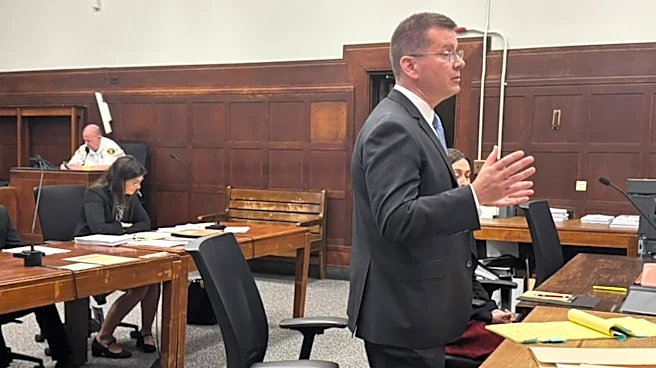
At the July 7 hearing, the Sheriff’s Office relied largely on legal concepts of pre-emption — arguing that federal law prohibited them from issuing the health records. The sheriff’s attorneys argued that federal dominion over immigration law pre-empted the state’s public records law in this case, despite the Sheriff’s Office being a state agency.
Budreau brushed that concern aside in his decision.
“The state law at issue is not, however, an attempt by the Commonwealth to regulate the documentation of immigrants,” he said. “Rather, the question before this court is about the state maintaining records relating to the state’s police powers and oversight of the health and safety of persons held in state facilities.
“The state maintains (its) right to reasonably police and ensure the health and safety of its population,” he went on to say, “and such right is not usurped by the federal regulation at issue here.”
The ACLU had filed a motion for summary judgment to compel the handover of the documents in response to the sheriff’s motion for dismissal. Budreau said the judgment will be entered within 30 days should neither party request a hearing on that motion.
The ACLU argued in court on July 7 that the laws the sheriff cited in its denial of the records were overly broad, and that the sheriff was attempting to circumvent state law.
“It would be pretty extraordinary if Congress tried to interfere in state agencies’ abilities to generate its own record,” McFadden said.
Jessica Kenny, the sheriff department’s attorney, argued that the ACLU could attempt to procure the documents through a federal Freedom of Information Act request to ICE.
“These documents were created pursuant to the (ICE-sheriff agreement), so ICE does have the records,” she said.
When Budreau pressed Kenny on whether the redaction of detainees’ names, alien registration numbers, and any other identifying information could resolve the issue, she quickly assented.
“If those are redacted, there’s no way of connecting that to a detainee?” Budreau asked.
“Presumably no,” Kenny responded.
Plymouth County Correctional Facility began to house immigrant detainees through a contract with the now defunct-Immigration and Naturalization Service in 1998. It is currently the only such facility to house immigrant detainees long term in Massachusetts.
According to its contract with ICE, Plymouth sets aside 250 beds at the facility for immigrant detainees. The agency pays the Sheriff’s Office $215 per day per occupied bed.
The contract also obligates the Sheriff’s Office to create the health records. The ACLU filed its initial records request seeking those records on Dec. 11.
“The availability of medical care in immigration detention facilities is vitally important, as immigration detainees have no other way to seek medical help while detained,” wrote Mackenzie Saunders, an ACLU attorney, in the original complaint. “And for some, not receiving medical care can be a matter of life or death.”
A 2024 report published by the Boston University School of Law and Prisoners’ Legal Services of Massachusetts found through interviews with detainees that Plymouth authorities did not provide detainees with necessary care and services. It recommended the sheriff ensure inmates had timely access to necessary medical care and to discontinue the use of solitary confinement. Another 2024 report by the ICE Office of Detention Oversight found the prison had “no deficiencies” in treatment.
As of Aug. 4, 57 people had died in ICE custody nationwide since Donald Trump’s return to the presidency, according to the National Immigration Project. The ACLU cited the fatalities, and other reports of ill-treatment, in its complaint.
Several of those detainees died of what may appear to be minor problems. On March 2, 56-year old Emmanuel Damas, a Haitian man living in Boston, died at a hospital in Scottsdale, Arizona, while in custody from an untreated tooth infection.
___
This story was originally published by The New Bedford Light and distributed through a partnership with The Associated Press.