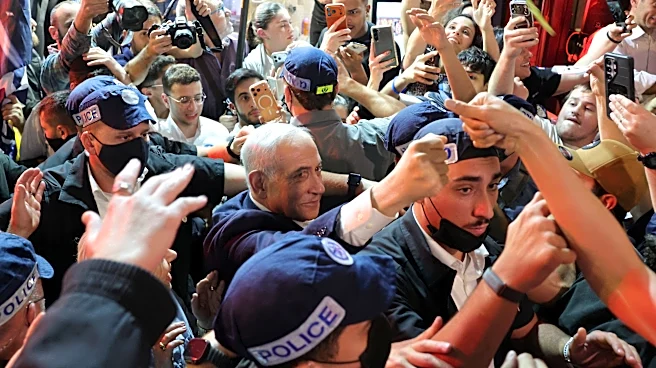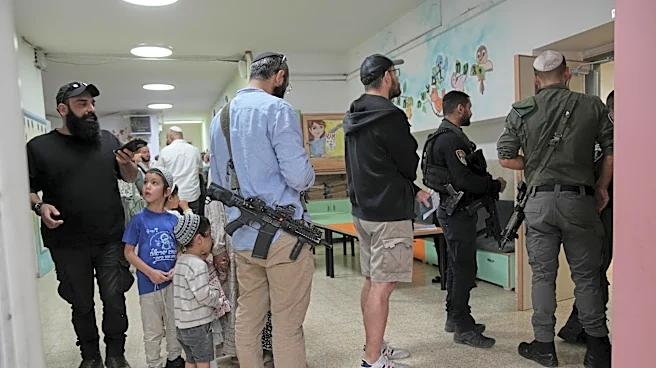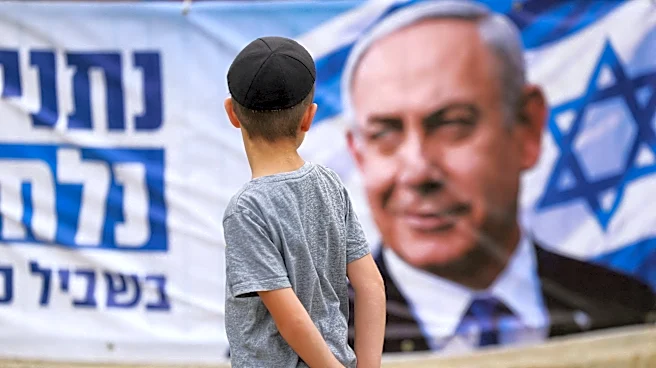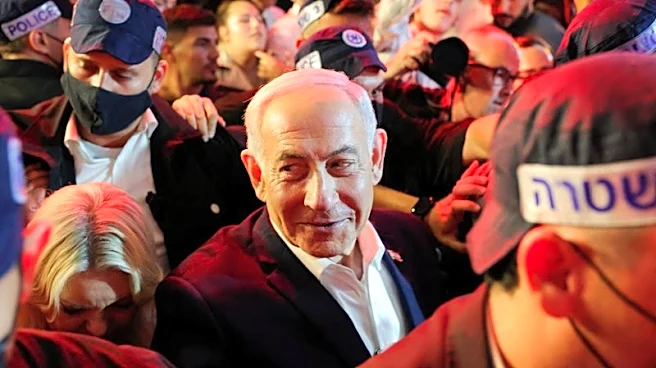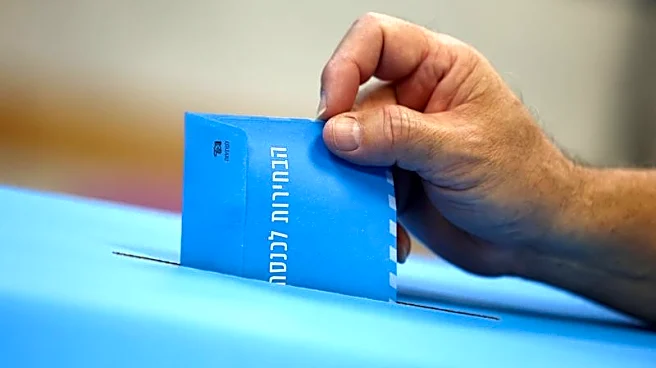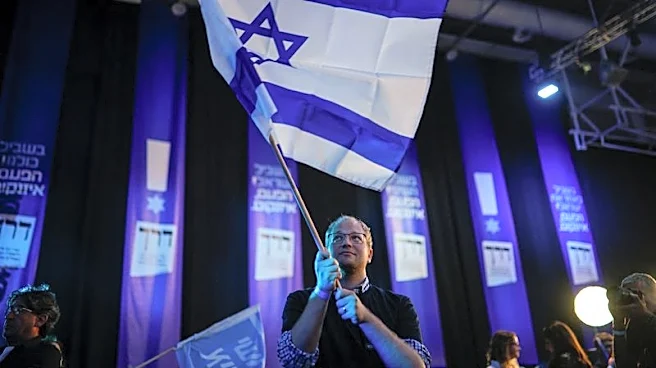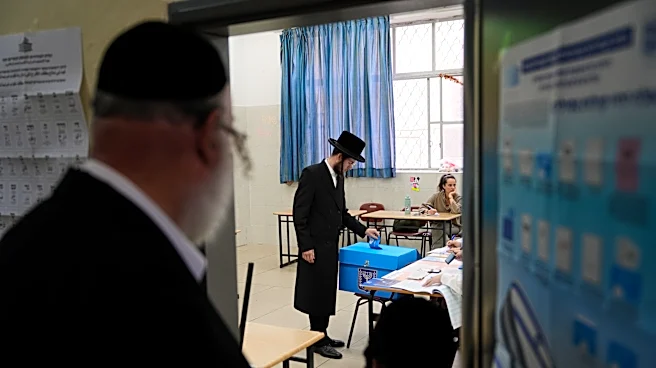





JERUSALEM (AP) — Israel's election has no clear winner, exit polls indicated late Tuesday just after polls closed.
The election is widely seen as a referendum on the country’s longest-serving prime minister, Benjamin Netanyahu, who has been in a tight race with his chief rival, former military chief of staff Gadi Eisenkot.
Exit polls released by major Israeli TV stations suggest that neither Netanyahu's nor Eisenkot's bloc secured the 61-seat parliamentary
majority needed. No single party has ever won a majority in parliament, known as the Knesset.
The jostling for power between parties large and small to achieve a governing coalition and name the next prime minister could take weeks or even months. And if it fails, there could be another round of elections. Like all surveys, exit polls are subject to potential error and final results, expected in the coming days, may vary from the exit polls.
Here are some key points to know as the polls closed in Israel on Tuesday night.
Two hours before polls closed, the latest update from Israel’s Central Elections Committee put turnout at 74.3% of eligible voters. That’s eight percentage points higher than at the same time, 8 p.m., in the previous election in 2022.
In its update, the committee said the latest turnout figures were the highest since those recorded at the same hour in the 1988 elections.
This election was held against the background of the enduring trauma of the Hamas-led attack on Oct. 7, 2023, when militants killed 1,200 people, mostly civilians, and abducted 251 others, and the ensuing wars in Gaza and beyond.
The deadliest day in Israel’s history featured prominently in the campaigns. Israelis have focused on the security failures surrounding Oct. 7 and the enormous burden on their society, rather than on the humanitarian situation in war-devastated Gaza.
Around 68% of Jewish Israelis called their attitudes toward that day a central factor in deciding which party to support, according to the Israel Democracy Institute, a Jerusalem think tank.
Netanyahu has resisted calls for a commission of inquiry and continues to strike a hawkish tone on all fronts, including Iran. His opposition focuses on his role in the security breakdown on Oct. 7 and his efforts to exempt ultra-Orthodox Jews from military service, a policy that has angered the broader public during a time of protracted wars.
As the country remains on a war footing amid tenuous ceasefires, about a quarter of Jewish voters polled by the Israel Democracy Institute ranked mandatory military service as a key factor.
Netanyahu’s governing coalitions have long relied on ultra-Orthodox Jewish parties that demand exemptions from military conscription for young men engaged in religious studies.
Netanyahu’s rival Eisenkot — who lost his son and two nephews to combat in Gaza — has vowed to end the de facto exemptions.
More than three dozen parties competed in the election, and roughly one dozen are expected to win enough seats to enter parliament.
Netanyahu, 77, leads the nationalistic Likud, Israel’s largest party. His legacy is on the line.
Eisenkot, 66, spent four decades rising through the ranks of Israel’s military. He now leads the largest opposition party — the centrist Yashar — after entering politics in 2022.
Other leading candidates include Naftali Bennett, a 54-year-old former prime minister and onetime aide to Netanyahu who has formed a joint ticket with his centrist partner, Yair Lapid.
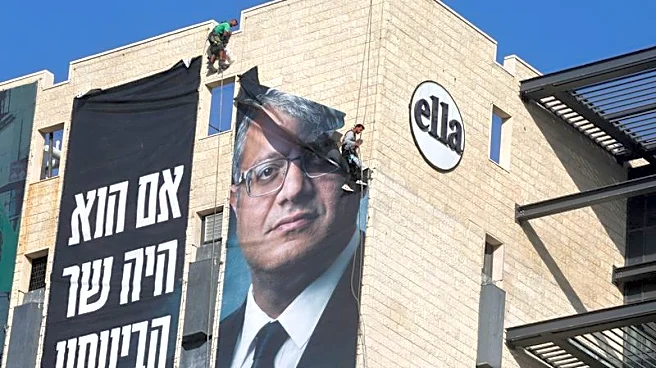
Itamar Ben-Gvir, 50, is Israel’s national security minister and leader of a far-right ultranationalist party in the current coalition.
Yair Golan, 64, is a former general who leads the Democrats, a center-left party that favors the establishment of a Palestinian state.
Israelis are largely opposed to a Palestinian state. No major candidate advocated a return to the long-moribund peace process.
Even Mansour Abbas, a Palestinian Arab politician who leads Ra’am, the first Arab-led party to join a governing coalition in 2021, centered his campaign on concerns about crime in Arab communities.
Following reports of a high early voting turnout, Netanyahu, who has a long history of using scare tactics to rally his base, exhorted his supporters to vote so as not to “leave this battle in the hands of the left and the Arab parties, who seek to bring an end to the Jewish state.”
The long-standing alliance between the United States and Israel has been tested by the unresolved war with Iran, which the two countries launched together on Feb. 28.
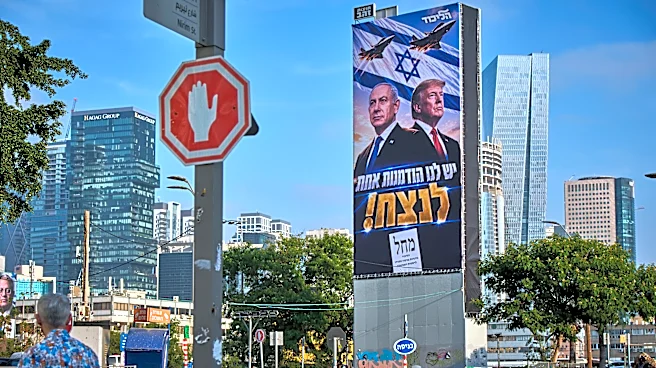
U.S. President Donald Trump endorsed Netanyahu for reelection last week. The U.S. midterm election is on Nov. 3, and Israel – from its treatment of Palestinians to its wartime conduct in Gaza – features prominently in campaigns in the U.S., where the Iran war is unpopular.
Israel’s standing has plummeted in much of the world as a result of its war in Gaza, and repairing its image and relationships globally is a priority for many Israelis who live abroad and returned to vote, as well as for Jews worldwide.