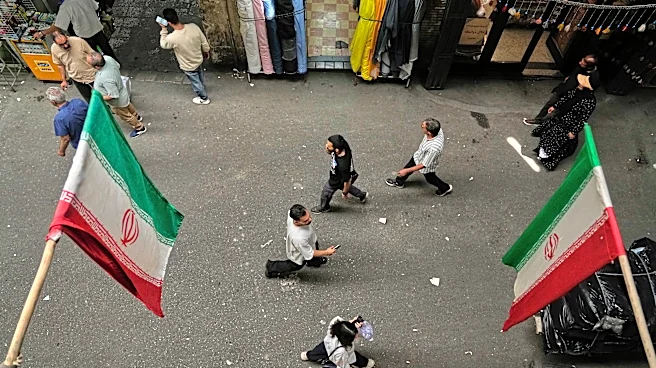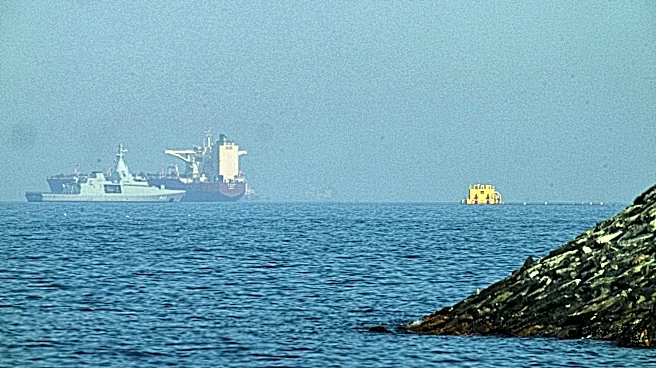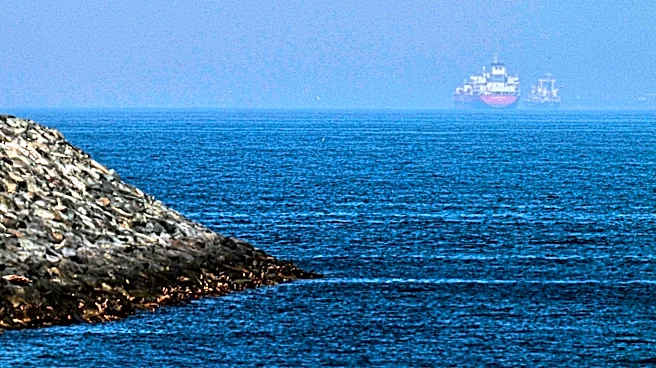







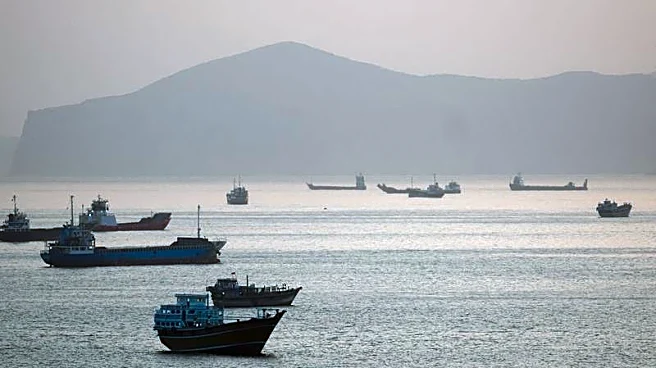

DUBAI, United Arab Emirates (AP) — The United States kicked off an effort to “guide” stranded ships from the Iran-gripped Strait of Hormuz, as it tries to counter economic disruptions that outlasted the peak of fighting with no peace deal in sight.
A day after U.S. President Donald Trump announced what he called “Project Freedom,” the Joint Maritime Information Center said Monday that the U.S. had set up an “enhanced security area” south of typical
shipping routes and urged mariners to coordinate closely with Omani authorities “due to anticipated high traffic volume.” The strait sits between Iranian and Omani territory.
The center warned that passing close to the usual routes, known as the traffic separation scheme, “should be considered extremely hazardous due the presence of mines that have not been fully surveyed and mitigated.”
The U.S.-led maritime task force’s announcement marked the start of the effort to revive traffic and restore confidence among commercial vessels transiting the strait.
The disruption of the waterway through which roughly one‑fifth of the world’s oil typically passes has become one of the most enduring consequences of the war that the U.S. and Israel launched Feb. 28. It has squeezed countries in Europe and Asia that depend on Persian Gulf supplies and added new volatility to energy prices for households and businesses worldwide.
Announcing the ship shepherding effort in a social media post Sunday, Trump promised “neutral and innocent” countries "that we will guide their Ships safely out of these restricted Waterways, so that they can freely and ably get on with their business.”
U.S. Central Command said the initiative would involve guided-missile destroyers, more than 100 aircraft and 15,000 service members. The Pentagon did not immediately answer questions about how they would be deployed.
Ships and seafarers, many on oil and gas tankers and cargo ships, have been stuck in the Persian Gulf since the war began. Crew members have described to The Associated Press seeing intercepted drones and missiles explode over the waters as their vessels run low on drinking water, food and other supplies.
“They are victims of circumstance,” Trump wrote, describing the effort as a humanitarian gesture “on behalf of the United States, Middle Eastern Countries but, in particular, the Country of Iran.”
Trump also sounded a warning: “If, in any way, this Humanitarian process is interfered with, that interference will, unfortunately, have to be dealt with forcefully.”
As more ships reported coming under attack Sunday, Iran’s state-run IRNA news agency called Trump's announcement part of his “delirium.” Ebrahim Azizi, head of the national security commission of Iran's parliament, said on X that any interference in the strait would be seen as a ceasefire violation.
Trump spoke hours after Iran said it was reviewing the U.S. response to its latest proposal to end the war and made clear these are not nuclear negotiations. The fragile three-week ceasefire appears to be holding.
Tehran is reviewing the U.S. response to its latest proposal to end the war, Iran’s judiciary Mizan news agency cited Foreign Ministry spokesman Esmail Baghaei saying Sunday.
But “at this stage, we have no nuclear negotiations,” Baghaei said. Iran’s nuclear program and enriched uranium have long been the central issue in tensions with the U.S., but Tehran would rather address it later.
Iran’s proposal wants other issues resolved within 30 days and aims to end the war rather than extend the ceasefire, according to Iran’s state-linked media. Trump on Saturday said he was reviewing the proposal but expressed doubt it would lead to a deal.
Iran’s 14-point proposal calls for the U.S. lifting sanctions on Iran, ending the U.S. naval blockade of Iranian ports, withdrawing forces from the region and ceasing all hostilities, including Israel’s operations in Lebanon, according to the semiofficial Nour News and Tasnim agencies, which have close ties to Iran's security organizations.
Iranian officials have vowed the strait won't return to its prewar conditions and moved to impose charges on transiting ships, but the U.S. has warned shipping companies they could face sanctions for paying Iran in any form.
The U.S. naval blockade since April 13 is depriving Tehran of oil revenue it needs to shore up its ailing economy. The U.S. Central Command on Sunday said 49 commercial ships have been told to turn back.
“We think that they’ve gotten less than $1.3 million in tolls, which is a pittance on their previous daily oil revenues,” U.S. Treasury Secretary Scott Bessent told Fox News on Sunday, adding that Iran's oil storage is rapidly filling up and "they’re going to have to start shutting in wells, which we think could be in the next week.”