

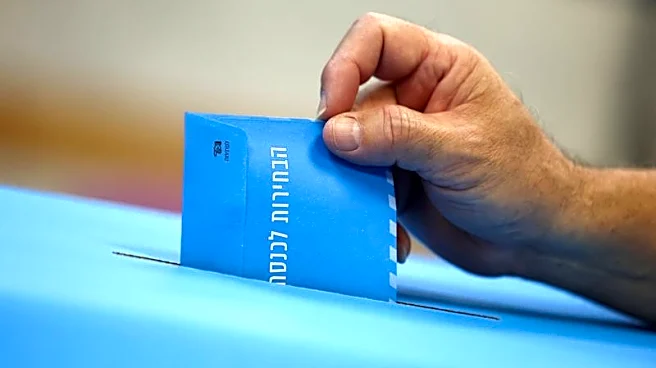
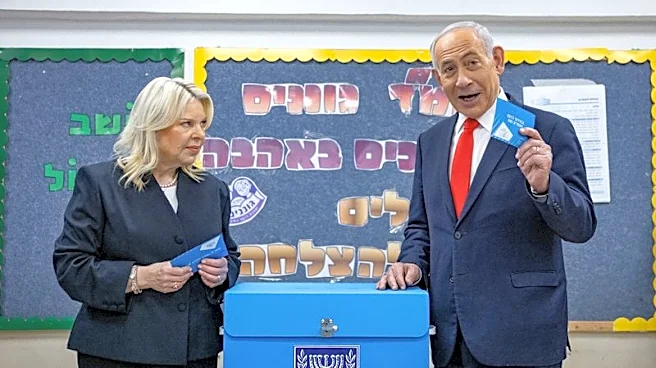
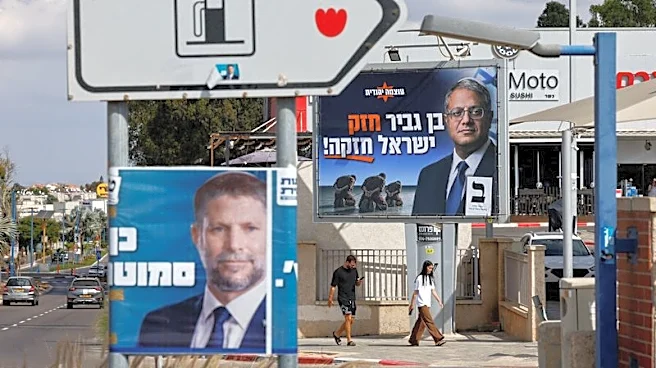

Israel’s election ended Tuesday with no clear winner, exit polls indicate, likely setting off weeks of jockeying before a leader is declared. Exit polls released by major Israeli TV stations suggest that neither Netanyahu’s political bloc nor that of his main rival, former military chief Gadi Eisenkot, secured the 61 seats needed for a parliamentary majority.
Israelis were voting in a tense national election widely seen as a referendum on Netanyahu's
leadership since the Hamas-led Oct. 7, 2023, attack on Israel and the wars that have since shaken the Middle East.
Israelis vote for parties, which then form alliances to create a majority coalition. No single party has ever won a 61-seat majority in the 120-member parliament, known as the Knesset.
Opinion polls suggest a tight race, with no clear winner expected, setting the stage for weeks or even months of negotiations among around a dozen parties expected to win seats in the Knesset.
Here is the latest:
Israel’s election ended Tuesday with no clear winner, exit polls indicate, likely setting off weeks of jockeying before a leader is declared.
An inconclusive result would leave Israel in political limbo after the country’s first national election since Hamas’ Oct. 7, 2023, attack. The vote served as a referendum on Prime Minister Benjamin Netanyahu’s wartime leadership.
Exit polls released by major Israeli TV stations suggest that neither Netanyahu’s political bloc nor that of his main rival, former military chief Gadi Eisenkot, secured the 61 seats needed for a parliamentary majority.
Like all surveys, exit polls are subject to potential error. Preliminary results are expected in the coming hours. Final results are expected in the coming days and may vary from the exit polls.
▶ Read more
Polling stations across Israel have closed, despite a request by Netanyahu’s Likud and other right-wing parties to extend voting past the planned 10 p.m. cutoff.
The election has seen high turnout all day despite some inclement weather, and the parties have headed to campaign events to watch the results roll in.
Still, the country may not know who its next prime minister is for weeks or even months.
Supporters of the Joint List of Arab parties were hopeful that high turnout in Arab-majority cities would help them win more seats in Israel’s Knesset.
Former lawmaker Osama Saadi applauded how turnout was high among both Jewish and Palestinian citizens of Israel. But he echoed appeals from right-wing parties for supporters not to let up. At an emergency news conference, he urged people to keep voting up to 10 p.m.
The Joint List has made opposing the war in Gaza and settlements in the occupied West Bank centerpieces to its campaign. Those positions that could alienate Jewish-led parties and make it more difficult to form a coalition with them.
But party leaders have signaled they would consider supporting a government led by Netanyahu’s opponents from outside if that support were needed to oust the veteran prime minister.
“Our people are determined to sweep out this government once and for all,” Saadi said.
Prime Minister Benjamin Netanyahu framed Israel’s election as a “war for our home” in the final half hour of voting.
He made a plea for voters to immediately head to the polls, claiming his right-wing coalition could lose control of the government if more supporters don’t turn out.
“Call your grandparents, your aunt and uncle, your neighbors. If someone hasn’t gone, tell them there’s still time,” he said in a video posted to social media.
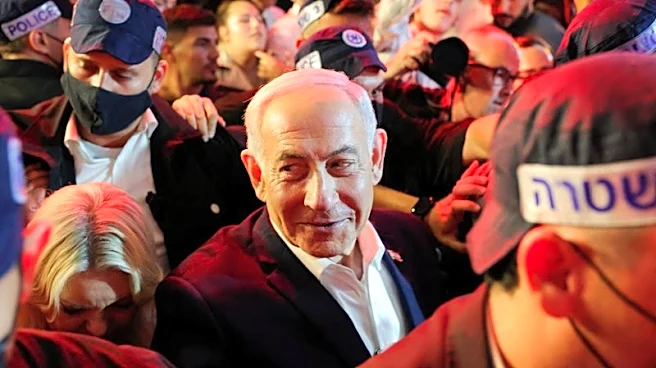
The stakes are high for Netanyahu, Israel’s longest-serving prime minister. The election results could secure him another term, or likely end his political career.
Less than an hour before polls were set to close, Netanyahu’s Likud party headquarters was mostly empty.
Journalists streamed into a convention center in Jerusalem where the party will gather to watch the exit polls when the voting ends.
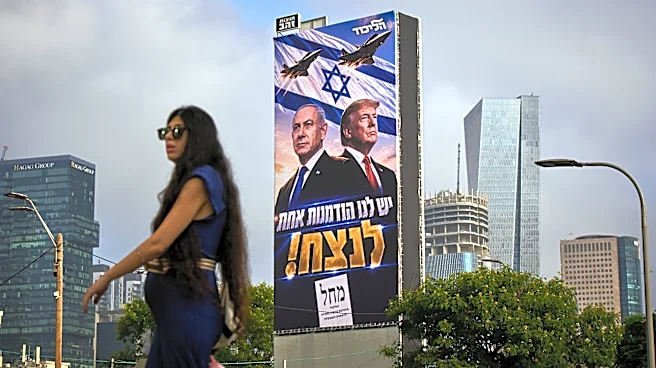
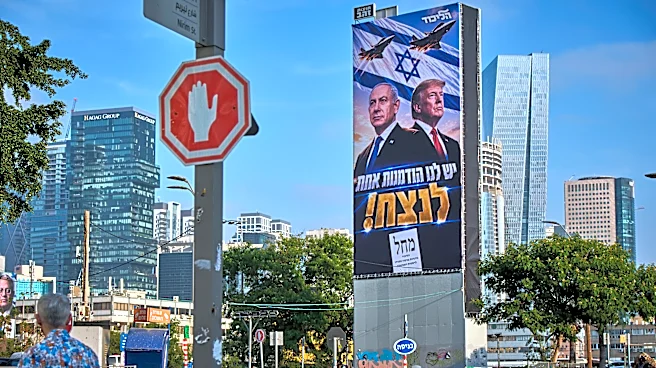
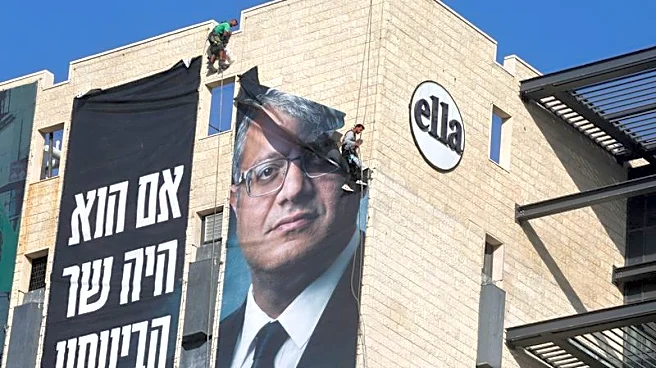
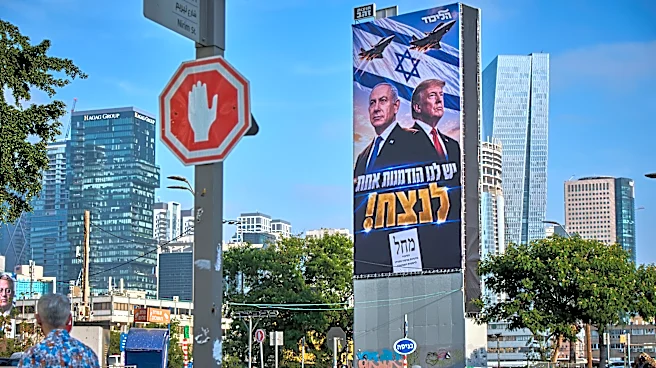
A large screen aired Netanyahu’s campaign ads on repeat including some that mocked journalists. Others showed Netanyahu with U.S President Donald Trump. Signs hung from the wall with the party’s name in Hebrew. With no Likud members or supporters, some journalists began interviewing other media.
The headquarters of Netanyahu’s main rival, Gadi Eisenkot. was similarly lacking a crowd.
Less than an hour before polls close, Netanyahu’s chief rival for control of the government, Gadi Eisenkot, urged voters in a statement to choose “enlistment over draft evasion.”
A former military chief of staff who lost his son and two nephews in the war in Gaza, Eisenkot has made the issue of the exemption from the military draft for ultra-Orthodox men a central issue in his campaign.
Eisenkot also called for “responsibility over evading responsibility,” a not at all subtle nod to Netanyahu offloading blame for Hamas’ Oct. 7, 2023 attacks onto senior Israeli officials, rather than taking responsibility as prime minister for the deadliest day in Israel’s history.
The latest update from Israel’s Central Elections Committee puts voter turnout at 74.3% of eligible voters by 8 p.m. local time. That’s eight percentage points higher than at the same time in the previous election in 2022.
The elections have seen high turnout all day. In its update, the committee said the latest turnout figures were the highest since ones recorded at the same hour in 1988 elections.
One young voter, Michal Shiloh, was on the streets of Jerusalem helping to encourage last-minute voting for candidates like the far-right Bezalel Smotrich.
She and friends cheered for Netanyahu, but Shiloh acknowledged the high Arab voter turnout, “unfortunately.”
“We don’t want the government with the Arab people,” she said, reflecting a rightward shift among some younger Israelis.
The request by Netanyahu’s Likud and other right-wing parties to extend voting past the planned 10 p.m. cutoff has been denied, Israel’s Central Elections Committee said.
The committee found “the current circumstances do not justify an extension.” It added that all voters in line at the polls by 10:00 p.m. would be able to cast their ballot.
“High nationwide turnout across all sectors of society reflects strong public engagement in the democratic process, and no need to extend voting hours was identified,” the committee said in a statement.
Netanyahu’s rivals said the request was an effort to lay the groundwork to challenge the election results later on.
Heading into the final hours of voting, Israel’s Central Elections Committee’s latest update shows nearly 67% of eligible voters cast their ballots by 6 p.m. local time. That’s the highest turnout by that point since at least 1973 and nine percentage points higher than at the same time during the last elections in 2022.
Voting is set to end at 10 p.m. local time.
Netanyahu’s party, Likud, has petitioned to extend voting hours past 10 p.m. His rival, Gadi Eisenkot, has come out opposing the bid.
“No exceptional incident has occurred that would justify granting this request, which is intended to lay the groundwork for allegations challenging the integrity of the election, continuing the lies Netanyahu has been spreading since this morning,” Eisenkot said in a statement.
A loss for Netanyahu could mean the end of his decades-long career. He is locked in a tight race with Eisenkot, his former military chief of staff.
Election Day is a national holiday in Israel, with schools, many businesses and government offices closed. Many Israelis took advantage of the mid-week vacation to barbecue with their families, hike, or hang out at the beach before threatening weather forced them inside.
More than 90,000 people visited the country’s national parks, according to Israel’s Nature and Parks Authority, though flooding in the south forced the closure of several popular parks. In Tel Aviv, people thronged to cafes and parks, and a few braved the blustery beach.
In Tel Aviv, one group of friends held a picnic and tried to recruit new members for their women’s beach footvolley team. “I really hope Bibi won’t get chosen again, that there will be real change, socially, economically, we deserve something different,” said Gal Elian, a 28-year-old architect from Tel Aviv, using a nickname for Netanyahu.
Although her whole family votes for Netanyahu, Elian said it was clear to her she needed to vote for whichever party could remove him from power.
Voter turnout has increased significantly in liberal strongholds and among voters in Arab-majority villages, according to official figures and expert Ofer Kenig.
That could spell trouble for Netanyahu’s coalition, explained Kenig, a research fellow at the Jerusalem-based think tank Israel Democracy Institute.
“The picture right now is looking encouraging for the bloc of change,” Kenig said, referring to the opposition parties. But he said Netanyahu has managed last minute upsets before.
Small parties could also be adversely impacted by the higher turnout, making it harder for them to pass an electoral threshold needed to enter parliament. If they don’t, the votes cast for them go to waste and the political bloc they are aligned with will lose out.
Hanna Swaid, a Palestinian Christian from the Galilee and former Knesset member, said four years of simmering anger toward Netanyahu was pushing turnout to record levels among both Palestinian and Jewish citizens of Israel.
Palestinian citizens make up slightly more than one-fifth of Israel’s population, but their parties have never won proportional representation in the Knesset. Even if they don’t win one-fifth of seats, picking up several could be decisive in a tight race.
Questions about Arab voter turnout have long been both an important factor in election results and a political weapon to scare and mobilize right-wing voters, Swaid said.
“Palestinian citizens want to change things and kick out the extremist ministers,” he said, referring to National Security Minister Itamar Ben-Gvir and Finance Minister Bezalel Smotrich. “The only way to do that in a democratic state — as far as you can still call Israel that — is elections.”
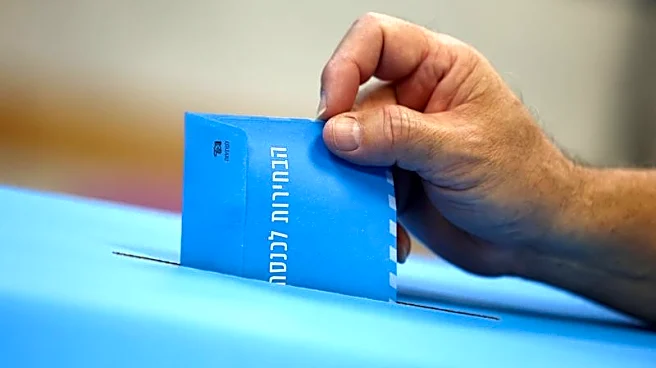
Almost all Israelis vote in person — unlike voters in some other countries that allow mail-in or absentee voting — so many are voting in the rain today. Israel’s meteorological service reported stormy weather was hitting parts of the country, warning that conditions could worsen into thunderstorms or flash floods in some parts of the country. Thunder rolled over Jerusalem Tuesday afternoon.
Studies show that voter turnout is driven primarily by other factors. But Florida State University political scientist Yusaku Horiuchi said research suggests rain can depress voter turnout in certain contexts.
“Even a relatively small weather-related turnout effect could matter,” Horiuchi, who has researched weather and voting patterns in the United States and Japan, said.
There is little evidence that rain consistently changes election outcomes, and weather’s impact likely depends on other context. But Horiuchi said it’s possible that bad weather could keep undecided or less politically engaged voters home.
Right-wing parties had done little campaigning for votes in Arab-majority communities ahead of Israel’s election. But for some, that changed Tuesday.
Itamar Ben-Gvir of the Otzma Yehudit party and Orit Strock of the Religious Zionism party both visited Arab towns Tuesday to film videos warning their supporters about high turnout among Palestinian citizens of Israel.
“This mad rush must wake us up,” Strock said, standing behind policemen in the town of Rehat.
Ben-Gvir visited the northern Israeli town of Kafr Qasem to make a similar plea. Before Election Day, he had also filmed social media videos at the sites of Palestinian home demolitions in east Jerusalem, a shootout in the occupied West Bank and at Ofer Prison, where he boasted about the increasingly restrictive conditions Palestinian detainees have faced since he became national security minister in 2022.
“The voter turnout in the Arab sector is insane. Absolutely insane,” Ben-Gvir said in a video posted Tuesday afternoon, without providing evidence. “If you want this country to remain Jewish and Zionist … then get out and vote!”
The first downpour in months drenched Jerusalem in the evening, sending men in an ultra-Orthodox neighborhood under shelter.
At nearby Mahane Yehuda market, where Netanyahu campaigned to cheers less than a week ago, banners drooped under the heavy rain.
Nearly 56% of eligible voters cast their ballots by 4 p.m. local time, according to Israel’s Central Elections Committee.
Acting director-general of the Elections Committee Dean Livne said the turnout was the highest for the hour since officials began recording those figures in 1973. It’s also 8.2% higher than the same time in the 2022 elections.
It was too early to tell which party the high turnout might benefit. Voting is set to continue until 10 p.m. local time.
Israeli police are investigating an attack on a campaign booth for a party running to wrest control of the government from Netanyahu.
A video of the attack shows a man approaching the booth and punching two activists for The Democrats, a left-wing party led by Yair Golan, who favors partnering with Arab parties to form a majority government.
One man was knocked unconscious, according to The Democrats, who identified the attacker as a supporter of Itamar Ben-Gvir.
“We will not allow anyone to disrupt the proper conduct of the election process, and we will neither be deterred nor intimidated by threats and attacks,” The Democrats said in a statement.
A police spokesperson said the agency had identified a suspect and “takes any incitement to violence or threats seriously.”
A spokesperson for Ben-Gvir did not respond to a request for comment.
The attack followed police seizing a knife from a man in Tel Aviv earlier Tuesday, in an alleged attempt to stab Golan.
“There is no difference between Netanyahu and Eisenkot,” said Mahmoud Hamada, a resident of Khan Younis, referring to former military chief Gadi Eisenkot, a leading opposition challenger to the prime minister. “It is all part of a well-known Israeli policy.”
Ahmad Qanan, also from Khan Younis, said both candidates followed the same policies and that Palestinians could not expect genuine peace or the return of displaced people to their homes.
A ceasefire that took effect in October 2025 has failed to stop Israeli strikes. More than 1,500 Palestinians have been killed since it began, according to Gaza’s Health Ministry, while the overall death toll from the war has surpassed 74,000.
Hasan al-Masri, displaced from Beit Hanoun, desperately hoped the elections would bring change to Gaza, saying, “We pray to God that these elections bring a positive outcome for us. We have been utterly devastated; nothing remains. They have killed our children, destroyed our homes, and everything we had is gone.”
Settler leaders in Netanyahu’s right-wing government echoed his remarks about the threat of Palestinian citizens of Israel turning out to vote in high numbers.
National Security Minister Itamar Ben-Gvir and Finance Minister Bezalel Smotrich both homed in on turnout in Arab-majority towns on social media, warning their supporters about the implications and urging them to vote. Ben-Gvir warned that high Arab turnout meant his supporters could “lose the country,” while Smotrich said he was organizing an emergency meeting at his campaign headquarters over concerns about the turnout. Neither cited evidence about turnout in Arab-majority communities.
Israelis of Palestinian Arab descent are full citizens under the law and have the right to vote. But such tactics aren’t new for Netanyahu or Israel’s right.
Families displaced by Israel’s ongoing military operation in the occupied West Bank said they had become victims of Netanyahu’s efforts to project strength during the elections.
Israel launched a military operation throughout the West Bank after Palestinian gunmen shot and killed two Israeli soldiers at a checkpoint outside Hebron on Friday. Troops subsequently cleared the suspected gunmen’s neighborhood, displacing thousands of people in a move that Palestinians said amounts to collective punishment.
“We are human beings. We have our dignity, our homes and our pride, and we will not accept being humiliated to this extent,” said Khawla Shawar, one woman whose family was displaced.
With checkpoints and military gates closed, the army has kept Hebron sealed off from the West Bank. Local officials say 780 families — almost 5,000 people — have been displaced. Israel’s military did not respond to questions about the operation’s objectives.
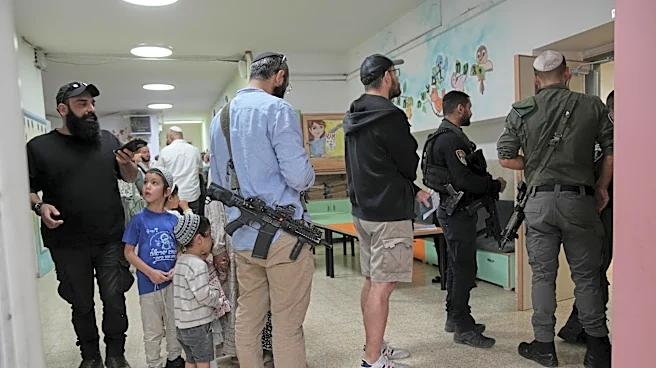
At a polling place in Israeli-annexed east Jerusalem, two very different sectors of society were turning out to vote. Palestinian citizens of Israel and religious Jews filtered into the building to cast their ballots.
For decades, Israel’s government has sought to increase Jewish presence in this part of the city. Palestinians who live there may seek Israeli citizenship but most do not and those who don’t cannot vote.
Most Palestinians who spoke to the AP said they had voted for minority Arab parties, which could have a potentially powerful role in coalition negotiations.
Religious Jewish Israelis voting there expressed support for the issues important to them; some voted for increased West Bank Jewish settlements and others in favor of exemptions for ultra-Orthodox Jews from military conscription.
A ceasefire agreement in Gaza has not stopped what a group of independent experts commissioned by the U.N. says is genocide carried out by Israel in the territory, the team said in a new report Monday. They also accused Israeli forces of crimes against humanity, including torture and rape, in the West Bank.
The report Monday said Israel was “continuing to commit genocidal acts with the genocidal intent to destroy, in whole or in part, the Palestinians in Gaza.”
In response, Israel’s mission in Geneva called for the commission’s dissolution and said on X the report marked an example of the body’s “misinformation campaign to demonize the state of Israel and portray its very existence as criminal.”
Israel has long criticized the commission’s output and denied accusations of genocide in Gaza and sexual assault by its forces.
Almost 45% of Israelis have voted by 2 P.M., according to Israel’s Central Elections Committee, the highest voter turnout by this time in more than 50 years. Voter turnout is six percentage points higher than this time in the previous elections in 2022.
Numbers were similar for soldiers. 48% of soldiers had voted by mid-afternoon, compared with 44% by this time in the previous election, according to the Israeli military.
Acting director-general of the Elections Committee, Dean Livne, noted that several polling stations are facing exceptionally long lines, which he attributed to unprecedented voter turnout.
Israelis are turning out to vote in high numbers despite rainfall and blustery weather in parts of the country. The meteorological service said at midday that thunderstorms were developing in several parts of central and southern Israel, with a risk of flash floods.
Police reported several road closures in the south.
Palestinian citizens, whose families remained in Israel after the 1948 war surrounding the country’s creation, make up 20% of the population but have historically turned out to vote at lower rates than Jewish citizens. In Israel’s most recent election in 2022, roughly 53% voted.
Leaders of the two Arab-led slates running are hoping that frustration with Prime Minister Benjamin Netanyahu will motivate voters to turn out.
Turnout could have multiple effects on the election result and whether Netanyahu retains power.
The higher the turnout in Arab communities, the more seats their parties could win. It could also raise the number of votes required to clear the 3.25% threshold that parties must surpass to enter the Knesset, making it harder for smaller parties to win seats. That could prove decisive for smaller parties at risk of not qualifying, including Yoav Hendel’s center-right Reservists-Economic Party and Ofer Winter’s far-right Amcha Yisrael party.
If anyone would partner with them.
Netanyahu and his chief rivals have said they won’t form a coalition with any other Arab-led party after the election – even if that means months of gridlock and another round of voting.
It’s a measure of where Israel’s long-marginalized Arab minority finds itself three years after the Oct. 7 attack. Their speech is heavily policed, their leaders have been branded as traitors, and at one point their parties were outlawed before a court lifted the ban. Yet in a tight race, Arab politicians are poised to play a potentially decisive role in choosing the next prime minister — a rare opportunity to wield their influence.
Lotem Beiden Ben Aharon, 42, said she voted for Yair Golan and the Democrats because of healthcare and education. She said that under Netanyahu’s government, doctors’ appointments have become harder to come by, as more and more physicians “run away from Israel.” She moved with her daughter Geffen, 4, from the city of Rehovot to Tel Aviv for better schools, but she said teachers are being poorly paid.
“Golan seems like the best option for a change here in Israel," she said, “I’m probably going to be disappointed.”