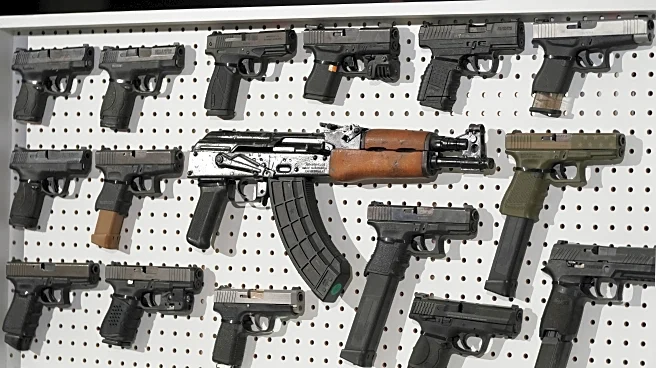




Canada’s strict gun laws include a ban on assault-style firearms and a national freeze on the sale, purchase and transfer of handguns.
The Canadian government has banned more than 2,500 makes and models of assault-style firearms in recent years.
Former Prime Minister Justin Trudeau announced an immediate ban of more than 1,500 models on May 1, 2020, two weeks after a gunman killed 22 people in Nova Scotia. The ban included two weapons used by that gunman as
well as the AR-15 and other weapons that have been used in a number of mass shootings in the United States. “Canadians need more than thoughts and prayers,” he said at the time.
More than 12,000 guns were collected and destroyed as part of a compensation program for businesses that ran between November 2024 and April 2025. A similar program for individuals opened last month to compensate gun owners who voluntarily turn in banned weapons by March 31.
Those who do not participate must dispose of or permanently deactivate their prohibited guns before an amnesty period ends Oct. 30.
The national freeze on the sale and purchase of handguns took effect in October 2022. It does not apply to those who already were authorized to carry handguns and those involved in shooting sports covered by the International Olympic Committee or International Paralympic Committee.
Such changes are part of what government officials describe as a comprehensive approach to combatting gun violence. Other recent efforts include implementing lifetime background checks and investing in law enforcement and border operations.
The government also has helped fund community projects that raise awareness of “Red Flag” laws that allow anyone to apply to courts to temporarily prevent access to firearms for those who pose a danger to themselves or others.