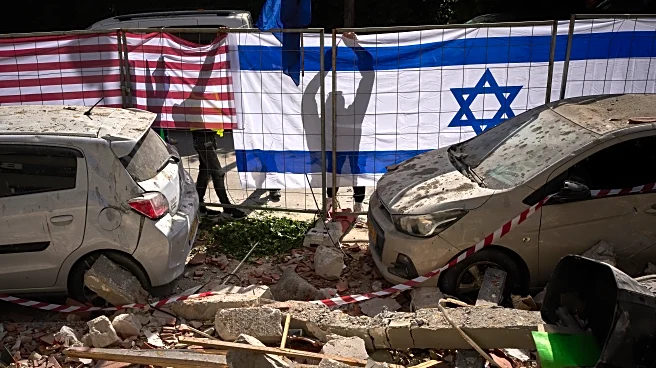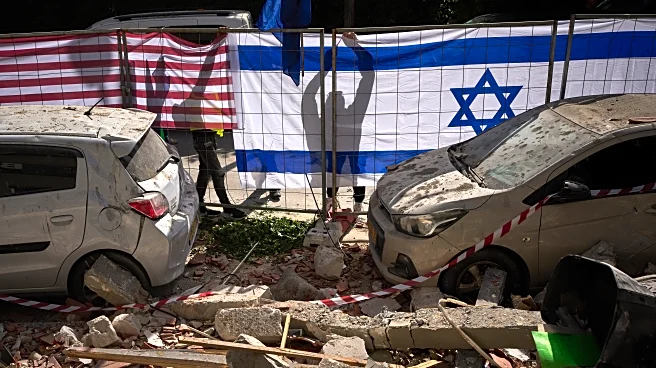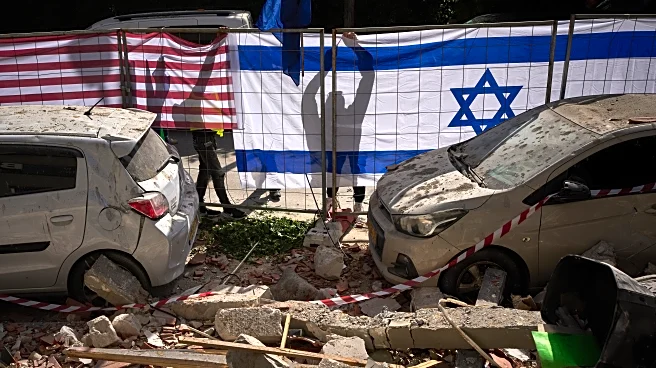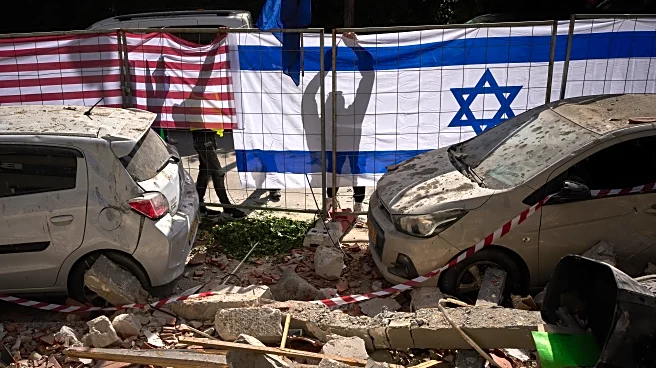

Israel’s defense minister said Wednesday that the military killed Iranian Intelligence Minister Esmail Khatib. Khatib’s killing follows Israel killing top Iranian security official Ali Larijani and the head of the paramilitary Revolutionary Guard’s all-volunteer Basij force.
Also on Wednesday, Iran launched strikes toward Israel and neighboring Gulf countries, with explosions heard in the United Arab Emirates and Qatar and interceptions reported in Saudi
Arabia.
The attacks came hours after Iranian state media confirmed Israel’s military killed top Iranian security official Ali Larijani in an overnight strike, as well as Gen. Gholam Reza Soleimani, the head of the Revolutionary Guard’s Basij force, known for its role in suppressing protests.
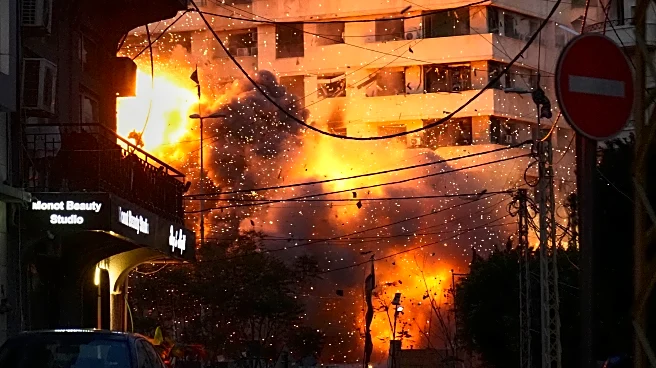
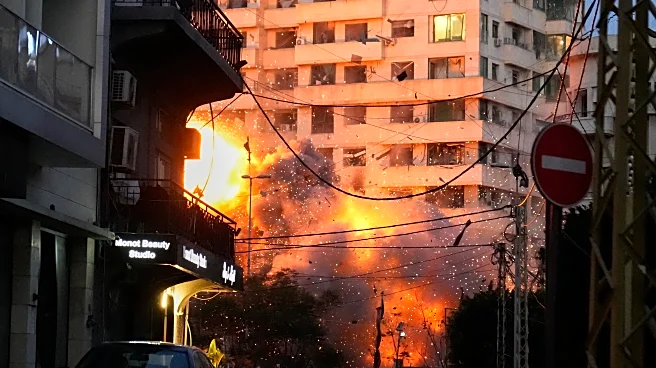
An Israeli airstrike struck an apartment building in Bachoura, central Beirut, completely flattening it as day broke. Two earlier strikes on residential apartments in other central Beirut neighborhoods early Wednesday killed at least six people and wounded 24 others, according to the Lebanese Health Ministry.
Israeli strikes targeting central Beirut have become increasingly frequent in recent days, with or without prior warning. The attacks have hit far from the city’s southern suburbs, for which the army issued evacuation notices early in the war with Hezbollah.
The U.S.-Israeli war with Iran has killed at least 1,300 people in Iran, more than 900 in Lebanon and 14 in Israel, according to officials in those countries. The U.S. military says 13 U.S. service members have been killed and about 200 wounded.
Here is the latest:
Iranian state television confirmed the killing of Khatib, who the U.S. sanctioned in 2022 for alleged cyber-related activities against the U.S. and its allies. Iranian President Masoud Pezeshkian calling Khatib’s killing “an unfair assassination.”
It applies to goods shipped between U.S. ports to be moved on U.S.-flagged vessels. The 1920s law, designed to protect the American shipbuilding sector, is often blamed for making gas more expensive.
The moves highlight the increased pressure the Republican administration is under to ease soaring oil prices as the United States, along with Israel, wages a war with Iran without a foreseeable end date. Global oil prices have since spiked as Iran halted traffic through the narrow Strait of Hormuz, where one-fifth of the world’s oil typically passes through from the Persian Gulf to customers worldwide.
U.S. companies will be allowed to do business with Venezuela’s state-owned oil and gas company after the Treasury Department eased sanctions, with some limitations, Wednesday as the Trump administration looks for ways to boost world oil supplies during the Iran war.
The Treasury issued a broad authorization allowing Petróleos de Venezuela S.A, or PDVSA, to directly sell Venezuelan oil to U.S. companies and on global markets, a massive shift after Washington for years had largely blocked dealings with Venezuela’s government and its oil sector.
The move highlights the increased pressure the Republican administration is under to ease soaring oil prices as the United States, along with Israel, wages a war with Iran without a foreseeable end date. Global oil prices have since spiked as Iran halted traffic through the narrow Strait of Hormuz, where one-fifth of the world’s oil typically passes through from the Persian Gulf to customers worldwide.
▶ Read more
Chancellor Friedrich Merz told German lawmakers Wednesday “we’re speaking at all levels with Washington” and “seeking trans-Atlantic agreement.”
He stressed that Germany shares many U.S. aims “but we can’t and won’t shy away from telling our partners honestly where we see things differently and where we have different interests.”
Merz said he still has questions about the war in Iran and there is still “no convincing concept for how this operation could succeed.”
He noted that Washington “didn’t consult us and said European help wasn’t necessary … we would have advised against pursuing this road the way it has been pursued at present.”
Germany is among the countries that say they won’t contribute to a military mission in the Strait of Hormuz as long as the war continues.
“Targeting fuel, energy and gas infrastructure in the aggressor country is our legitimate right and we will respond with force as soon as possible,” Iran’s Khatam al-Anbiya Central Headquarters said in a statement.
U.S. stocks are slipping as another rise in oil prices raises worries about inflation, which may have already been primed to worsen even before the war with Iran began.
The S&P 500 fell 0.4% in early trading Wednesday and was on track for its first loss this week. The Dow Jones Industrial Average fell 237 points, and the Nasdaq composite fell 0.4%.
Stocks fell under the pressure of a 2% climb for the price of a barrel of U.S. crude. The Federal Reserve is widely expected to hold interest rates steady when its latest policy meeting wraps up later Wednesday.
▶ Read more
Trump’s chief spokesperson, Karoline Leavitt, said Iranian Intelligence Minister Esmail Khatib was a “known terrorist.”
“Of course, this man is no longer with us here on earth,” she said during a morning appearance on Fox News Channel. “And that’s a good thing for the United States. And it’s a good thing for the American people who have long been threatened by this rogue terrorist regime.”
Israeli Defense Minister Israel Katz announced Wednesday that its military had killed Khatib.
International Atomic Energy Agency chief Rafael Grossi says he doesn’t believe Iran would be willing to return to nuclear negotiations with the United States until there’s a ceasefire and a halt to U.S.-Israel military operations and Iranian retaliation.
“It is not a moment to consider that as an immediate possibility,” Grossi told reporters in Washington on Wednesday. “For as long as there is a military campaign ongoing, I don’t think that there would be negotiations.”
Grossi took part in portions of the last round of Oman-mediated talks between the U.S. and Iran that were held in Geneva, Switzerland, shortly before the war began. He declined to comment on the substance of those talks.
The head of the UN’s nuclear watchdog says damage to Iran’s Bushehr nuclear site appears not to be ‘very significant’ and that a strike on the facility may have hit a small building containing a laboratory.
International Atomic Energy Agency chief Rafael Grossi told reporters in Washington on Wednesday that the IAEA had received information about the incident from Iran and from Russia that Bushehr was hit by a drone. He said it did not hit the actual power plant but landed on the premises.
“The reactors have not been affected and there are no casualties,” he said, adding that his agency had not yet been able to independently confirm the damage.
“We are looking at images but it doesn’t seem to be very significant,” he said. “At the same time, any attack on any nuclear facility should always be avoided.”
Qatar on Wednesday blamed Israel for an attack on an offshore natural gas field it shares with Iran.
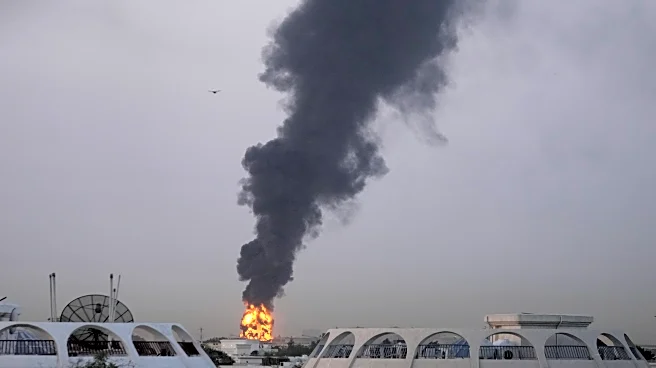
The accusation came from Majed al-Ansari, a spokesperson for Qatar’s Foreign Ministry. The Iranian side of the field, the South Pars field, came under attack Wednesday and was burning.
Al-Ansari called the attack “a dangerous & irresponsible step amid the current military escalation in the region.”
“Targeting energy infrastructure constitutes a threat to global energy security, as well as to the peoples of the region & its environment,” he wrote on X.
“We reiterate, as we have repeatedly emphasized, the necessity of avoiding the targeting of vital facilities. We call on all parties to exercise restraint, adhere to international law, & work toward de-escalation in a manner that preserves the security & stability of the region.”
Iranian media reported Wednesday that the national women’s soccer team has returned to the Islamic Republic after several of the players had sought asylum in Australia.
The outlets shared footage of the women entering Iran after landing in Turkey and taking a bus to the border. They were greeted by some officials at the border.
Two Iranian female players, Fatemeh Pasandideh and Atefeh Ramezanisadeh, chose to remain in Australia. Others who initially sought asylum later changed their minds.
Iran’s state television published a threat Wednesday, saying the Islamic Republic would be attacking oil and gas infrastructure in Qatar, Saudi Arabia and the United Arab Emirates.
The threat resembled other attack warnings put out by Iran during the war, copying the style used by the Israeli military.
Iran specifically threatened Saudi Arabia’s Samref Refinery and its Jubail Petrochemical Complex. It also threatened the UAE’s Al Hasan Gas Field and the petrochemical plants and a refinery in Qatar.
It comes after Iran said its South Pars gas field and associated infrastructure came under attack earlier Wednesday.
The public wrangling between Iran, FIFA and U.S. President Donald Trump over the narrative of playing in the World Cup shifted on Tuesday to Mexico where President Claudia Sheinbaum seemed open to a suggestion by Islamic Republic diplomats that Iran’s games in June be moved to her country.
The Iranian ambassador and embassy in Mexico City said the country was negotiating with FIFA to move Iran’s three group-stage matches from the United States to Mexico after Trump last week discouraged the team from attending the 48-nation tournament, citing safety concerns.
It was already unclear whether such talks were even happening before FIFA said such unprecedented changes in World Cup history weren’t planned to a match schedule agreed three months ago.
▶ Read more
He’s set to pay his respects on Wednesday at a Delaware military base when the remains of six U.S. service members killed in the crash of a refueling aircraft are returned to their families.
It will be the second time since launching the war on Iran on Feb. 28 that the Republican president will attend the solemn military ritual known as a dignified transfer, which he once described as the “toughest thing” he has had to do as commander in chief.
All six crew members of a KC-135 Air Force refueling aircraft were killed last week in a plane crash over friendly territory in western Iraq while supporting operations against Iran. They were from Alabama, Indiana, Kentucky, Ohio and Washington state.
The crash brought the U.S. death toll in Operation Epic Fury to at least 13 service members. About 200 U.S. service members have been injured, including 10 severely, the Pentagon has said.
▶ Read more
The United Arab Emirates has reported 13 ballistic missiles and 27 drones fired Wednesday on the oil-rich nation.
Facilities associated with Iran’s massive offshore South Pars natural gas field came under attack Wednesday, state media reported.
Iranian state television and the state-run IRNA news agency reported on the attack targeting facilities at Asaluyeh in Iran’s southern Bushehr province.
They did not immediately elaborate.
Iran shares the offshore field in the Persian Gulf with Qatar, which it has repeatedly attacked during the war along with other Gulf Arab nations.
It wasn’t clear if Israel or the United States had carried out the attack, however the U.S. has been operating primarily in southern Iran.
The U.S. previously attacked Iran’s Kharg Island in the Persian Gulf, its main oil terminal.
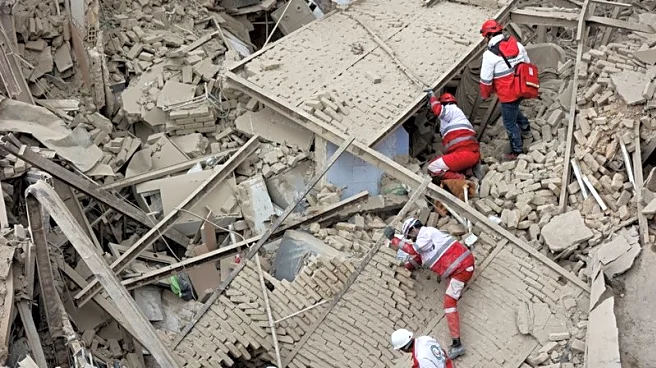
At least eight people were killed in an airstrike on a courthouse complex in Iran’s Larestan County on Wednesday, according to Iran’s official judiciary news agency Mizan.
The head of the Fars province judiciary told Mizan that one lawyer, six clients and a member of the judicial staff were killed, but the agency reports the exact number of those killed and wounded is not yet known.
The Israeli military said it hit branches of al-Qard al-Hasan, a Hezbollah-linked microfinance institution that Israel says is being used to fund the group’s military wing.
A wave of Israeli strikes overnight hit several neighborhoods in central Beirut and killed 10 people, the Lebanese Health Ministry said.
Israel also said its navy targeted Hezbollah militants in Beirut.
France’s special envoy for Lebanon, Jean-Yves Le Drian, speaking to the France Info radio station Wednesday, said the Iran-backed Lebanese militant group Hezbollah “bears full responsibility for the resumption of fighting in Lebanon” but “Israel’s response has been disproportionate and counterproductive, as it unites various actors against Israel.”
He criticized Israel for mass evacuation orders that have driven the displacement of more 1 million people in Lebanon and for spurning offers by the Lebanese government to enter into negotiations.
Israel and the U.S. have criticized the Lebanese state for failing to disarm Hezbollah after the last Israel-Hezbollah war ended with a ceasefire in November 2024. Le Drian said the state had taken steps toward disarmament.
“Israel occupied Lebanon for many years and did not succeed in eliminating Hezbollah’s military capabilities,” Le Drian said. “It cannot now demand that the Lebanese government achieve this in three days under bombardment.”
Israel’s Defense Minister Israel Katz said Wednesday that the Israeli military killed Iranian Intelligence Minister Esmail Khatib.
Khatib’s killing follows Israel killing top Iranian security official Ali Larijani and the head of the paramilitary Revolutionary Guard’s all-volunteer Basij force.
Katz said “significant surprises are expected throughout this day on all the fronts,” without elaborating, in announcing Khatib’s killing.
The U.S. Treasury, which sanctioned Khatib in 2022 over the Intelligence Ministry “engaging in cyber-enabled activities against the United States and its allies” put his year of birth as either 1960 or 1961. It said Khatib had been born in Ghayenat in Iran’s South Khorasan Province.
Khatib “directs several networks of cyber threat actors involved in cyber espionage and ransomware attacks in support of Iran’s political goals,” the Treasury said at the time. “In addition to conducting malicious cyber activity that affected Albanian government websites, (Intelligence Ministry) cyber actors were also responsible for the leaking of documents purported to be from the Albanian government and personal information associated with Albanian residents.”
The Treasury also called Iran’s Intelligence Ministry in another round of sanctions “one of the Iranian government’s main security services which is responsible for serious human rights abuses.”
“Under his leadership, the (Intelligence Ministry) has cracked down on a large number of human rights defenders, women-rights activists, journalists, filmmakers, and members of religious minority groups,” it said.
The Intelligence Ministry “has also aggressively persecuted individuals reporting on human rights abuses and violations in Iran, as well as their families, and subjected detainees to torture in secret detention centers during his tenure.”
In June 2025, Khatib claimed Iran seized documents from Israel’s nuclear program. The head of the International Atomic Energy Agency later said that the information Iran claimed it seized regarding Israel’s nuclear program “seems to refer” to the country’s Soreq Nuclear Research Center. Soreq, located 20 kilometers (12 miles) south of Tel Aviv, is a national laboratory for nuclear science established in Israel in 1958, engaged in nuclear science, radiation safety and applied physics.
Israel, whose undeclared atomic weapons program makes it the only country in the Mideast believed to have nuclear bombs, has not acknowledged any such Iranian operation targeting it, though there have been arrests of Israelis allegedly spying for Tehran.
Khatib was a Shiite cleric who worked in a variety of positions in Iran’s judiciary and the Intelligence Ministry. He served in the Revolutionary Guard in the Iran-Iraq war in the 1980s and was wounded in combat.
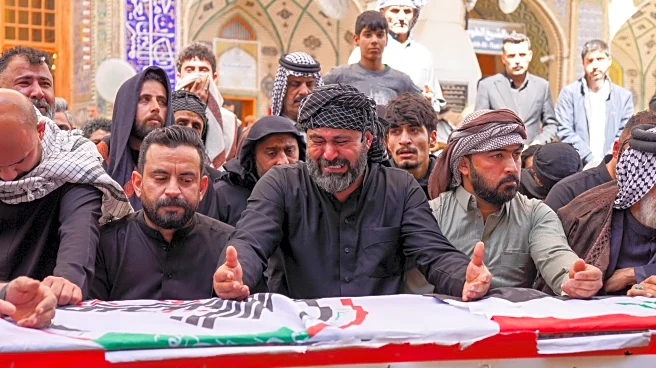
Iran did not immediately acknowledge Khatib’s death as Iranian state television aired live footage of a funeral procession for top Iranian security official Ali Larijani, as well as the slain head of the Revolutionary Guard’s all-volunteer Basij force and others, in Tehran. Thousands thronged to the processional as Larijani’s body and his son, also killed in an Israeli strike, paraded past on a bed of a semitruck adorned with images of the dead. People waved Iranian flags at the funeral.
Iran has increasingly turned toward large, pro-government events in the war as Israeli airstrikes continue to kill the theocracy’s top leaders, including the late Supreme Leader Ayatollah Ali Khamenei when the war began Feb. 28.
In announcing killing Khatib, the Israeli military described Iran's Intelligence Ministry as having “advanced intelligence capabilities” and conducting operations worldwide, including those against Israel.
“Khatib played a significant role during the recent protests throughout Iran, both with regards to the arrest and killing of protestors as well as shaping the regime’s intelligence assessment,” the Israeli military said. “Similarly, he operated against Iranian citizens during the Mahsa Amini protests.”
A senior Israeli military intelligence official says Israel killed the head of Iran’s Basij force while he was hiding in a tent hidden in a wooded area under some trees.
The official says Gen. Gholam Reza Soleimani was killed with his top staff in the strike.
The official says such strikes, which have killed many members of Iran’s leadership, are meant to send a message that “they have no safe place.” The account could not be independently verified.
The official declined to say how Israel located top Iranian official Ali Larijani, who was killed in a separate strike this week. But he says, “every time they decide to appear publicly, it’s a big advantage for us.”
The official spoke on condition of anonymity to discuss a classified intelligence assessment.
The Kremlin on Wednesday condemned Israel’s killing of Iran’s senior security officials.
Kremlin spokesman Dmitry Peskov said “we resolutely condemn” the killing of members of the Iranian leadership, including Ali Larijani, secretary of Iran’s Supreme National Security Council and one of the country’s most powerful figures.