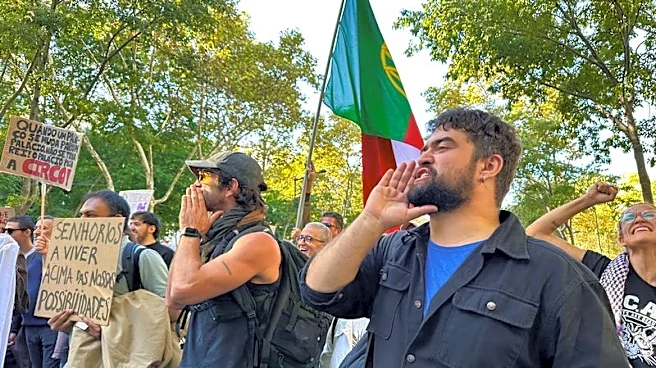










LISBON, Portugal (AP) — Portugal’s Parliament on Tuesday began debating the center-right government's spending plans for next year, ahead of the latest demonstration by protesters demanding more action to address a prolonged and deepening housing crisis.
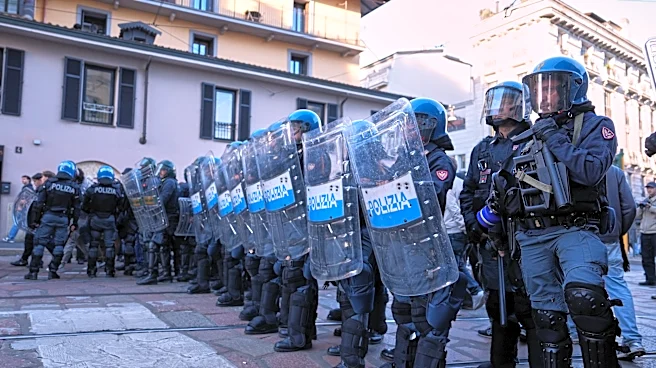
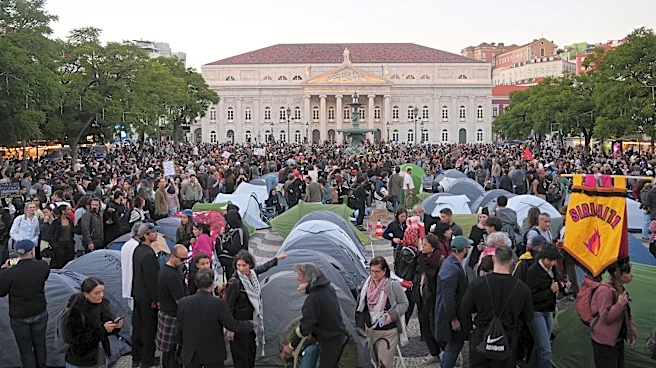
Protests in recent weeks, some of them staged in Lisbon’s downtown squares and broken up by police with batons and dogs, took their cue from demonstrations that began in neighboring Spain last month
over similar complaints about unaffordable housing.
A demonstration was announced for later Tuesday outside the parliament building in central Lisbon.
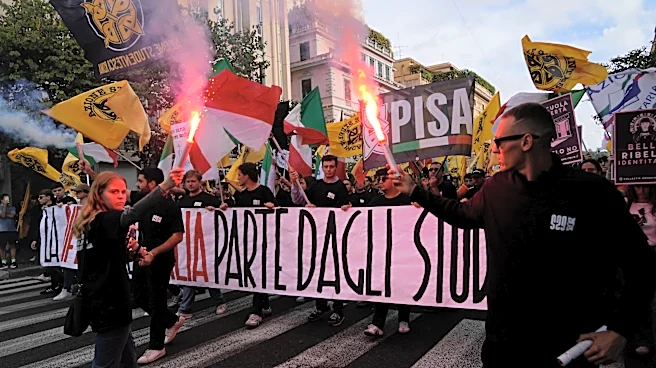
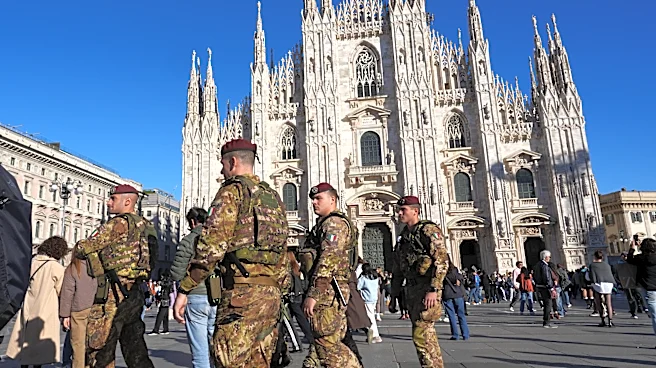
Wide social unrest in the streets has erupted across Europe this autumn. Portuguese President António José Seguro, whose role is mostly ceremonial but who wields political influence, has convened a Council of State, an advisory body, for a meeting next week to discuss the protests.
A European Union report published at the end of last year said that housing costs surged across Europe by an average of 60.5% between 2015 and 2025. Portugal’s increase over that period was the third highest, at 147%, after Hungary and Lithuania.
There is no sign that the growth in costs is slowing. Between the first quarter of last year and the first quarter of 2026, housing prices rose by almost 20%, the National Statistics Institute, a government agency, said last week.
Rental prices, too, have climbed significantly, recording a 68% increase since 2020, according to the government.
Foreign buyers and investment funds have pushed up prices by buying Portuguese properties, including dilapidated buildings. The country’s pleasant climate and long coastline have helped it grow popular with digital nomads and other remote workers, as well as retirees. Tourism has also surged, with many city center apartments turned into short-term rentals.
Local people say they are being priced out of the property market. Young people complain they can’t get a foot on the property ladder, and parents complain their children have to move far away to find a home. At the same time, some Portuguese have made substantial profits by selling their homes.
The government has responded with measures such as lowering taxes on new construction, restricting short-term rentals and promising to build 145,000 new homes, although it acknowledges that the effects won't be immediate.
Infrastructure development funds will be scarcer in 2027 as financing under the European Union’s post-COVID-19 economic recovery program ends this year.
Portugal hasn’t seen the scale of violence, arson and looting witnessed in some other European countries, although protesters have complained about heavy-handed policing during the removal of tents erected in city squares. Authorities are evaluating whether the use of batons and police dogs was excessive.