

NEW YORK (AP) — Shoppers increased their spending in November from October as holiday shopping kicked into full gear.
Retail sales rose a better-than-expected 0.6% in November, following a revised 0.1% decline October, according to the Commerce Department. The report was delayed more than a month because of the 43-day government shutdown.
Retail sales rose 0.1% increase in September, but jumped 0.6% in July and August and 1% in June.
The federal government
is gradually catching up on economic reports that were postponed by the shutdown.
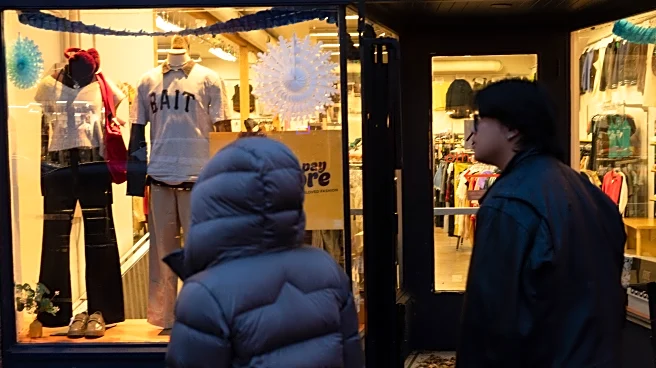
Sales at clothing and accessories stores rose 0.9%, while online businesses had a 0.4% increase. Business at sporting goods and hobby stores was up 1.9%.
The snapshot offers only a partial look at consumer spending and doesn’t include many services, including travel and hotel lodges. But the lone services category – restaurants – registered an uptick of 0.6%.
The report comes as 41,000 attendees from retailers, brands and technology companies gathered for the annual three-day National Retail Federation convention. With shoppers growing anxious about high prices and impact of President Donald Trump’s tariffs, as well as a souring job market, the outlook for shopping for this year was a key issue that dominated discussions.
The industry wrapped up a solid holiday shopping season, based on early data, but many consumers, particularly from the lower income households, remain financially strained.
Hiring has generally been weak, which could hurt consumer spending and the broader economy for 2026.
Inflation cooled a bit last month as prices for gas and used cars fell, a sign that stubbornly elevated cost pressures are slowly easing, according to a report from the Labor Department Tuesday.
Consumer prices rose 0.3% in December from the prior month, the same as in November. Excluding the volatile food and energy categories, core prices rose 0.2%, also matching November’s figure. Increases at that pace, over time, would bring inflation closer to the Federal Reserve’s target of 2%.
Many economists had predicted inflation to jump last month as the government resumed normal data collection after the six-week shutdown last fall, so the modest increases that matched the November figures came as a relief. The price of manufactured goods was flat in December, a sign that the impact of tariffs may be starting to fade.
The National Retail Federation is predicting retail sales in November and December grew between 3.7% and 4.2% over 2024. That translates to total spending between $1.01 trillion and $1.02 trillion. By comparison, holiday sales for 2024 rose 4.3% over 2023 to reach $976.1 billion.
The trade group will not be coming out with official sales results for the November and December period until next month when the government reports December retail figures.
Lululemon Athletica said on Monday that it anticipates fourth-quarter profit and revenue to come in at the high end of its previously released outlook, helped by a solid holiday shopping season. And Abercrombie & Fitch Co. said on Monday that both its Hollister and Abercrombie fared well during the holiday season.
A better picture of holiday spending will come next month when Walmart, Target and other major retailers report results.