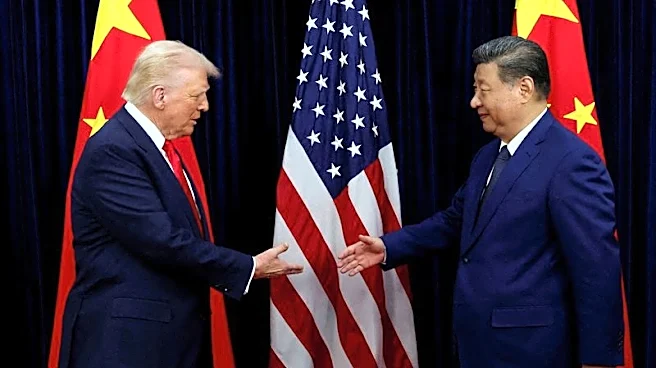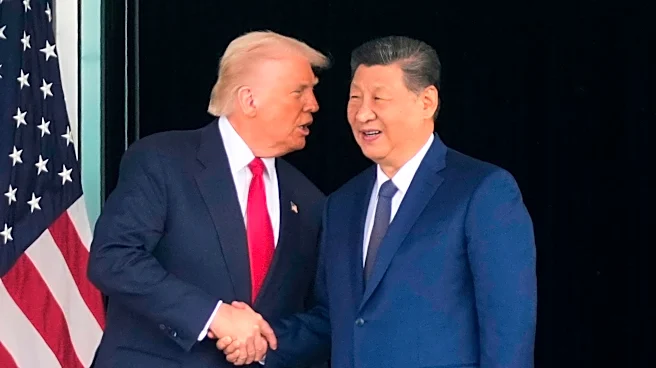



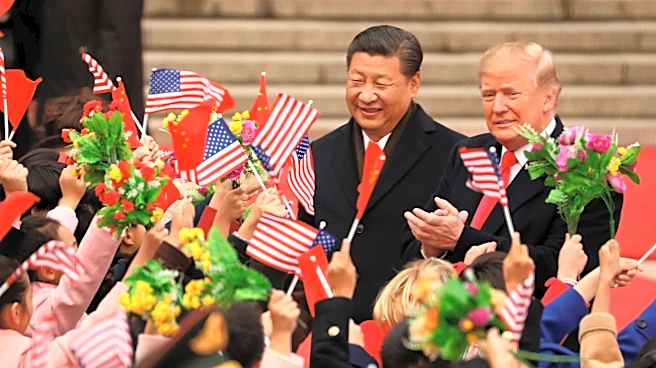
WASHINGTON (AP) — From the moment President Donald Trump lands in Beijing on Wednesday, all eyes will be on how much of a spectacle the Chinese government rolls out, such as who lines up to greet him, what music is played and whether Chinese and American children wave flowers and flags.
In China's rigidly hierarchical world of diplomacy, protocol and ceremony carry weight. The reception of Trump is shaping up to be warm and designed to flatter him,
indicative of Beijing's tactical approach to a U.S. leader known for his love for pomp, but it is unlikely to top the “state visit plus" extravaganza President Xi Jinping extended to Trump in 2017.
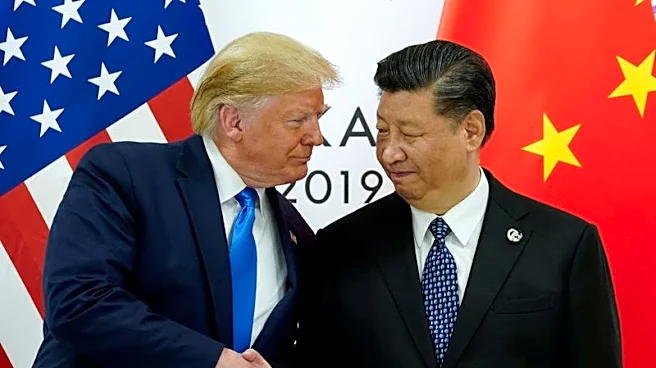
“That reflects greater Chinese confidence in their position, greater skepticism of Trump, and the awkwardness of the current relationship,” said Rush Doshi, C.V. Starr senior fellow for Asia studies at the Council on Foreign Relations and an assistant professor of security studies at Georgetown University.
In the past nine years, the China-U.S. relationship has shifted from engagement to competition and has dipped to a low point during the COVID-19 pandemic and trade wars.
Experts say China's economic clout and its ability to leverage its dominance in the global supply chain have allowed the Chinese leadership to negotiate from a position of strength and led to a more pragmatic China policy by the Trump administration. And now the war with Iran, which has left the Strait of Hormuz blocked and rattled the global economy, has given Xi an upper hand coming into the summit.
The war, which began with U.S. and Israeli strikes on Feb. 28, delayed Trump's visit, initially scheduled for the end of March. Now, Trump is going to Beijing for a shorter stay than in 2017, and without first lady Melania Trump.
“The context for this visit is wholly different,” said Danny Russel, a former senior U.S. diplomat, who does not expect Beijing to outdo itself this time in receiving Trump. “The schedule has been compressed to basically one day and stripped down to the basics.”
But the U.S. holds a special place in China's foreign relations, and China will shower Trump with plenty of ceremonial pomp because Beijing sees it as a diplomatic tool, Russel said.
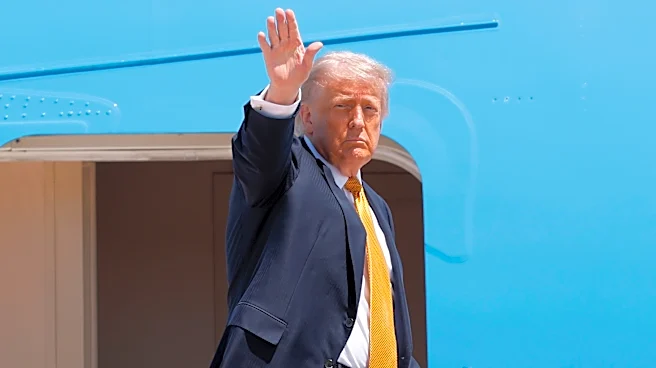
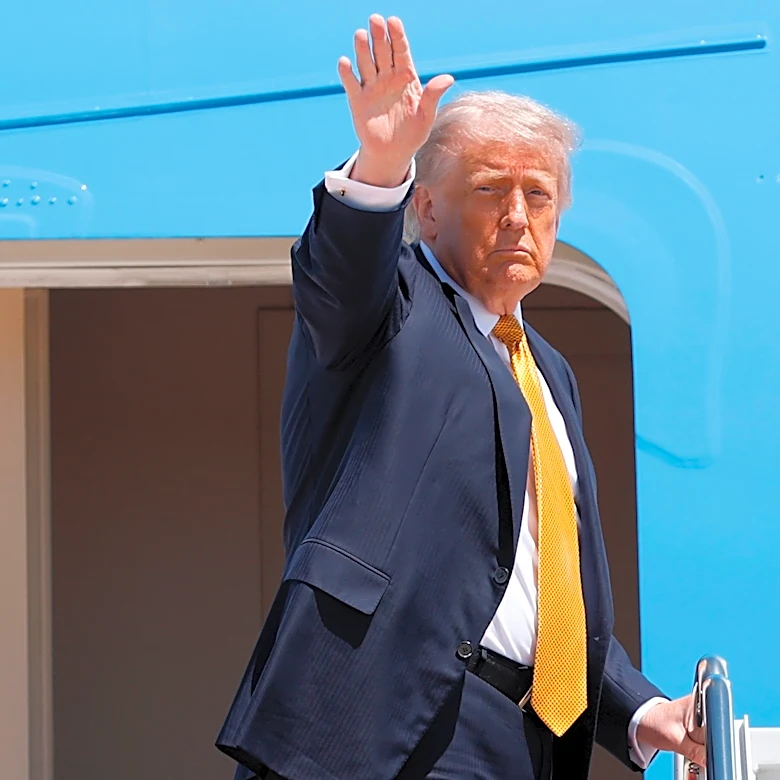
If the 2017 trip is any indication, Trump can expect to walk down from Air Force One along a red-carpet stairway with golden edging and be greeted by a warm crowd.
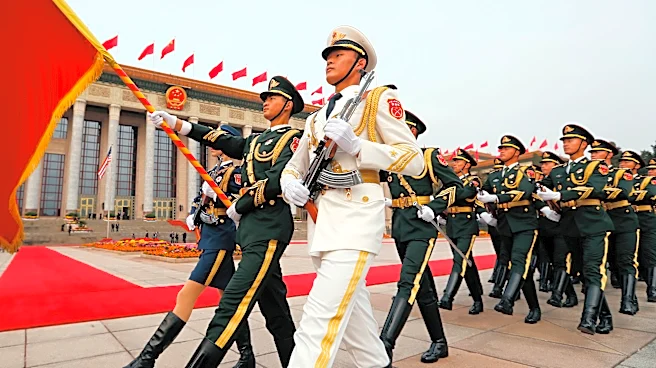
At a formal welcome ceremony the next day, he will be greeted by Xi and other Chinese officials, whose rank could be telling. Trump is then expected to inspect military honor guards, lined up precisely by height, their eyes closely tracking him and Xi as the two leaders walk down the red carpet. And he will likely receive a 21-gun salute.
“It’s no secret to any government that President Trump responds positively to flattery and spectacle,” Russel said. “The pomp and pageantry is designed both to flatter Trump and to pacify him, making him more amenable to Chinese asks and reducing the risk of an embarrassing public confrontation.”
Xi also will offer something extra, as he did during past visits by American presidents. In 2014, it was an evening stroll with former President Barack Obama in the leadership compound of Zhongnanhai. In 2017, he hosted a private dinner for Trump at the Palace Museum, on the grounds of the former imperial palace.
This time, the special relationship between the Chinese and American leaders will play out at the Temple of Heaven, a former imperial site, in front of the Hall of Prayer for Good Harvests, an iconic, blue-tiled building known for its circular design and a triple-gabled roof. The White House says Xi will accompany Trump on a tour of the World Heritage site, where Chinese emperors once prayed for bumper harvests.
The entire park is closed on Wednesday and Thursday, while the main attractions, including the hall and the Echo Wall, were closed on Tuesday for “the maintenance of ancient architecture,” park management said.
This is unusual. The park was not closed for the prime ministers of Britain or Spain when they visited the Palace Museum and the Summer Palace in Beijing, respectively, earlier this year. And Xi didn’t accompany them.
Beijing declared Trump’s first presidential trip to China to be a “state visit plus,” and it is the only one China has held for any foreign leader. The trip was full of unprecedented arrangements.
Xi and his wife, Peng Liyuan, gave Trump and the first lady a tour of the Palace Museum, where they chatted over afternoon tea and watched a traditional opera performance at a royal theater that had not seen a show for a century. They also dined there — a first for any foreign leader.
During the formal welcome ceremony the next day, “The Stars and Stripes Forever” was played as the presidents inspected Chinese military guards, an unusual choice intended to impress Trump.
Trump, who often boasts of his good relationship with Xi, still harkens back to that visit nearly nine years ago.
“You know, last time I went to China, President Xi, he treated me so well, he gave me a display,” Trump said in February. “I never saw so many soldiers, all the same height, exactly the same height within a quarter of an inch.”
How China treats Trump this time will offer clues about the dynamics of the relationship, said Doshi, who served on former President Joe Biden's National Security Council and helped plan his summits with Xi in 2022 and 2023.
“China uses diplomatic protocol as a method of signaling favor or disfavor. That is why we should pay close attention to how President Trump is received,” Doshi said.