





AKROPONG-AKUAPEM, Ghana (AP) — The Indigenous Akuapem people in eastern Ghana celebrated this week their military victory over the Ashanti Empire 200 years ago, a vast, sprawling and powerful 18th-century West African state.
The battle helped reshape the area into what has become part of modern Ghana.
The empire might be long gone, but the battle has not faded from memory. Two centuries later, the Akuapem people still come together to honor their victory
by reenacting the war.
The festival, called Akuapem Odwira, is also a means of purification, spiritual renewal and thanksgiving, they say.
The two-week-long celebration, which started on Sept. 21, has featured an array of pageantry, a re-enactment and a durbar, or ceremonial gathering.
Both royalty and subjects engaging in the festivities were draped in traditional Kente cloth. Gold ornaments glinted in the afternoon sun as drums rolled through the streets and the chiefs arrived on decorated palanquins carried by attendants. Praise singers and dancers performed around the clock in the streets.
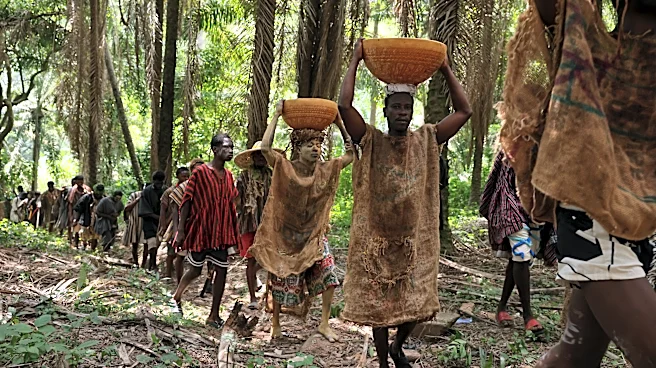
On the 10th day of the celebration, young men dressed as warriors marched from the palace into the hills and forest for the re-enactment of the battle, fought on Aug. 7, 1826.
The performers climbed a steep mountain into the forest, following the route toward the area where the battle is believed to have taken place. At a stream, libations were poured and other rituals performed.
Some participants, acting as captured enemy soldiers, were chained and led back toward the community, where crowds gathered to receive them before they were presented to the chief.
Nanahemaa Adwoa Awindor, the Queen Mother in charge of developmental activities, said the bicentennial anniversary was important because it showed how culture can survive across generations.
“Two hundred years of Odwira represents far more than the passage of time. It is a remarkable testimony to the resilience of the people, the continuity of tradition, and the enduring power of culture to bind generations together,” she said.
For younger generations, the anniversary has also become a means to reconnect with a heritage they say is too easily overlooked.
Kingsley Ketegu, a 36-year-old Akuapem resident who took part in the celebrations, said young people should use such occasions to learn about their history.
“As young people, we should embrace this and learn our culture,” he said. “Odwira is a very big festival. Very, very big. But we have underrated it.”