

A controversial 148-unit Kōloa housing project got the green light from Kaua‘i’s Planning Commission with the conditions that the units never be turned into vacation rentals and that at least 45% of them go to existing county residents.
The unanimous decision was made after eight and a half hours of testimony, an unsuccessful petition to intervene in the proceeding, an executive session and discussions among the planning commission, planning department
and developer.
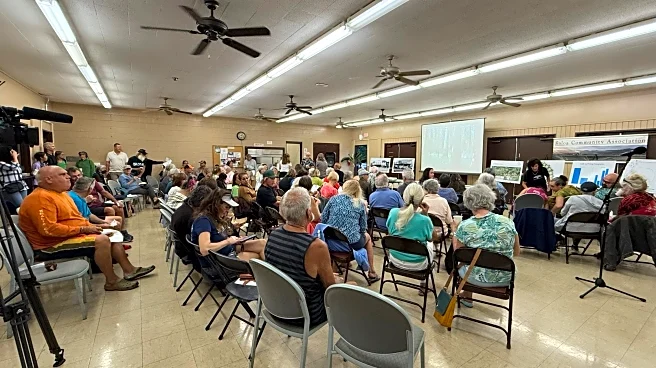
Roughly 60 community members attended the meeting, with dozens forced to watch from a TV screen outside. This was the second time the planning commission reviewed the project, which was seeking two zoning permits to build multifamily housing targeting residents who make too much to qualify for affordable rentals but not enough to purchase market-rate homes.
While the project is not in a Visitor Destination Area, where vacation rentals are allowed, Developer Mike Serpa of SK Investors LLC said he agrees with the planning commission’s conditions. He said housing locals was always his intention.
He previously built the Kōloa Village shopping center and is currently building the neighboring 60-unit Kauhale at the Village condo complex. Serpa said the units there were quietly sold so that his team could ensure they went to existing residents as much as possible. His goal was to sell at least two-thirds to locals, and so far he’s surpassed that, with about 70% of the 59 units sold going to locals, mostly first-time homebuyers.
Over the last month, community members have expressed concerns about the project’s size and how it could impact the surrounding area’s traffic, emergency access, drainage and environment, especially combined with the under-construction Kauhale project across the street.
Community groups Friends of Māhā’ulepū and Save Kōloa filed a petition to intervene in the proceeding, arguing that the project is ill-suited for Kōloa and will exacerbate the rural town’s safety issues. They also took issue with the project’s analysis of whether any Native Hawaiian traditional practices would be impacted and argued that the developer did not give proper notice for the project.
“We can’t keep approving these things without the proper infrastructure,” said Elizabeth Okinaka of Save Kōloa. “Waikomo Road is a one-lane road. We have all the children that walk to and from Kōloa school every single day on this road. It is crazy that he would not have to present a traffic study or at least a traffic plan before this is approved.”
The commission denied the organization’s petition, saying its filing was untimely. Such petitions are supposed to be filed at least seven days before the first public hearing, which for this project was on Jan. 13.
Those in support of the project emphasized its potential to prevent more longtime community members from leaving. David Jay Ledee, who rents a studio at Kōloa Village and owns the six-month-old Mura Izakaya on the shopping center’s second floor, said all his employees — aside from himself and his partner — are from Kaua‘i.
“This project will allow my workers to actually afford something because every one of them is living with their parents,” he said. “This would give a good opportunity for them to own something in paradise.”
Of the six current commissioners, Francis DeGracia recused himself from participating in the project’s hearing, saying his employer testified in support of the permits.
Gerald Ako, chair of the Planning Commission, said this project was the most challenging he’s heard during his tenure as chairman. Ultimately, it came down to Kaua‘i’s dire need for more homes and while the project site could accommodate fewer units, they’d be priced much higher than residents can afford.
“I don’t live in Kōloa but I think there’s a lot of unhappy people today because it’s going to be crowded in there,” he said. “But the choices I think that we face right now is the fact that do we want like 50 luxury homes that will more than likely be bought from someone off-island coming in and just adding to the situation there, as opposed to having 148 gap homes, which will actually go to local people?”
___
Civil Beat’s reporting on Kauaʻi is supported in part by a grant from the G. N. Wilcox Trust.
___
This story was originally published by Honolulu Civil Beat and distributed through a partnership with The Associated Press.