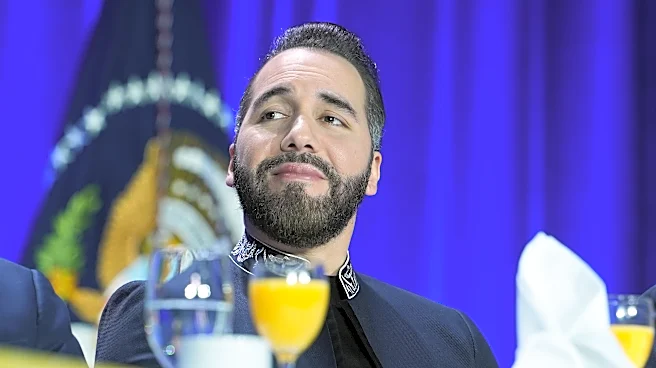








SAN SALVADOR, El Salvador (AP) — The number of people deported to El Salvador from the U.S. nearly doubled in the first months of 2026, according to official figures, coming as Salvadoran President Nayib Bukele has positioned himself as an ally willing to help the Trump administration accelerate deportations, a central priority.
The U.S. deported 5,033 Salvadorans back to their country in the first three months of 2026 compared with 2,547 deportees
in the same period in 2025, according to El Salvador migration authority figures obtained by The Associated Press on Tuesday.
That marks nearly a 98% increase as the same time that the Trump administration has boosted deportation flights across the world. Globally, deportation flights from the U.S. jumped around 61% between 2024 and 2025, according to data compiled by the Asociación Agenda Migrante El Salvador, or AAMES, and other organizations.
The U.S. has stopped regularly releasing deportation data, so experts instead are relying on other information from countries like El Salvador, deportation flights and other numbers.
The sharp increase in deportations “confirms a real hardening of the U.S. immigration system toward the region,” said César Ríos of AAMES.
The jump comes as Bukele, a tough-on-crime politician, has sought to align himself with U.S. President Donald Trump, and the U.S. government has lined up allies across Latin America to help him carry out his agenda. While Mexico and other Central American nations have quietly accepted deportees from third countries, Bukele has boldly embraced Trump's efforts in Latin America.
In March 2025, Bukele most notably accepted 238 Venezuelan deportees accused of being members of the Venezuelan gang Tren de Aragua and locked them up in a mega-prison built for accused gang members in Bukele's ongoing offensive on El Salvador's gangs. The incident fueled widespread accusations of human rights abuses.
The geopolitical firestorm came after Trump's government struck a deal with Bukele to accept what they described as transfer and imprisonment of foreign criminals to El Salvador. Under the agreement, El Salvador would receive $6 million from the U.S.
In April, the Trump administration mistakenly deported a Maryland resident and Salvadoran citizen Kilmar Abrego García with protected status in the U.S., becoming yet another legal and political flashpoint. Bukele originally refused to return Abrego García and denied accusations of beating and torture — which have been widely documented by human rights groups in Salvadoran prisons.
He was later returned to the U.S. in June to face charges that he helped bring immigrants to the U.S. illegally, something his lawyers call “baseless.” Abrego García has pleaded not guilty and asked a judge to dismiss his case as the U.S. Department of Homeland Security announced that it hoped to deport Abrego García to Liberia.
Even more recently, Bukele joined a coalition of other right-leaning Trump allies in a group of countries that Trump dubbed the Shield of the Americas, purportedly aimed at cracking down on criminal groups in Latin America, even though the two most essential countries in that effort — Mexico and Colombia — refused to attend.
Meanwhile, many migrants in the U.S. are turning their eyes on U.S. Supreme Court arguments as Trump seeks to stop shielding hundreds of thousands of migrants from Haiti and Syria, a decision many of the more than 200,000 Salvadoran migrants with temporary protections worry might eventually affect them.
Bukele has helped the U.S. with its immigration agenda even before Trump entered office.
In 2023, El Salvador’s government began to slap a $1,130 fee on travelers from dozens of countries connecting through the nation’s main airport, amid pressure from the Biden administration to help control the number of migrants moving toward the United States' southern border. At the same time, migration from El Salvador, fueled by gang violence and poverty, dipped following Bukele's contentious war on the gangs.
Analysts said that Bukele's government used dips in migration as a bargaining chip to offset human rights criticisms by the U.S.
___
Megan Janetsky reported from Mexico City.