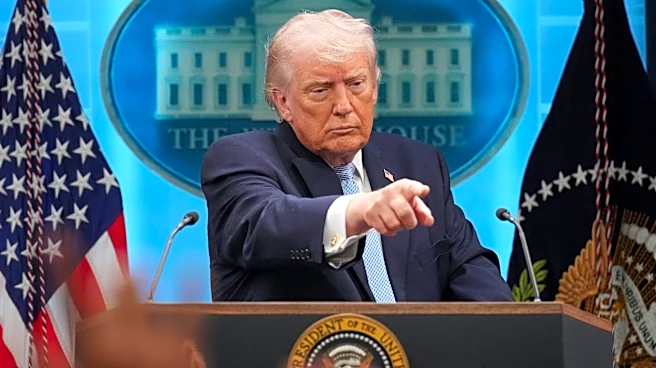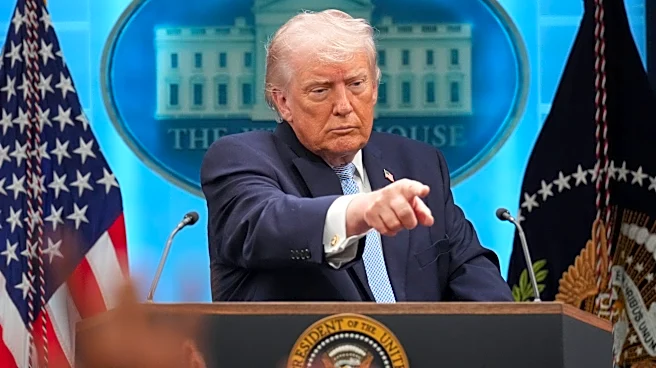

Iran, the United States and Israel agreed to a two-week ceasefire on Tuesday, an 11th-hour deal that headed off U.S. President Donald Trump’s threat to unleash a bombing campaign that would destroy Iranian
civilization. Hours after the announcement, Iran and Gulf Arab countries reported new attacks Wednesday, though it was not clear if the strikes would scuttle the deal.
All sides have presented vastly different versions of the terms. Iran said the deal would allow it to formalize its new practice of charging ships passing through the Strait of Hormuz. Trump said the U.S. would work with Iran to remove buried enriched uranium, though Iran did not confirm that.
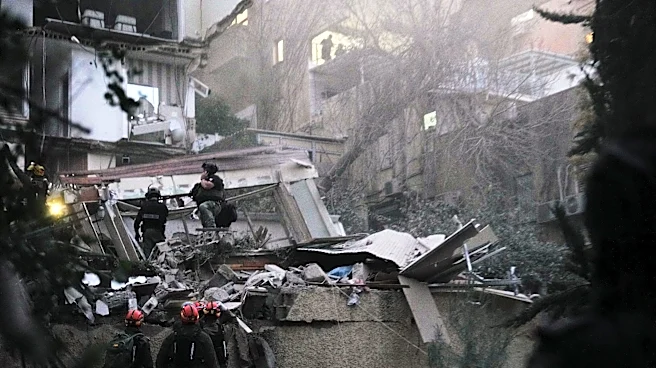
Pakistan and others said fighting would pause in Lebanon, which Israel has invaded to fight Iran-backed Hezbollah militant group, but Israeli Prime Minister Benjamin Netanyahu said early Wednesday that the deal doesn’t cover fighting against Hezbollah. Israeli strikes hit several dense commercial and residential areas in central Beirut Wednesday afternoon without warning, killing dozens and wounding hundreds of people.
The ceasefire may formalize a system of charging fees in the Strait of Hormuz that Iran instituted — and give it a new source of revenue. Iranian attacks and threats deterred many commercial ships from passing through the waterway, through which 20% of all traded oil and natural gas passes in peacetime.
Here is the latest:
In a televised address to his Cabinet, Prime Minister Shehbaz Sharif said Pakistan played a key role in securing the pause in fighting, crediting his team, including Foreign Minister Ishaq Dar and army chief Field Marshal Asim Munir, for sustained diplomatic engagement with U.S. and Iranian leaders.
He described the truce as a “first step” toward broader peace and expressed hope that the talks being held Friday in Islamabad would help turn the fragile ceasefire into a lasting resolution.
“The war has only been temporarily averted, but this is an important beginning,” Sharif said.
He did not specify who would represent the U.S. or Iran or when the delegations would arrive.
Saudi Arabia said Wednesday afternoon that it intercepted nine drones over the past few hours as the Gulf nation continues to deal with Iranian air attacks despite the announcement of a ceasefire in Iran.
The diplomat says Arab countries in the region fear that sanctions on Iran will soon be lifted and Iran will collect fees from ships passing through the Strait of Hormuz.
Iran has offered a 10-point ceasefire plan that includes both of these steps. It’s unclear whether they will be part of a final ceasefire, but Trump has described the proposal as a “workable base” for negotiations.
The diplomat, who spoke on condition of anonymity to discuss behind-the-scenes discussions between the Arab countries, says Gulf Arab countries are concerned a deal won’t take their security concerns into account, particularly freedom of navigation through the Strait of Hormuz.
Saudi Arabia and Kuwait said Wednesday that movement through the strait must take place “without restrictions.”
The diplomat said the Gulf countries haven’t been invited to join ceasefire negotiations, even though they are touching “the core of our security.”
Jean Arnault, U.N. Secretary-General Antonio Guterres’ personal envoy, landed in Iran hours after Washington and Tehran agreed to a temporary halt in hostilities despite contradicting views of what a final peace deal would look like.
“Acting on the Secretary-General’s instructions, he is visiting countries across the region to support all efforts aimed at achieving a comprehensive and durable resolution to the conflict,” a U.N. spokesperson said in a statement Wednesday.
The envoy is scheduled to meet with Iranian officials to “hear their perspective on the way forward.”
Israeli military spokesperson Lt. Col. Nadav Shoshani said Israel’s largest strike on Lebanon since March 1 came as the militant group attempts to “scatter” its operations to populated civilian areas.
“We are seeing them move in a more dispersed way and try to embed their operations behind civilians more and more,” Shoshani said Wednesday.
He added that Hezbollah was moving away from its traditional areas of influence, including southern Lebanon or the Dahiyeh suburb of Beirut, and into areas deeper within civilian populations, including downtown Beirut.
The military said the operation on Wednesday included 50 fighter jets, which launched 160 munitions at 100 targets in 10 minutes, causing widespread panic across the Lebanese capital during rush hour.
Stock markets are surging worldwide, and oil prices are plunging back toward $90 per barrel after President Donald Trump pulled back from his threat to force a “whole civilization” to die in the war with Iran.
The S&P 500 leaped 2.7% after Trump, Iran and Israel agreed to a two-week ceasefire, just hours before a deadline the U.S. president had set for Iran to open the Strait of Hormuz and allow oil to flow freely again from the Persian Gulf to customers worldwide.
The Dow Jones Industrial Average jumped 1,350 points, and the Nasdaq composite surged 3.4% following even bigger gains in European and Asian markets.
Morocco on Wednesday welcomed the ceasefire and backed upcoming negotiations in Pakistan, the foreign ministry said, adding it hopes the talks will serve “the higher interest of the brotherly Arab countries in the Gulf.”
The North African country, one of Washington’s closest allies in the region, also stressed the importance of keeping the Strait of Hormuz open. Its closure has pushed fuel prices in the country up by more than 30%.
The Pentagon chief did not offer any details about whether Iran had agreed to Trump’s statement that the U.S. would work with them to “dig up” the buried material.
However, Hegseth said Iran will “give it to us voluntarily,” or the U.S. might do “something like” its strikes last summer with Israel hitting Iran’s nuclear sites.
“We reserve that opportunity,” Hegseth said.
The defense ministry said 28 drones were fired at the oil-rich country on Wednesday morning, in what it described as a “large-scale series of Iranian attacks.”
Col. Saud Al-Atwan, the ministry spokesman, said the attacks, which came after the ceasefire announcement, reflect “clear determination to persist in targeting the country’s security and vital capabilities.”
Gen. Dan Caine, the chairman of the Joint Chiefs of Staff, said more than 13,000 targets have been struck in operations against Iran, destroying 80% of Iran’s air defense systems and attacking 90% of its weapons factories.
Caine told reporters at a Pentagon briefing that more than 90% of Iran’s regular naval fleet has been sunk, “including all major surface combatants” with 150 ships now “at the bottom of the ocean.”
Caine added that the operation included the consumption of “more than 6 million meals, and by my estimate, more than 950,000 gallons of coffee, 2 million energy drinks and a lot of nicotine.”
“We own their skies,” Hegseth told reporters Wednesday, even though Iranian forces shot down two U.S. military jets on Friday.
Largely repeating his claims that Iran had been badly defeated, Hegseth said the U.S. and Israel had achieved a “capital ‘V’ military victory” and said Iran’s military no longer poses a significant threat to U.S. forces or the region.
Gen. Dan Caine, chairman of the Joint Chiefs of Staff, said U.S. strikes have significantly set back Iran’s military and defense industrial base, but also said the military would stand ready to resume strikes if the ceasefire fails.
The Pentagon “for now, for now, has done its part,” Defense Secretary Pete Hegseth said Wednesday during a news conference. “We stand ready in the background to ensure Iran upholds every reasonable term.”
Hegseth praised the “bravery and sheer guts” of the U.S. military and said the operation had hobbled Iran’s regime. He said nobody makes a better deal than Trump.
The Israeli military chief of staff said on Wednesday that Israel will continue to “utilize every operational opportunity” to strike Hezbollah after the military said it struck more than 100 targets within 10 minutes across Lebanon, the largest wave of strikes since March 1.
Lt Gen. Eyal Zamir said Israel will continue striking Hezbollah to protect Israel’s northern residents, who have come under heavy fire from Hezbollah. The Israeli strikes caused panic during Lebanon’s afternoon rush hour as plumes of black smoke rose over several neighborhoods across the capital.
Dan Caine, chairman of the Joint Chiefs of Staff, said in a news conference at the Pentagon Wednesday that the U.S. military had three objectives in Iran: to destroy Iran’s ballistic missile and drone capabilities, to destroy its navy, and to destroy its defense industrial base.
The president and members of his administration have offered varying objectives throughout the 5 1/2-week war and have shifted them throughout, despite claiming they have not changed.
Trump has at times named five objectives, but has changed them.
Other objectives have included eliminating Iran’s air force, blocking Iran’s path to a nuclear weapon, cutting off support for its proxy groups and protecting allies in the Middle East.
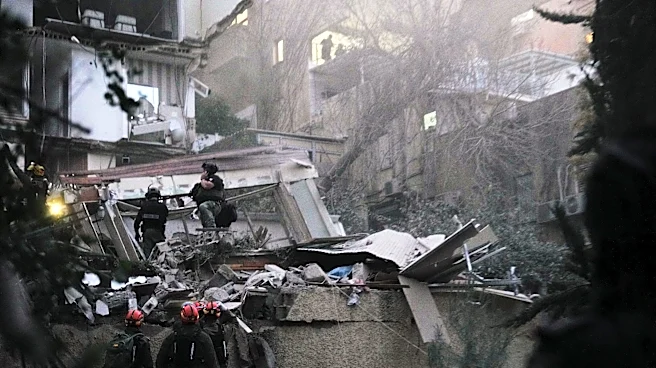
A series of Israeli airstrikes hit at least five different neighborhoods in the heart and along the coast of Beirut on Wednesday, Lebanon’s National News Agency reported.
The simultaneous strikes during rush hour caused panic around the capital.
Two French former detainees in Iran who were allowed to return to France on Wednesday described years “under constant threat” in Tehran’s Evin prison, where many dissidents are held.
Cécile Kohler, 41, and Jacques Paris, 72, had been staying in French diplomatic premises in Tehran since their release in November after more than three years in detention on spying charges, which Paris called unfounded.
The two were received by President Emmanuel Macron in Paris hours after arriving. French authorities said the pair left Iran by road into neighboring Azerbaijan on Tuesday before flying to Paris.
Kohler thanked those who helped secure their release “from the hell of Evin, where we experienced daily horror,” adding: “We realize how narrowly we escaped, because it could have been much worse.”
“We were under constant threat,” Paris said. “We had no right to read or write. Whenever we left our cell, we were blindfolded.”
“We are not broken,” he added. “We will bear witness … and we will enjoy life again.”
The White House says “nothing is final” over plans for in-person talks over Iran.
In response to questions about whether U.S. Vice President JD Vance would be participating in U.S.-Iran talks expected to be held later this week in Pakistan, White House press secretary Karoline Leavitt said in a statement, “There are discussions about in person talks, but nothing is final until announced by the President or the White House.”
The vice president was in Hungary, where he was supporting. Prime Minister Viktor Orbán ahead of upcoming elections.
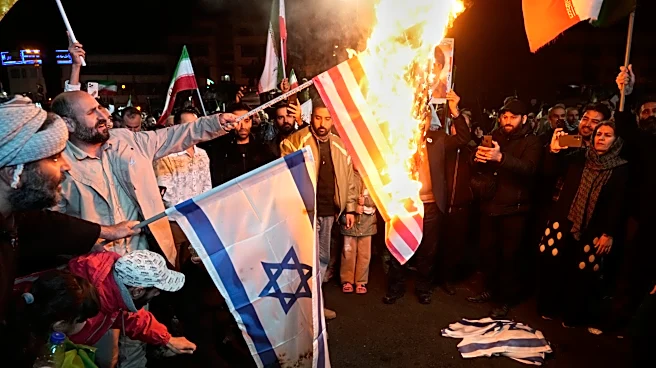
“As we have seen in Gaza and Lebanon, ceasefires have often been violated unilaterally. Hopefully, this time they will remain committed, the ceasefire will hold, and our people will stay steadfast until we achieve final results,” said Ezzat Papar, a Tehran resident.
“When dialogue and negotiation are possible, we should pursue our demands that way,” said Alireza Khoddami, a 60-year-old taxi driver in Tehran.
“How long have we been under sanctions, and what progress have we truly made? In my view, it is the people and the country who continue to suffer. This is a valuable opportunity. We are in a strong position and have the upper hand,” Khoddami said.
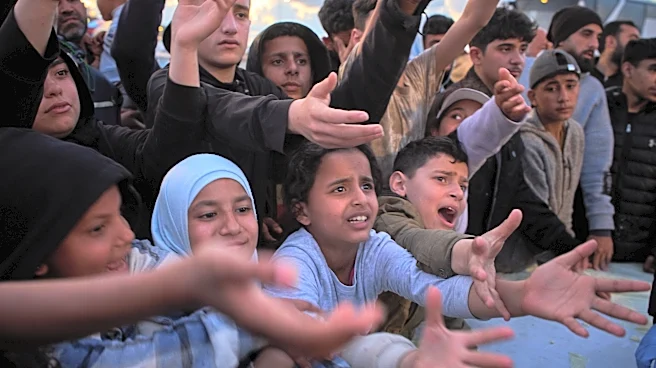
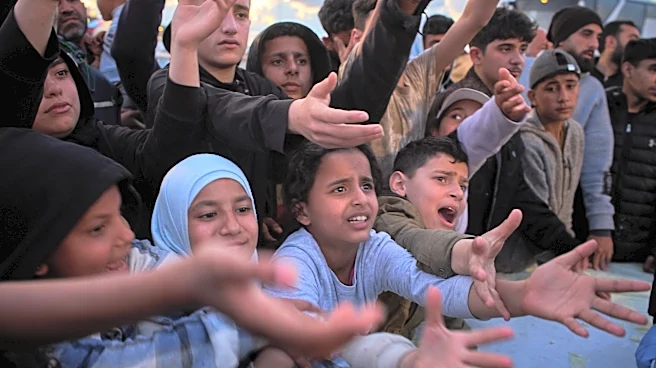
The World Health Organization said it welcomed the two-week ceasefire between the U.S. and Iran, but warned an additional ceasefire is needed between Israel and Hezbollah as more than 1 in 5 Lebanese have been displaced.
“Further violence and displacement will continue to devastate the Lebanese health system and disproportionately impact the most vulnerable—including people with chronic conditions, the elderly and children,” said Dr. Hanan Balkhy, the WHO regional director.
Balkhy spoke at a news conference describing the organization’s emergency response across the Middle East.
He added that regional hospitals and health facilities are operating under intense strain, especially in Iran, where more than 33,000 are injured and more than 2,300 have been killed.
Financial markets see the two-week ceasefire reached between the U.S. and Iran as reducing the threats to global energy supplies, with the global benchmark for crude oil falling roughly 14% to $94 a barrel in Wednesday morning trading.
But oil prices are still higher than before the start of the Iran war, a sign that uncertainty persists about the conflict and the flow of tankers through the Strait of Hormuz, which now appears to be under Iran’s control.
Brent crude oil futures were trading at $72.29 a barrel before the war began.
Israel’s military said it struck more than 100 Hezbollah targets within a space of 10 minutes in Beirut, southern Lebanon and the Beqaa region, calling it the largest coordinated strike in the current war.
The military noted the targets included missile launchers, command centers and intelligence infrastructure.
Many were located within civilian areas and Israel accused Hezbollah of using civilians as human shields.
“The State of Lebanon and its civilians must refuse Hezbollah’s entrenchment in civilian areas and its weapons build-up capabilities,” Israel’s military said.
A series of Israeli strikes hit several areas in central Beirut Wednesday without warning, the state-run National News Agency reported.
Loud booms could be heard throughout the city and smoke was rising from several points.
It was not immediately clear what was targeted, but several of the strikes were in busy commercial locations.
Since the outbreak of the latest Israel-Hezbollah war on March 2, Israel has regularly struck southern and eastern Lebanon and Beirut’s southern suburbs but rarely in the center of Beirut.
There was no immediate report on the number of casualties.
The strikes came hours after a ceasefire was announced in the U.S.-Israeli war with Iran. Israel has said the agreement does not extend to Lebanon, although mediator Pakistan said it does.
U.S. President Donald Trump said Wednesday the U.S. will work with Iran to “dig up and remove” its enriched uranium that was buried under joint U.S-Israeli strikes last summer.
Trump said on social media, “There will be no enrichment of Uranium,” and that none of the material had been touched since the June attacks.
He previously said the U.S. would retrieve the deeply buried material, which is expected to be an intensive undertaking, if it struck an agreement with Iran.
“We are, and will be, talking Tariff and Sanctions relief with Iran,” Trump said.
Although Trump had said on Tuesday the U.S. found a 10-point ceasefire proposal from Iran “workable,” the president on Wednesday suggested many of the points in his 15-point plan, which Iran had rejected, had been agreed to.
Iran has neither said that nor confirmed it would work with the U.S. to retrieve the buried uranium.
The government in Europe’s biggest economy is calling for “realistic expectations” after the ceasefire announcement.
German officials say their country doesn’t have a supply problem but point to the effect of the closure of the Strait of Hormuz on the global market.
Government spokesperson Sebastian Hille noted “significant setbacks” are possible at any time in the peace process, damaged production facilities need to be repaired, reopening the strait will take time, and ships will take weeks to make their journeys.
He said it will take time for significant price reductions to show up.
During a call Wednesday with Iranian Foreign Minister Abbas Araghchi, Turkish Foreign Minister Hakan Fidan expressed Turkey’s satisfaction with the planned two-week pause in fighting.
He also stated Turkey, which has been involved in efforts to end the war, would keep working toward a permanent peace.
Turkish President Recep Tayyip Erdogan said the ceasefire should be implemented fully and shielded from possible “provocations and sabotage.”
“It is our genuine wish that our geography, which has suffered greatly from war, conflict, tension, and oppression, will soon achieve peace, tranquility, and stability,” Erdogan said in a message posted on X.
Speaking about the ceasefire agreement between the U.S. and Iran, Kremlin spokesman Dmitry Peskov said Russia “from the very beginning spoke about the need for swiftly shifting this escalation onto a peaceful track, onto a track of political and diplomatic contacts, negotiations.”
Peskov said that “given yesterday’s rather harsh statements from different sides, which elicited a lot of emotions around the world,” Moscow welcomed the news.
“We welcome the decision not to follow the path of military escalation further, not to carry out strikes on civilian targets,” Peskov said. “We consider this to be very important.”
The Kremlin spokesman expressed hope that “each side will be able to defend its interests not through armed intervention, but at the negotiating table.”
At the end of his weekly general audience Wednesday, Pope Leo XIV called the ceasefire a “sign of true hope” and repeated a call for the faithful to join him in a peace prayer vigil Saturday in St. Peter’s Basilica. The previous day, the pope condemned U.S. President Donald Trump’s threat to destroy Iranian civilization as “truly unacceptable” and said that any attacks on civilian infrastructure would violate international law. Meanwhile, Italy’s foreign minister welcomed the ceasefire as a positive sign for both peace in the Mideast and the Italian economy. Foreign Minister Antonio Tajani wrote on social media: “Iran cannot be allowed to possess nuclear weapons, and it is right that the U.S. does not bomb the civilian population.”