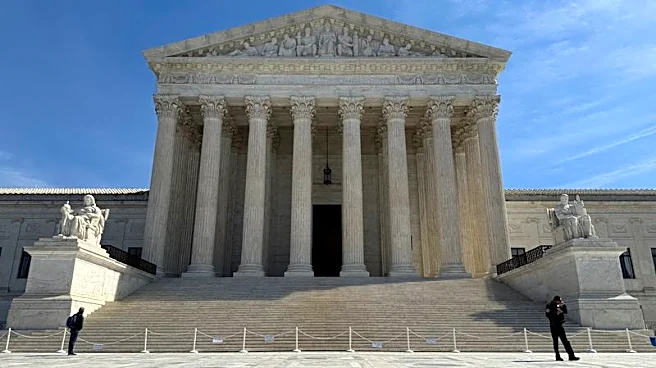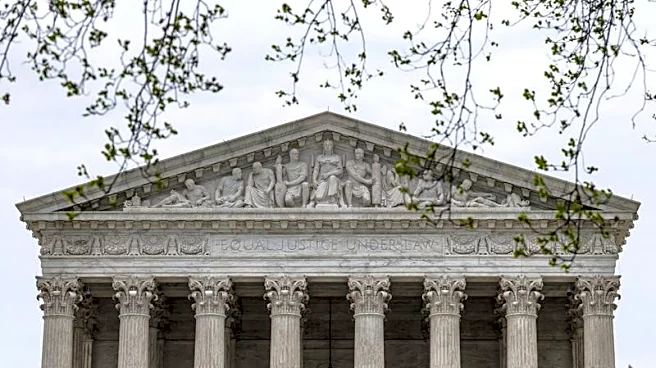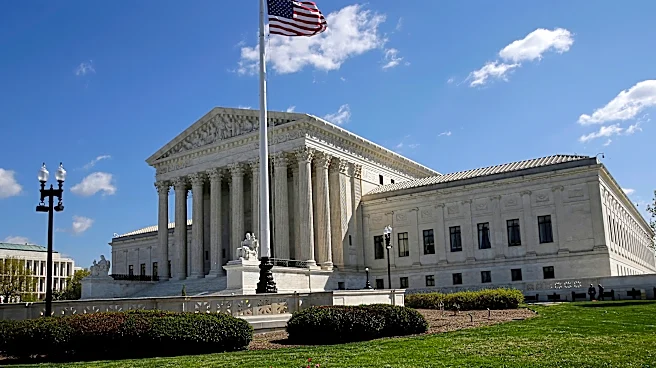




WASHINGTON (AP) — The Supreme Court on Wednesday weakened a landmark Civil Rights-era law that has increased minority representation in Congress and elsewhere, striking down a majority Black congressional district in Louisiana and opening the door for more redistricting across the country that could aid Republican efforts to control the House.
In a 6-3 ruling, the court’s conservative majority found that Louisiana district represented by Democrat Cleo
Fields relied too heavily on race. Chief Justice John Roberts had described the 6th Congressional District as a “snake” that stretches more than 200 miles (320 kilometers) to link parts of Shreveport, Alexandria, Lafayette and Baton Rouge.
“That map is an unconstitutional gerrymander,” Justice Samuel Alito wrote for the six conservatives.
The effect of the ruling may be felt more strongly in 2028 because most filing deadlines for this year's congressional races have passed. Louisiana, though, may have to change its redistricting plan to comply with the decision.
It is unclear how much is left of the provision, known as Section 2 of the Voting Rights Act of 1965, the main way to challenge racially discriminatory election practices.
Not much, Justice Elena Kagan wrote in a dissent for the three liberal justices. “The consequences are likely to be far-reaching and grave. Today’s decision renders Section 2 all but a dead letter,” Kagan wrote.
The voting rights law succeeded in opening the ballot box to Black Americans and reducing persistent discrimination in voting. Nearly 70 of the 435 congressional districts are protected by Section 2, election law expert Nicholas Stephanopoulos has estimated.
Alito wrote that "allowing race to play any part in government decisionmaking represents a departure from the constitutional rule that applies in almost every other context.” He said Section 2 is effectively limited to instances of intentional discrimination, a very high standard.
Kagan said the upshot of the decision is that states "can, without legal consequence, systematically dilute minority citizens’ voting power.”
Reaction to the decision broke along partisan lines.
“This is a complete and total victory for American voters. The color of one’s skin should not dictate which congressional district you belong in. We commend the court for putting an end to the unconstitutional abuse of the Voting Rights Act and protecting civil rights.” White House spokeswoman Abigail Jackson wrote in an email.
The chair of the Democratic Congressional Campaign Committee called the decision “appalling.” Rep. Suzan DelBene of Washington state said it was the latest in a long line of attacks by President Donald Trump and the conservative court “against the fundamental right of every American citizen to vote.”
She said Democrats remained poised to regain the House majority in November “despite this corrupt and targeted assault on the voting rights of Black and Brown Americans from the Supreme Court.”
Trump had touched off a nationwide redistricting competition this year to boost Republican chances of preserving their House edge.
Legislatures already are free to draw extremely partisan districts because of a 2019 Supreme Court decision.
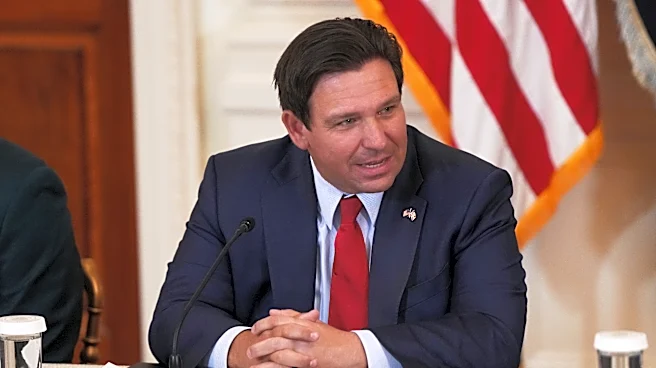
Wednesday's ruling came out as Florida legislators debated a proposed redrawing of the state’s congressional lines, submitted by Republican Gov. Ron DeSantis and intended to give the GOP a chance to pick up as many as four seats in the state’s U.S. House delegation.
Democrats in the Florida Senate urged the Republican supermajority to delay debate to at least offer lawmakers a chance to read the decision and consult lawyers on how it might affect DeSantis’ proposal. Republicans refused.
In the Supreme Court's Louisiana ruling, the justices did an about-face from a decision in a similar case from Alabama less than three years ago that led to a new congressional map for the state that sent two Black Democrats to Congress.
Roberts and Justice Brett Kavanaugh joined the three liberals to form a majority in the Alabama case. Both joined Alito's opinion Wednesday.
The Alabama decision also prompted Louisiana lawmakers to add a second majority Black district. About a third of Louisianans are Black and they now form majorities in two of the state’s six congressional districts. Alabama has a separate appeal pending at the Supreme Court.
Barring extraordinary action, the broader impact probably will be felt in 2028, when Republicans potentially can replace more than a dozen Democratic-held House districts that were previously protected under the Voting Rights Act.
“The Voting Rights Act as a means to protect minority voters from vote dilution is essentially dead,” said Jonathan Cervas, a political scientist at Carnegie-Mellon University who has served as an outside legal expert in multiple Voting Rights Act cases.
___
Associated Press writers Sara Cline in Baton Rouge, La., Nicholas Riccardi in Denver, Bill Barrow in Tallahassee, Fla., and Lisa Mascaro contributed to this report.
___
Follow the AP’s coverage of the U.S. Supreme Court at https://apnews.com/hub/us-supreme-court.