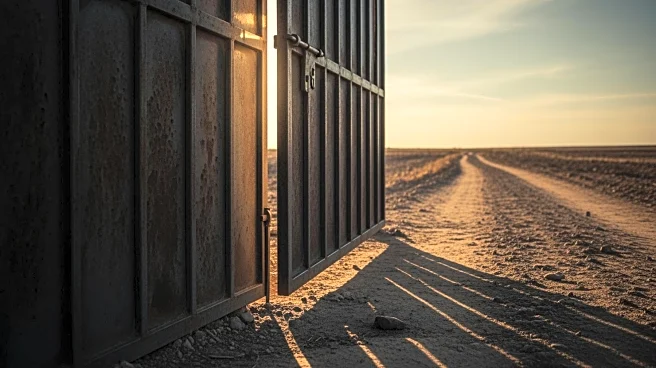


JERUSALEM (AP) — The gateway to the world for Palestinians in Gaza — the Rafah border crossing to Egypt — is set to reopen Sunday after being largely shut since it was seized by Israel in May 2024.
The reopening, announced by Israel on Friday, is part of entering the second phase of the U.S.-brokered ceasefire, and it raises hopes for thousands of war-wounded Palestinians seeking travel abroad for medical care, and for tens of thousands of people outside
Gaza seeking to return home. However, at first only very few people will be allowed to cross.
Officials say that the crossing will initially operate under strict controls, with Israeli, Egyptian and European Union personnel overseeing the new arrangements and only dozens of Palestinians — and no goods — allowed through the crossing each day.
Here’s what to know:
COGAT, the Israeli military body in charge of coordinating aid to Gaza, said in a statement that starting on Sunday a “limited movement of people only” would be allowed through the Rafah crossing.
The announcement followed statements from Israeli Prime Minister Benjamin Netanyahu and Ali Shaath, newly appointed to head the Palestinian administrative committee governing Gaza’s daily affairs, that it would likely open soon.
"Opening Rafah signals Gaza is no longer closed to the future and to the world,” Saath said in a Jan. 22 video the White House posted on X.
Before publicizing Shaath's promise, the U.S. had pressed Israel and Hamas to enter the ceasefire's second phase. The remains of the final hostage in Gaza were recovered this week, completing a key part of the first phase.
Shaath and the new Palestinian committee remain in Cairo, without Israeli authorization to enter Gaza through Rafah.
Preparations are underway to let a limited number of medical evacuees leave Gaza first. That's a significant shift from before the war, when most exited through Israel, according to World Health Organization data.
There are conflicting reports on how many people can cross each day. An Israeli official speaking on the condition of anonymity in line with protocol said earlier this week that 50 Palestinians will be allowed in and 50 out daily. Another person familiar with discussions said 50 would be allowed in daily and 150 out.
Either mean a long wait for many of the estimated 20,000 sick and wounded that the territory’s health ministry says need treatment outside Gaza. At a rate of 50 evacuations a day, it would take more than a year for everyone to leave.
In the past, those prioritized for evacuation have been mostly children, cancer patients and people suffering from physical trauma. Most received treatment in Egypt.
Medical evacuees typically exit Gaza with escorts. The person familiar with the discussions said two escorts likely would be allowed for each evacuee.
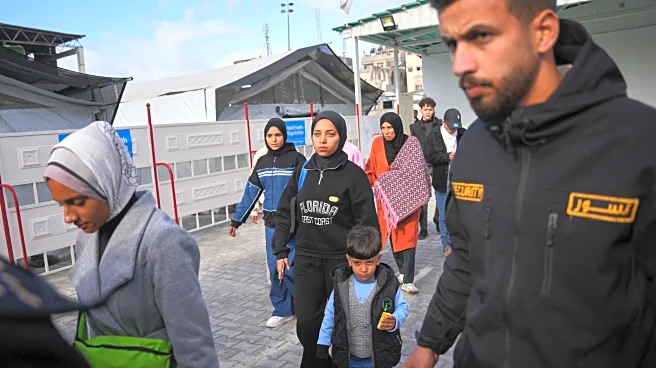
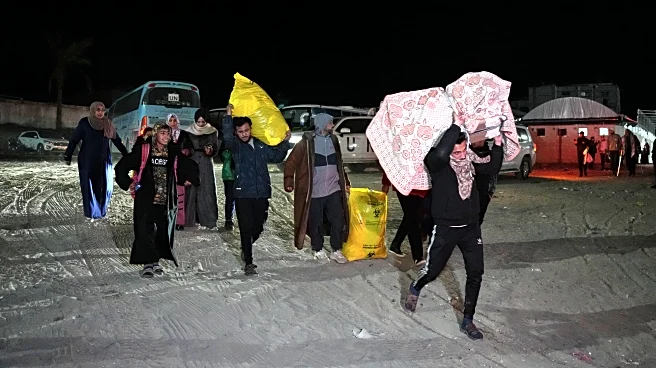
Meanwhile, at least 30,000 Palestinians have registered with the Palestinian Embassy in Cairo for return to Gaza, according to an embassy official, speaking on condition of anonymity because details of the reopening remain under discussion.
A complex web of countries and institutions will oversee the Rafah crossing, including Egypt, the Palestinian Authority and a European Union mission, but Israel has control over who enters or exits.
COGAT said Israel and Egypt would vet Palestinians for entry and exit, though the crossing itself would be overseen by European border patrol agents. Those who fled during the war and are cleared by Israel may return.
Under the ceasefire terms, Israel’s military controls the area between the Rafah crossing and the zone where most Palestinians live. COGAT will bus Palestinians to and from the crossing, said an Israeli official, speaking on the condition of anonymity in line with protocol.
At the edge of the zone, Palestinians travelling to the crossing will undergo an additional screening, COGAT said on Friday. In the past, such screenings have been conducted by Israeli soldiers and private U.S. contractors.
“Anyone entering or exiting undergoes our inspection, a full inspection," Netanyahu said Tuesday.
Officers from the EU Border Assistance Mission and the Palestinian Authority will run the crossing. Plainclothes officers with the Palestinian Authority will stamp passports, as they did during a brief ceasefire at the start of 2025 and before Hamas wrested control of Gaza in 2007, Palestinian officials told the AP.
Netanyahu seemed to acknowledge that members of Palestinian factions that historically have governed Gaza may play a role, noting that the majority of bureaucrats have a history of working for Hamas or the Palestinian Authority.
Even before the war, Palestinians faced heavy restrictions.
In 2022, the United Nations recorded more than 133,000 entries and 144,000 exits through Rafah, though many involved the same people crossing multiple times. Egyptian authorities allowed imports on 150 days of the year, and more than 32,000 trucks of goods entered.
Restrictions have tracked the region’s politics. Egypt, alongside Israel, imposed a blockade after Hamas seized power in Gaza in 2007. It reopened the crossing after Egypt’s 2011 revolution but closed it in 2013 after the military ousted President Mohammed Morsi, a leader of the Muslim Brotherhood, the Islamist movement from which Hamas emerged.
Egypt gradually allowed the Rafah crossing to reopen in the years that followed, but the on-and-off restrictions led to a massive tunnel economy that sprung up beneath it. Tunnels served as an economic lifeline for Gaza and a conduit for weapons and cash, according to Israeli and Egyptian officials. Hamas collected tens of millions of dollars a month in taxes and customs on goods passing through the crossing.
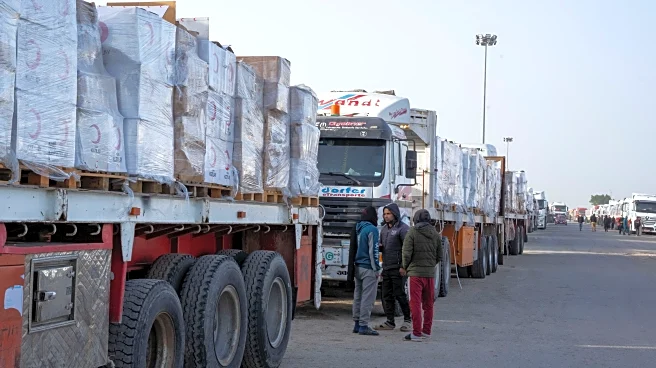
It is not clear when trucks will be allowed to pass through the Rafah crossing, what Palestinians will be permitted to bring and for how long daily entries and exits will be capped.
That's a big uncertainty for humanitarian organizations seeking to further surge aid into devastated Gaza, where groups have long reported vast shortages of medical supplies, fuel and other essential needs.
The United Nations wants the crossing open for “both humanitarian cargo and private sector cargo, which is critically important for reviving the economy in Gaza,” U.N. spokesperson Stephane Dujarric said Wednesday.
The U.N.’s deputy Middle East coordinator, Ramiz Alakbarov, told a U.N. Security Council meeting that humanitarian workers face “delays and denials of cargo at crossings and limited routes available for transporting supplies within Gaza.”
Netanyahu said his focus is on disarming Hamas, a challenging part of the ceasefire's second phase, and destroying its remaining tunnels. He said there would be no reconstruction in Gaza without demilitarization, a stance that could make Israel's control over the Rafah crossing a key point of leverage.
___
Associated Press writers Samy Magdy in Cairo and Edith M. Lederer at the United Nations contributed.
___
Find more of AP’s coverage at https://apnews.com/hub/israel-hamas-war