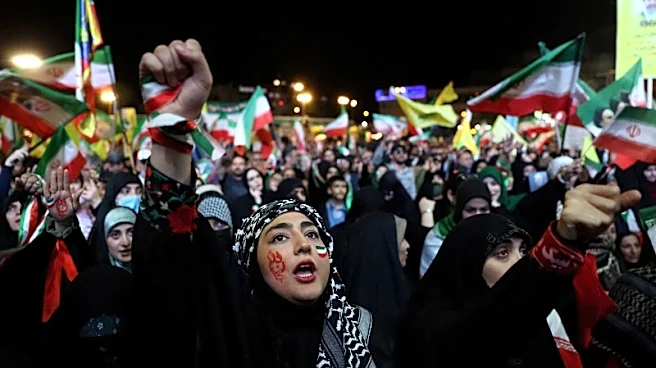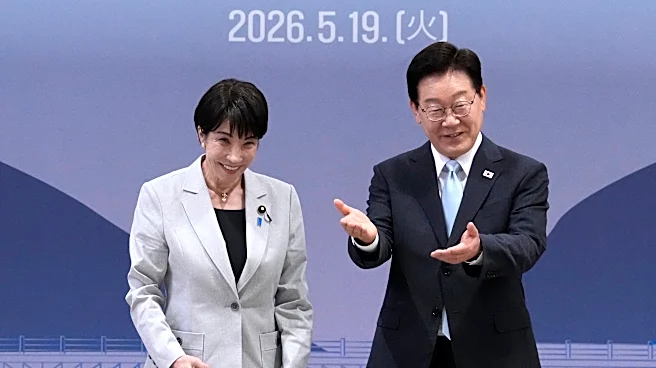






SEOUL, South Korea (AP) — South Korean President Lee Jae Myung and Japanese Prime Minister Sanae Takaichi held their fourth meeting in about six months on Tuesday, underscoring the need for greater cooperation between the historical Asian rivals amid global challenges, including the Iran war.
Lee hosted Takaichi in his hometown of Andong, a southeastern South Korean city famous for its centuries-old traditional folk village, a UNESCO World Heritage
site. In January, the two met in Takaichi’s hometown of Nara, an ancient Japanese capital.
The meetings marked the first time sitting leaders of the two countries have visited each other’s hometowns.
“The fact that such meaningful and historic exchanges took place in the span of just four months speaks to the depth and strength of the friendship and bonds that Korea and Japan now share,” Lee told a joint news conference with Takaichi after the summit.
Lee said bilateral cooperation was needed more than ever due to instability in supply chains and energy markets caused by the war in the Middle East. Takaichi made similar comments, saying the two discussed stabilizing energy and critical mineral supplies and pursuing swap arrangements of crude oil, petroleum products and natural gas.
The two leaders said they also discussed the importance of trilateral cooperation among Seoul, Tokyo, and Washington.
Experts say current ties between Seoul and Tokyo have no sticking points and that their relationship will subsequently remain on a positive trajectory for now.
“The two countries focus more on cooperation than contentious issues,” said Choi Eunmi, a Japan expert at the Seoul-based Asan Institute for Policy Studies. “They would now think negative bilateral relations won’t be helpful to anyone.”
South Korea and Japan are both key U.S. allies with vibrant democracies. But their relationship has long experienced severe ups and downs over grievances stemming from Japan’s 35-year colonization of the Korean Peninsula before the end of World War II.
Relations began improving in 2023 when Lee and Takaichi’s predecessors took steps to move beyond history disputes to strengthen bilateral cooperation, saying they faced common challenges like the U.S.-China strategic competition, supply chain vulnerabilities and North Korea’s advancing nuclear arsenal.
When Lee and Takaichi each took office as new leaders last year, observers worried about Takaichi’s reputation as a right-wing security hawk and the anticipation that Lee, a political liberal, would tilt toward North Korea and China and away from the U.S. and Japan. But they have maintained cooperation, even in some unprecedented ways.
In August, two months before Takaichi’s inauguration, Lee became the first South Korean leader to choose Japan as his first destination for a bilateral summit. At the end of their meeting in January, Lee and Takaichi drummed to K-pop hits such as BTS’ “Dynamite” in a jam session arranged by the Japanese leader, a heavy metal fan who was a drummer in her college days.
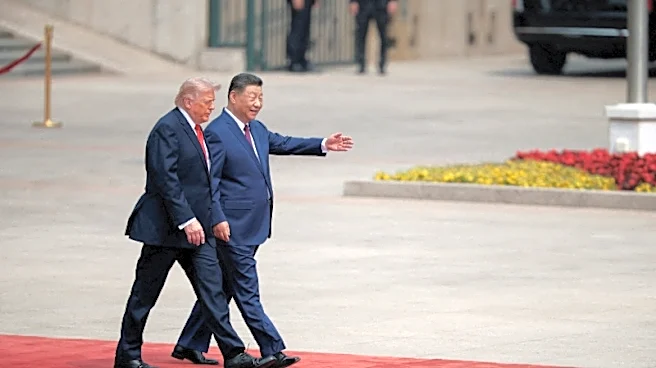
Lee has said he and Takaichi share a view that national leaders must act differently from ordinary politicians. But many observers say the two leaders also likely feel the need to tighten cooperation because they have more grave geopolitical difficulties than their predecessors, such as U.S. President Donald Trump’s America-first policy and global economic damage caused by the Iran war.
South Korea and Japan both have pledged hundreds of billions of dollars in U.S. business investments. Trump’s tariff war and his transactional approach to security threaten the trust in the U.S. held by many South Koreans and Japanese.
Ties between Seoul and Tokyo are so delicate that they could suffer unexpected setbacks if they fail to formulate coping measures for explosive issues such as Japan’s colonial-era mobilization of Koreans as forced laborers and sex slaves, according to experts, who say wrangling over those issues has eased as the two governments try to avoid public discussions.
“Both are not talking about how to settle these disputes or prevent them from recurring and we don’t know when such conflicts may arise,” Choi said.
___
Associated Press writers Kim Tong-hyung in Seoul and Mari Yamaguchi in Tokyo contributed to this report.