

LAWRENCE, Kan. (AP) — Five days before Missouri and Kansas were to meet for the latest edition of the Border War, the Jayhawks' athletic department posted on its official social media account a black-and-white image John Brown, championed by some as an ardent abolitionist and loathed by just as many for his bloody and militant tactics.
Kansas athletic director Travis Goff soon doubled down on his personal account, posting an old picture of Jayhawkers,
viewed by those in his state as heroic Civil War-era freedom fighters but considered guerilla raiders by folks across the state line in Missouri.
“These are the original Jayhawkers, after executing a daring jailbreak in the slave state of Missouri,” Goff wrote. “They rescued an Underground Railroad leader who was imprisoned by pro-slavery forces for helping slaves escape to freedom.”
Missouri fans were quick to point out that Confederate raiders were a problem in their state, too, so much so that a militia known as the “Fighting Tigers of Columbia” — Sound familiar? — was formed to defend the city home to the University of Missouri.
Talk about setting the tone for a college football game.
In an era of conference realignment, of players dashing from one program to the next and coaches doing the same, few rivalries still exist that are as bitter as Missouri-Kansas. Its origins can be traced to actual warfare, the first game having been played in 1891, just 26 years after the issue of slavery was settled on the bloody battlefields of Antietam, Fredericksburg and Gettysburg.
The series went on hiatus when Missouri jilted the Big 12 for the Southeastern Conference in 2012, and that only seemed to sow more dissension among Kansas fans. The game finally returned last year, when the Tigers won 42-31 in Columbia, and the return game is Friday night.
“It’s different in a sense that this is rooted in American history, right?" Kansas assistant Andy Kotelnicki said. “It's a little deeper than just, ‘Oh, hey, we really don’t like Michigan,' you know what I'm saying? It's generations of wrongs that we had to correct as a country that are represented in this game, so this is unlike any rivalry.”
The origins of the bitterness lie in the Kansas-Nebraska Act, which allowed settlers to decide on slavery through popular sovereignty. And on the frontier, that naturally led to bloodshed. There was the Sack of Lawrence in 1856, when a pro-slavery mob burned the town now home to the University of Kansas, and the Pottawatomie Massacre, when Brown led a raid that killed five pro-slavery settlers.
The reality is there were pro- and anti-slavery factions of both sides of the state line. Over the years, the escalating guerilla warfare in the years leading up to the Civil War became known as “Bleeding Kansas.”
Each state university ultimately adopted its nickname from those days. When their first football game was played on Oct. 31, 1891, old Civil War veterans stood on the sidelines and stared across the field at each other, almost as if it was another battlefield.
“We've talked about why this rivalry is beyond football,” Jayhawks coach Lance Leipold said. “We've talked about the history. I think they have seen the intensity of when it's being played, in this and most other sports across the board. We've all learned a little more there, myself included. ... Yeah, it's important for a lot of reasons, especially for our fans."
That's evident even when the teams are not playing each other.
Whenever the Tigers play a home game, for example, and “Mr. Brightside” is played in the second half, the crowd led by the student section punctuate the hit by The Killers with a profane three-syllable smear that begins with a four-letter “F” word and ends with “KU" — no matter the sport, no matter the opponent, even if they hadn't played Kansas in more than a decade.
“We’ve highlighted the significance of the rivalry,” Missouri coach Eli Drinkwitz said, “where it started and how it came to be.”
Most of the players taking the field Friday night weren't even alive on Oct. 29, 2005, the last time the Tigers played in Lawrence. Their last few years as conference rivals, the two teams played in Kansas City, Missouri, which lies right on the state border.
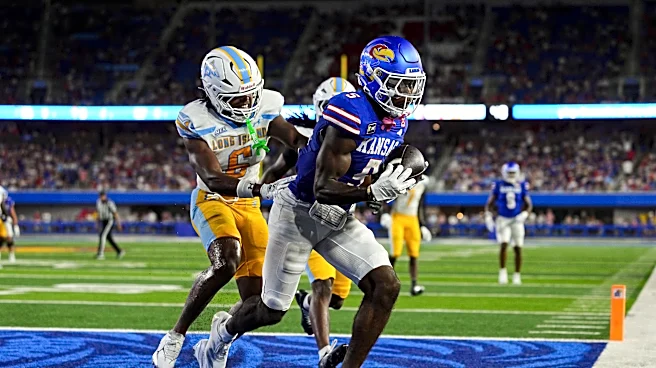
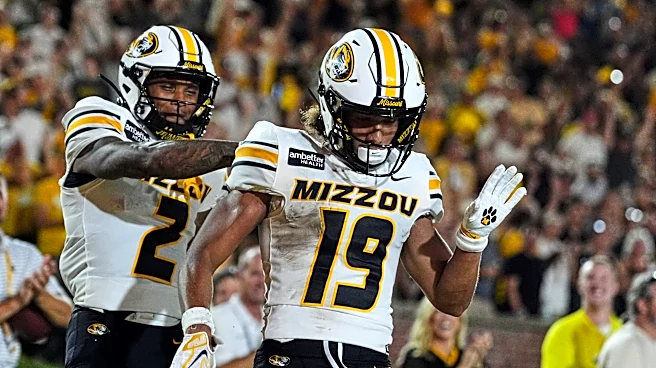
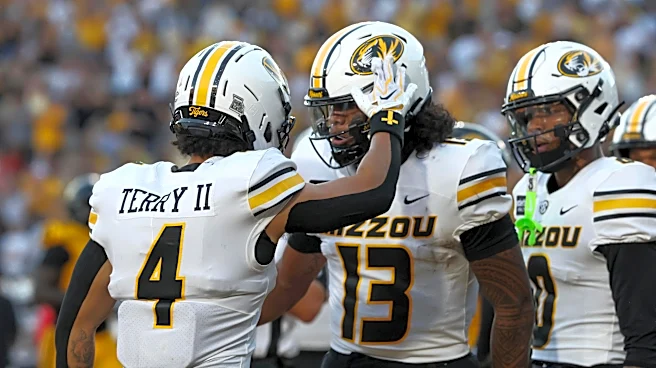
When the series was returned as a two-game, home-and-home affair, the first matchup took place in Columbia. The Jayhawks jumped out to a 21-6 lead by the end of the first quarter last season, but the Tigers battled back to tie the game by the break, and Missouri put the game away when Jamal Roberts ran 63 yards for a touchdown with 1:49 to go.
Kansas wound up missing out on a bowl game by a single win.
“Last year's game, we had some chances and didn't convert,” Leipold said. “We didn't make the stops when we needed to.”
There is much at stake once again in the nationally televised rematch Friday night.
The Tigers moved up two spots to No. 23 in the AP Top 25 after running roughshod over Arkansas-Pine Bluff last week. But with five games still to come against top-10 opponents in the rugged SEC, they can't afford to drop a game against the Jayhawks, who are trying to get some program-wide momentum going again after consecutive five-win seasons.
“It's a rivalry game,” Roberts said, “so everyone is going to put their hearts on the line for this game. The rivalry means a lot; it's also a trophy game. But it's been a rivalry for many years now. It's something that's been part of the Mizzou culture.”
___
Sign up for Top 25 poll alerts here, visit the Top 25 here and see AP’s full college football coverage here