






Iran fired at Kuwait on Thursday as part of its retaliation for U.S. bombardments earlier in the week. Meanwhile, Israeli police said they arrested a settler allegedly involved in an attack on Palestinians last week.
Here’s a look at the latest developments in the Iran war and the wider Middle East. Full coverage can be found here.
Sirens sounded in Kuwait early Thursday, where air defenses intercepted missile and drones during a “blatant Iranian aggression,”
the Ministry of Defense said on X.
It came after U.S. allies Bahrain and Jordan said their air defense systems also intercepted several Iranian air attacks Wednesday.
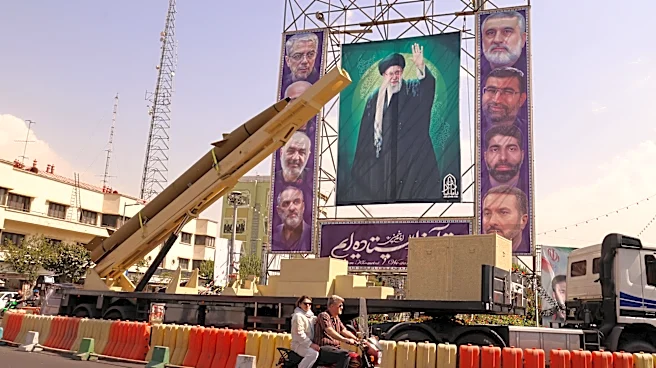
Fighting between the U.S. and Iran has increased this week after the U.S. hit Iranian rocket launchers on an island in the Strait of Hormuz on Sunday, saying Iran was planning to use them to shoot mines into the waterway.
Authorities in Israel arrested an Israeli settler for his suspected role in an attack on a Palestinian home in the occupied West Bank, according to a police statement Thursday.
The statement did not identify the suspect but said he was being held for questioning and that police would request to extend his detention.
The 19-year-old man is believed to have participated in a violent riot in the Palestinian village of Qusra on Saturday, in which settlers threw stones and barricaded themselves inside the home of one of the villagers. Police said they were working with Israel’s domestic security agency to investigate the incident and locate and detain more suspects.
The arrest followed weeks of incursions by Israeli settlers into Qusra, which is located south of the Palestinian city of Nablus. The settlers staged a siege of several Palestinian homes, including one owned by a Palestinian American man from Ohio. Their actions drew condemnations from U.S. Ambassador Mike Huckabee and Prime Minister Benjamin Netanyahu.
With his legacy on the line, Netanyahu is imploring his erstwhile allies to unite into larger parties that have a better chance of entering parliament.
A series of small, pro-Netanyahu parties are competing in the run-up to the Oct. 27 vote. But instead of strengthening the Israeli leader, these parties — including hard-line blocs led by polarizing Cabinet ministers Itamar Ben-Gvir and Bezalel Smotrich — risk weakening his chances for reelection by splitting the vote among Netanyahu’s base.
The election is largely a referendum on Netanyahu’s nearly uninterrupted 17-year rule and his handling of a turbulent period marked by mass protests, Hamas’ Oct. 7, 2023, attacks and nearly three years of war. A victory would mark a stirring comeback for the embattled leader, while a loss would likely end the reign of a man who has shaped Israeli politics for three decades.