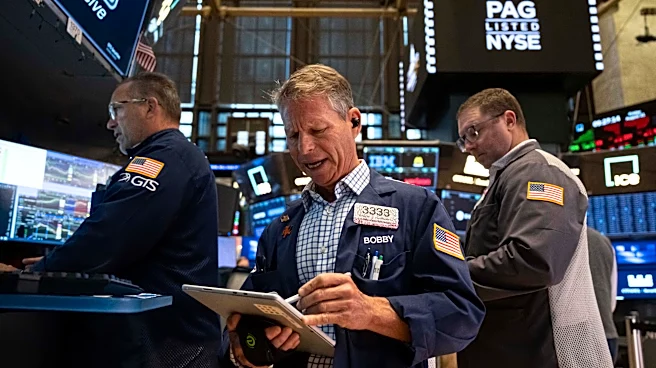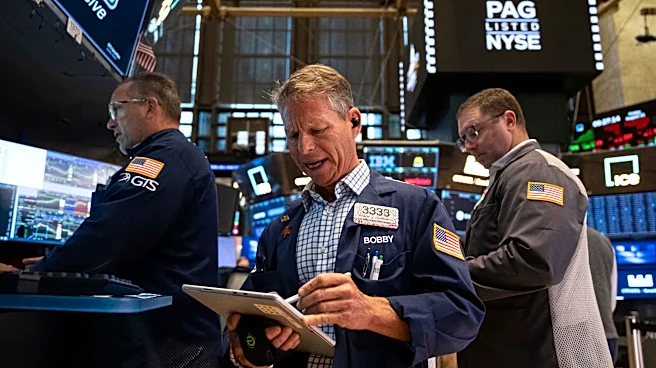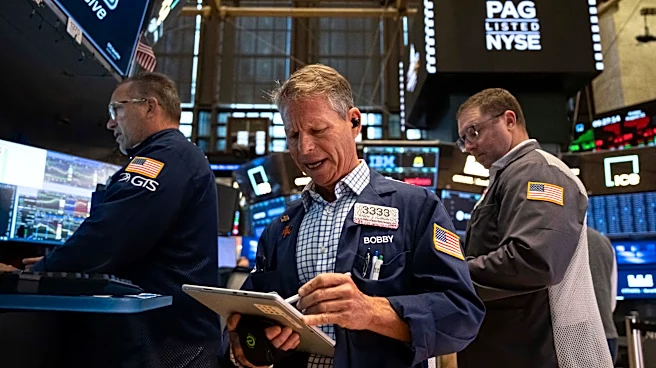





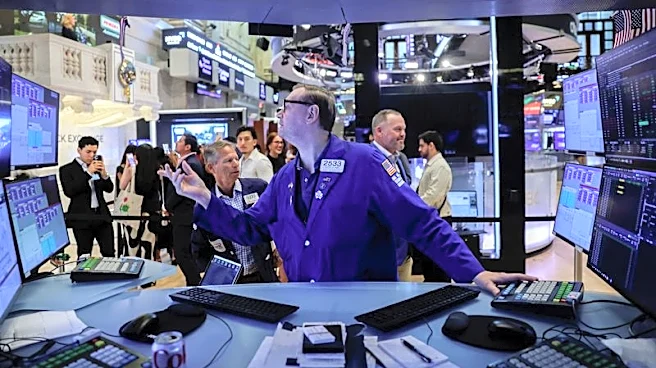
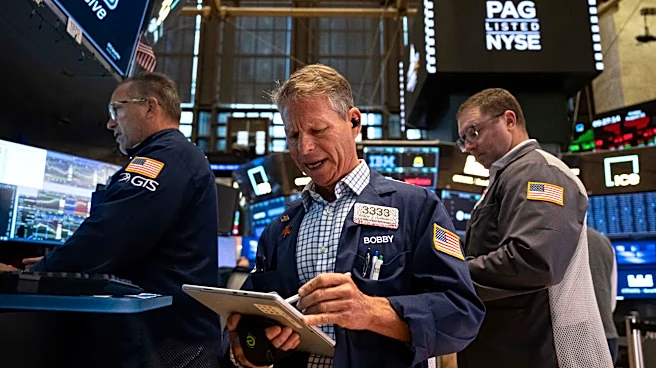
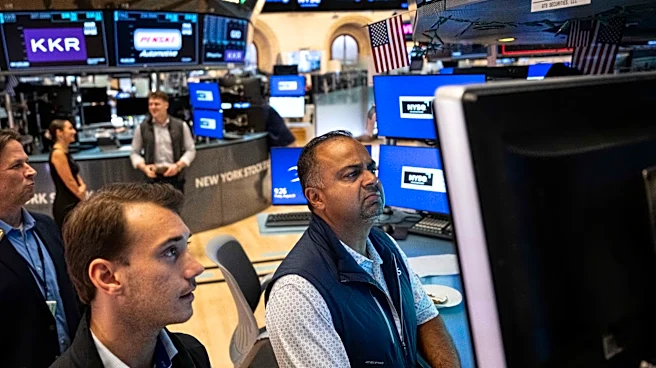
NEW YORK (AP) — Technology stocks are leading Wall Street on Thursday after Nvidia, Salesforce and others reported even fatter profits for the spring than analysts expected.
The S&P 500 added 0.4% and pulled closer to its all-time high set earlier this month. The Dow Jones Industrial Average was down 29 points, or 0.1%, as of 9:35 a.m. Eastern time, and the Nasdaq composite was 1.1% higher.
Nvidia was the strongest force pulling the market higher, even
though more stocks fell within the S&P 500 than rose. The chip giant climbed 7.6% after once again delivering much stronger profit and revenue for the latest quarter than analysts expected. More importantly, it also gave forecasts for upcoming revenue growth that topped analysts’ estimates, suggesting demand continues to accelerate for chips to power artificial-intelligence projects.
“AI has reached its inflection point,” Nvidia CEO Jensen Huang said. “It’s doing useful work. Its tokens are productive and profitable.”
That helped calm some of the worries that have built around AI stocks generally, which have been under pressure recently. After rocketing higher for years in the frenzy around AI, stocks in the industry are confronting skepticism that they shot too high and that booming demand for AI chips may fade if the AI revolution does not produce as much profit as promised.
Another big tech company, Salesforce, jumped 20.7% after it said that AI helped it deliver one of its best quarters in history. It reported stronger profit than analysts expected, and CEO Marc Benioff said it’s “seeing incredible demand for our AI and data products” and that it’s “turning AI into customer success at unprecedented scale.”
Salesforce, which helps companies manage their customers’ data, also raised its forecast for revenue over the full year. It’s notable because Salesforce’s stock struggled earlier on worries that competitors powered by AI could ultimately steal away customers from Salesforce and other software companies. Salesforce's stock is potentially heading for its best day in six years.
Elsewhere, though, trends were more mixed across big U.S. companies.
HP fell 6.7% even though it topped analysts’ expectations for profit and spring in the latest quarter. Analysts pointed to worries about its sales of personal computers, as well as how higher prices for computer memory and other commodities are pressuring its profit margins.
Best Buy and some other retailers also sank amid continued worries that U.S. shoppers could be stretched because of high inflation and discouragement about the economy. Best Buy sank 4.2% even though it topped analysts’ expectations for both profit and revenue in the latest quarter.
One potential winner from high inflation could be dollar stores, which could see higher-income households become new customers as they look for less expensive places to shop.
Dollar General rose 6.5% after reporting a stronger profit for the latest quarter than analysts expected. But rival Dollar Tree sank 2.2% despite blowing past profit expectations. More attention may have been on its forecasted range for an important underlying measure of revenue, whose midpoint fell short of analysts’ expectations.
In the bond market, Treasury yields held relatively steady following a report suggesting the U.S. job market remains solid. Fewer U.S. workers applied for unemployment benefits last week, an indication that layoffs could be remaining low.
The yield on the 10-year Treasury remained at 4.66%, where it was late Wednesday.
Yields have been largely climbing through the summer on worries about high inflation, the U.S. government’s gargantuan and growing debt and other factors. They got so high that the U.S. Treasury Department made a surprise announcement last week to intervene in the bond market, though analysts say its effect could be limited.
The next big event for the bond market will be a speech coming Friday from the chairman of the Federal Reserve, Kevin Warsh. He has been adamant about giving financial markets fewer clues about what the Fed will do in the future with interest rates to control inflation. But the pressure is on him to give clearer guidance.
One wild card for inflation recently has been oil prices, which have been swinging with uncertainty about when the war with Iran will allow oil tankers to freely exit the Persian Gulf again. The price for a barrel of Brent crude, the international standard, rose 1.1% Thursday to $87.87.
But it's still below the $102 level that it briefly touched last month.
In stock markets abroad, indexes were mixed in Europe and Asia. Stocks jumped 1.5% in Seoul and 1.1% in Shanghai but fell 1.7% in Paris.
___
AP Business Writers Chan Ho-him and Michelle Chapman contributed to this report.