



RALEIGH, N.C. (AP) — Four homes blasted by icy winds on an eroding North Carolina island collapsed into the ocean and Florida farmers anxiously waited for frozen plants to thaw Monday as people across the eastern half of the United States coped with more than a week of sub-freezing weather.
Thermometers hovered below freezing throughout the day Monday across the northern U.S. from the Dakotas to Maine, and sub-freezing temperatures were forecast to return
to the Southeast overnight, reaching into parts of northern Florida.
As residents of the Carolinas and Virginia dug out from deep snow, more than 70,000 homes and businesses in Tennessee and Mississippi began a second week without electricity since an earlier snow and ice storm inflicted severe damage on power lines and utility poles.
In hard-hit Nashville, Tennessee, Terry Miles said Monday was his ninth day without power. Miles said he has been living with his wife and their dog in a bedroom that he tried to insulate by hanging up blankets. He's cooking and heating water on a propane grill. On Sunday someone loaned him a small gas generator with enough power to run a couple of space heaters.
“We’re roughing it,” Miles said. “I’ve been camping before and had it easier than this. I feel like Grizzly Adams.”
The death toll has surpassed 110 in states afflicted by the dangerous cold since Jan. 24.
In New York City, Mayor Zohran Mamdani said Monday that hypothermia played a role in the deaths of 13 people found dead outside in the bitter cold, according to preliminary findings. More than a dozen other suspected hypothermia deaths were reported in Indiana, Louisiana, South Carolina and Texas.
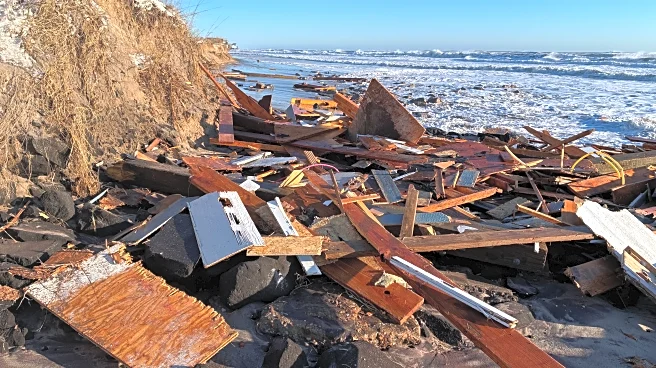
On the East Coast, where a weekend bomb cyclone brought heavy snow and fierce winds, the National Park Service said four unoccupied homes along North Carolina's Outer Banks collapsed into the Atlantic Ocean since Sunday. A bystander recorded one of them toppling into the water. Photos taken by the agency showed piles of debris along the shoreline in the village of Buxton.
The Outer Banks’ narrow, low-lying barrier islands have been eroding for years as rising seas swallow the land. Prior to the latest storm, more than two dozen houses, usually built on stilts at the water's edge, had collapsed since 2020. Most fell in extreme weather.
In Florida, where some farmers spray water on their fruit trees and plants ahead of freezing weather to help protect them from even deeper cold, fern growers were waiting Monday for a protective layer of ice coating their plants to melt away so they could assess damage. Florida got so cold over the weekend that the Tampa-St. Petersburg area saw snow flurries and cold-stunned iguanas were motionless on the ground.
The timing was especially awful for fern growers, who had been busy shipping plants to reach retailers ahead of Valentine’s Day on Feb. 14.
“It is just terrible timing," said Victoria Register, director of sales and marketing at FernTrust, a growers’ cooperative in Seville, Florida. “It’s right in the middle of our busiest shipping time of the entire year.”
In Tennessee, frustrations were growing with the utility Nashville Electric Service over an outage that knocked out about a quarter-million customers’ power. More than 20,000 remained without electricity Monday after more than a week, and won't be fully restored until Feb. 9, the utility said.
Nashville Electric Service has defended its response and said the storm was unprecedented, cutting off power to about half its customers.
But Mayor Freddie O’Connell announced Monday he's ordering a review of Nashville Electric Service’s storm preparation and response. O’Connell met with utility leaders Sunday and said afterward they were “unequipped to communicate about a crisis.”
And Sen. Marsha Blackburn of Tennessee also criticized the Nashville utility, posting on social media: “whoever is responsible for this breakdown should be fired.”
After more than a week of cold-weather warnings across the eastern U.S., the National Weather Service still had a few alerts in effect, including a freeze warning through early Tuesday in south Georgia and most of Florida. Some snow was also expected Tuesday across parts of Indiana, Kentucky, Ohio and West Virginia.
Nearly a foot (29 centimeters) of snow fell over the weekend in Charlotte, North Carolina's largest city. Gov. Josh Stein’s office said Monday that crews were still clearing interstates and highways.
“We are working around the clock to clear roads and get people back to their daily lives as quickly and safely as possible, but because temperatures will remain low overnight, this process takes time,” Stein said in a news release.
___
Loller reported from Nashville, Tennessee, and Bynum reported from Savannah, Georgia. AP journalists Jonathan Mattise in Nashville; Bruce Shipkowski in Trenton, New Jersey; and Jeff Martin in Atlanta contributed.