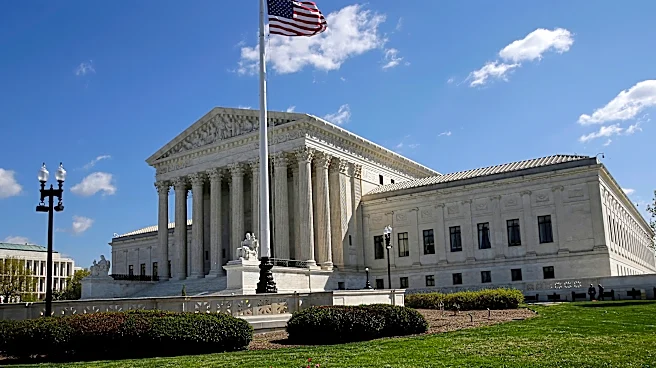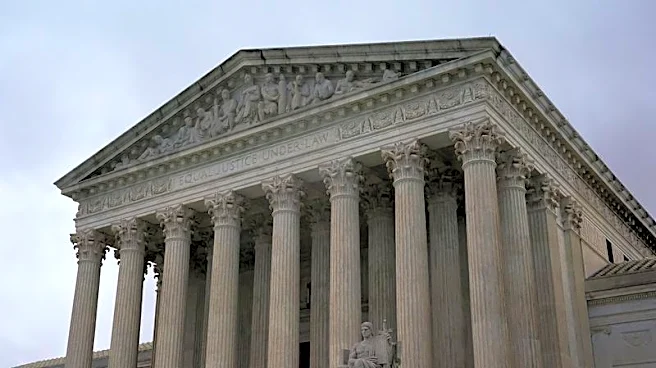









BATON ROUGE, La. (AP) — Louisiana’s congressional primaries won’t be going forward as scheduled in May, as a result of a U.S. Supreme Court ruling that struck down a majority Black congressional district, the state’s top elected officials said Thursday.
Gov. Jeff Landry and Attorney General Liz Murrill, both Republicans, said in a joint statement that Wednesday’s high court ruling effectively prohibits the state from carrying out the primaries under
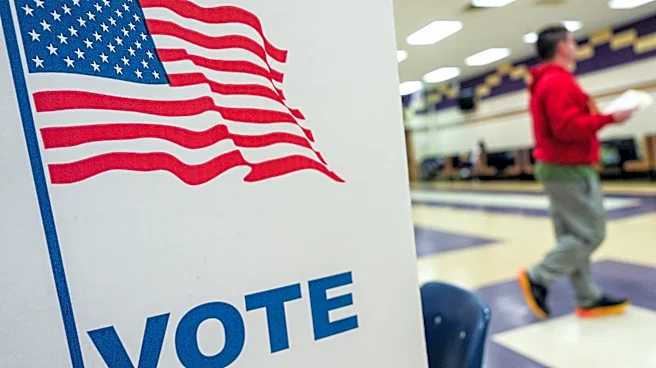
the current districts. Early voting had been scheduled to begin Saturday in advance of the May 16 primary.
“The State is currently enjoined from carrying out congressional elections under the current map," Landry and Murrill said in the statement posted to social media. “We are working together with the Legislature and the Secretary of State’s office to develop a path forward.”
Louisiana currently is represented in the U.S. House by four Republicans and two Democrats. A revised map could give Republicans a chance to pick up at least one more seat in the November midterm elections — adding to Republican gains elsewhere in an unusual national redistricting battle.
Voting districts typically are redrawn once a decade, after each census. But President Donald Trump last year urged Texas Republicans to redraw House districts to give the GOP an edge in the midterms. California Democrats reciprocated, and redistricting efforts soon cascaded across states.
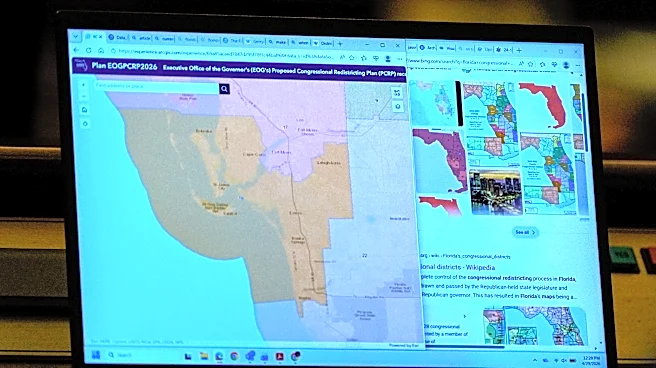
On Wednesday, Florida became the latest state to redraw its U.S. House districts, adopting a new map backed by Republican Gov. Ron DeSantis that could give the GOP a chance at winning several additional seats.
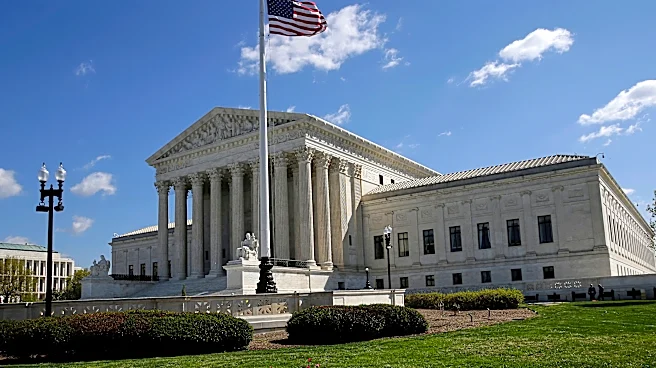
The Florida vote occurred just hours after the U.S. Supreme Court's conservative majority issued a ruling that significantly weakened minority protections under the federal Voting Rights Act. The court said Louisiana officials had relied too heavily on race when drawing a congressional district that is represented by Democrat Cleo Fields.
After the 2020 census, Louisiana officials had drawn House voting district boundaries that maintained one Black majority district and five mostly white districts, in a state with a population that is about one-third Black.
A federal judge later struck down the map for violating the Voting Rights Act. And the following year the Supreme Court found that Alabama had to create its own second majority Black congressional district.
In response, Louisiana’s legislature and governor adopted a new House map that created a second Black majority district. But that map also was subsequently challenged in court, leading to the most recent Supreme Court ruling.