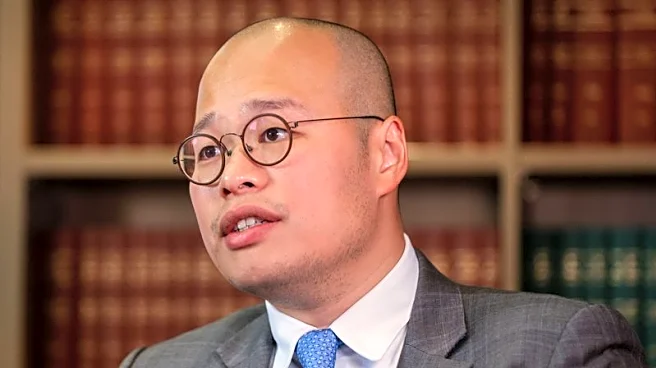

HONG KONG (AP) — A former Hong Kong reporter at the Wall Street Journal began testifying Monday against the newspaper she accused of terminating her due to her union activities in a trial — a closely watched case that has raised concerns about press freedom in the city.
Former WSJ reporter Selina Cheng, also chairperson of the trade union Hong Kong Journalists Association, launched a private prosecution against her ex-employer, Dow Jones Publishing
Co. (Asia) Inc., the parent company of the Journal, after losing her job in July 2024.
At that time, Cheng said she believed that the termination was linked to her refusal to comply with her former supervisor's request to withdraw from the election for the union role, instead of the news outlet's restructuring, as she was told.
Dow Jones faces two charges under the city’s Employment Ordinance. The company pleaded not guilty to both charges, each of which carries a maximum fine of 100,000 Hong Kong dollars (about $12,850).
The first charge alleges the company had prevented or deterred an employee from exercising union participation rights. The second alleges the company had terminated employment, penalized, or discriminated against an employee for exercising those rights.
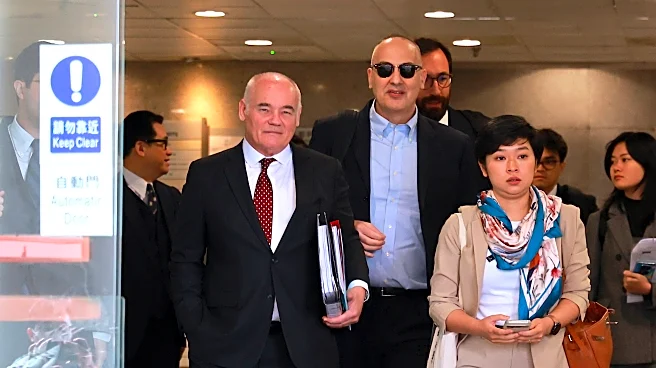
Before Cheng’s testimony, Dow Jones representative Benson Tsoi last week accused her of abusing the criminal process and acting in bad faith when seeking to get the court to admit certain email exchanges. Tsoi highlighted emails showing Cheng had demanded 3 million Hong Kong dollars ($385,500) as settlement or reinstatement with a formal apology.
Tsoi said while Cheng had told the Labor Tribunal she didn’t intend to settle out of court, the emails showed she had pressed for mediation with the company.
Hong Kong, which returned to Chinese rule in 1997 after some 150 years under British control, was once considered a bastion of press freedom in Asia. Yet despite the Basic Law, the city’s mini-constitution which guarantees its Western-style civil liberties to be kept intact under a “one country, two systems” approach, the ability of the media to operate there has seen drastic changes.
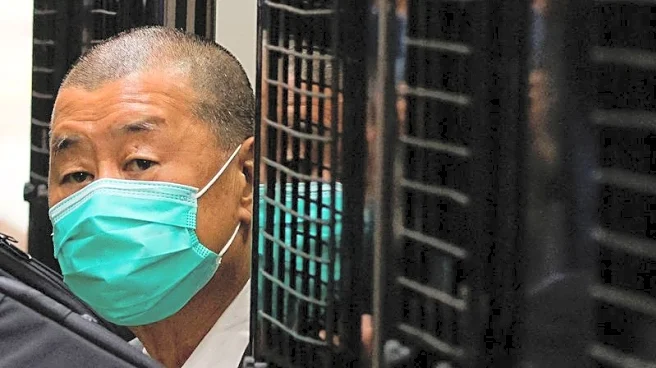
After Beijing imposed a national security law in 2020, two local news outlets known for critical coverage of the government, Apple Daily and Stand News, were forced to shut down following the arrest of their senior management, including Apple Daily publisher Jimmy Lai.
Lai was convicted under the security law last Monday, facing up to life in prison. While the government insists his case has nothing to do with press freedom, rights groups expressed concerns. Amnesty International said the conviction “feels like the death knell for press freedom in Hong Kong."
Two former editors at Stand News were also convicted in August 2024, the first journalists found guilty of sedition under a separate law since the former British colony returned to Chinese rule.
Cheng’s termination alarmed many journalists who are already operating in an increasingly restricted media environment in the city, where foreign outlets have traditionally faced less pressure than local news outlets.
Hong Kong ranked 140th out of 180 countries and territories in Reporters Without Borders’ latest World Press Freedom Index, down from 80 in 2021.