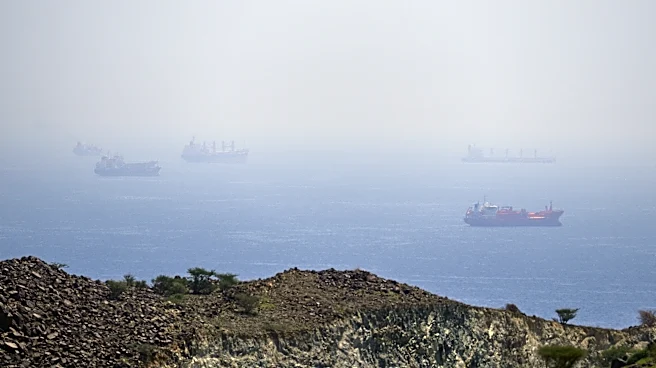




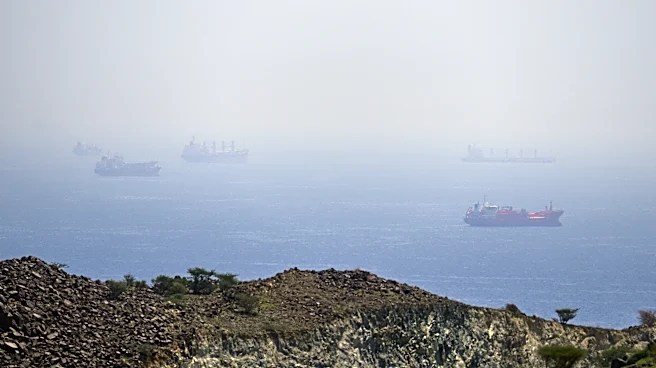
DUBAI, United Arab Emirates (AP) — A second ship came under attack Wednesday in the Strait of Hormuz, the British military said, just a short time after Iran’s paramilitary Revolutionary Guard opened fire on a container ship.
The British military’s United Kingdom Maritime Trade Operations center did not immediately identify who shot at the second ship. However, suspicion immediately fell on Iran, whose paramilitary Revolutionary Guard earlier opened
fire on the container ship.
In the second attack, the cargo ship said it had been fired upon and was stopped in the water. It said there was no reported damage to the vessel.
The attacks come days after the U.S. seized an Iranian container ship after shooting it this past weekend and boarded an oil tanker associated with Iran’s oil trade in the Indian Ocean.
THIS IS A BREAKING NEWS UPDATE. AP’s earlier story follows below.
DUBAI, United Arab Emirates (AP) — Iran fired on a container ship in the Strait of Hormuz on Wednesday, damaging the vessel and complicating efforts to bring the United States and Iran together in Pakistan for talks to end the war.
The morning attack by Iran’s paramilitary Revolutionary Guard came after U.S. President Donald Trump said the U.S. would indefinitely extend the ceasefire with Iran, which had been due to expire on Wednesday, to give Tehran time to come up with a “unified proposal” ahead of possible negotiations.
Iran has offered no formal acknowledgment of Trump's ceasefire extension.
Pakistan's Prime Minister Shehbaz Sharif thanked Trump for agreeing to the extension, saying it would buy time for ongoing diplomatic efforts.
“With the trust and confidence reposed in us, Pakistan shall continue its earnest efforts for a negotiated settlement of the conflict,” he wrote on X.
Trump said the U.S. would continue its blockade of Iranian ports, which Iran has called “unacceptable,” and has indicated was a reason it had not yet agreed to join talks in Islamabad.
The Revolutionary Guard vowed Wednesday to “deliver crushing blows beyond the enemy’s imagination to its remaining assets in the region.”
Wednesday's attack in the Strait of Hormuz came after the U.S. seized an Iranian container ship after shooting it this past weekend and boarded an oil tanker associated with Iran’s oil trade in the Indian Ocean.
The United Kingdom Maritime Trade Operations Centre, a monitoring agency run by the British military that first reported the 7:55 a.m. attack, said a Revolutionary Guard gunboat did not hail the ship before firing. It added that nobody was hurt in the attack.
Iran's Nour News, however, reported that the Guard only opened fire on the ship after it had “ignored the warnings of the Iranian armed forces.” Iran's semiofficial Fars news agency described the attack as Iran "lawfully enforcing its control over the Strait of Hormuz.
In peacetime, about 20% of the world's oil and natural gas transits the strategic waterway, which leads from the Persian Gulf to the open oceans and was fully open until the U.S. and Israel attacked Iran on Feb. 28 to start the war.
Since then Tehran has throttled shipping traffic through the strait, causing oil prices to skyrocket and impacting global economies.
In early trading on Wednesday, Brent crude oil, the international standard, was trading at close to $98 a barrel, up more than 30% since the day the war started.
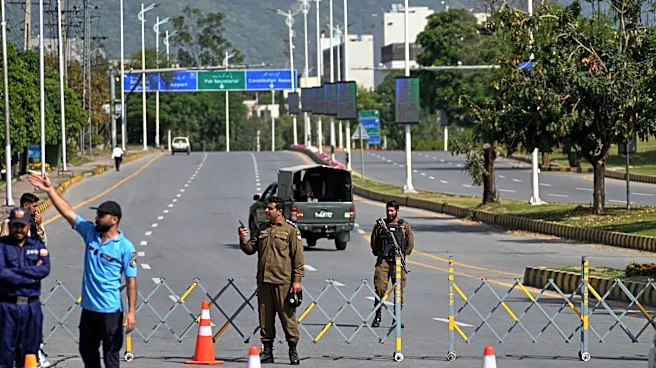
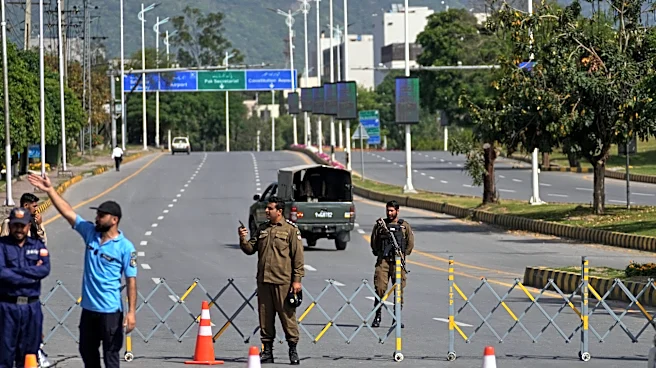
Pakistan has been working tirelessly to bring both sides together for a second round of talks.
So far, Iran has not committed but Pakistani officials there have expressed confidence that Tehran will send a delegation to resume negotiations. The first round April 11 and 12 ended without an agreement.
Over the weekend, Iran said that it had received new proposals from Washington, but also suggested that a wide gap remains between the sides. Issues that derailed the previous round of negotiations included Iran’s nuclear enrichment program, its regional proxies and the strait.
Following Trump's announcement of the ceasefire extension, U.N. Secretary-General António Guterres said he hoped it would create “critical space for diplomacy and confidence-building between Iran and the United States,” according to his spokesman, Stephane Dujarric.
Since the war started, at least 3,375 people have been killed in Iran, according to authorities. More than 2,290 people has been killed in Lebanon, 23 people have died in Israel and more than a dozen have died in Gulf Arab states. Fifteen Israeli soldiers in Lebanon and 13 U.S. service members throughout the region have been killed.
___
Rising reported from Bangkok. Melanie Lidman in Tel Aviv, Israel contributed to this report.