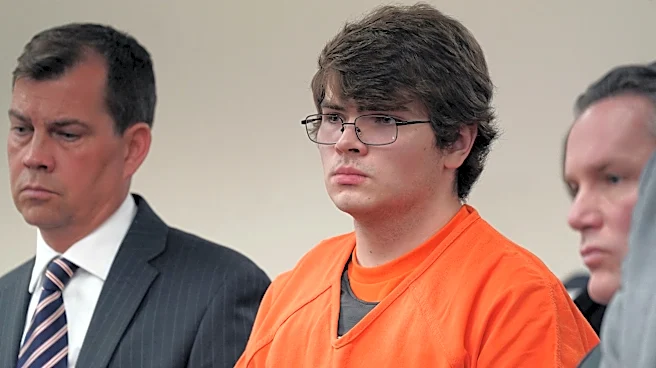







BUFFALO, N.Y. (AP) — Jury selection began Tuesday in the federal hate crime trial of a man who admitted to killing 10 Black people in a massacre at a New York supermarket in 2022, a case that could lead to a rare death sentence.
Payton Gendron is already spending life in prison after pleading guilty to state murder charges and tearfully renouncing his white supremacist views. He now faces a trial in federal court arising from the same mass shooting.
And the stakes are high: If convicted, the 23-year-old could face the death penalty.
The attack at the Tops Friendly Market in Buffalo is believed to be the deadliest hate-motivated shooting targeting Black people in the U.S. by a lone gunman in the past century.
Gendron has pleaded not guilty to dozens of hate crime and gun charges, though his defense lawyers do not dispute his guilt. One predicted a conviction when speaking to a prospective juror Tuesday.
If convicted, Gendron’s lawyers will try to persuade jurors to spare him from execution. Life imprisonment is typically the alternative.
“At trial, we will offer mitigating evidence about Payton that the jury needs to consider in making its decision,” his lawyers said in a statement. “Nothing we say or do is intended to be disrespectful or insensitive to the victims, the survivors, or their loved ones.”
Gendron spoke to his defense team and took notes while lawyers and U.S. District Judge Lawrence Vilardo interviewed people. One woman said she didn't want to be on the jury partly because of the stress of watching a video Gendron livestreamed during the shooting.
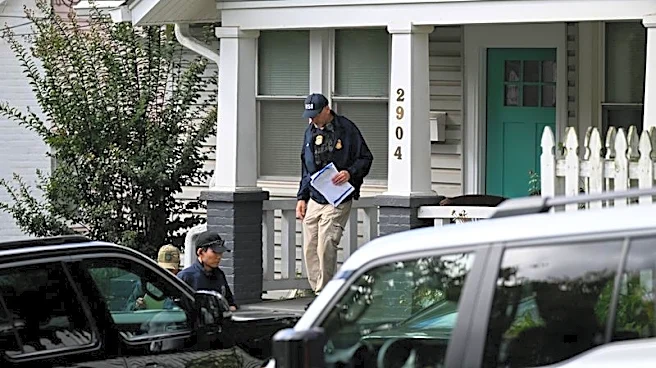
On May 14, 2022, Gendron, then 18, drove over 200 miles (320 kilometers) from Conklin, a predominantly white, rural town, to Buffalo. He fired around 60 shots from a semiautomatic rifle at supermarket employees and shoppers. Video later revealed Gendron apologized to a white store worker after shooting him in the leg.
Investigators also found past social media posts and other writings by Gendron dedicated to planning an attack to frighten people who were non-white and non-Christian into leaving the U.S. He promoted a baseless “great replacement theory” that people of color will replace white people through higher birth rates and immigration.
The victims killed were all Black and between the ages of 32 and 86. They were Celestine Chaney, Geraldine Talley, Katherine Massey, Pearl Young, Andre Mackneil, church deacon Heyward Patterson, Ruth Whitfield, Roberta Drury, Margus Morrison and Aaron Salter, a retired police officer who was working as a security guard.
The Justice Department decided in 2024 to seek the death penalty, despite a moratorium imposed by then-Attorney General Merrick Garland.
The agency later rejected a proposal from Gendron to plead guilty in exchange for a life sentence.
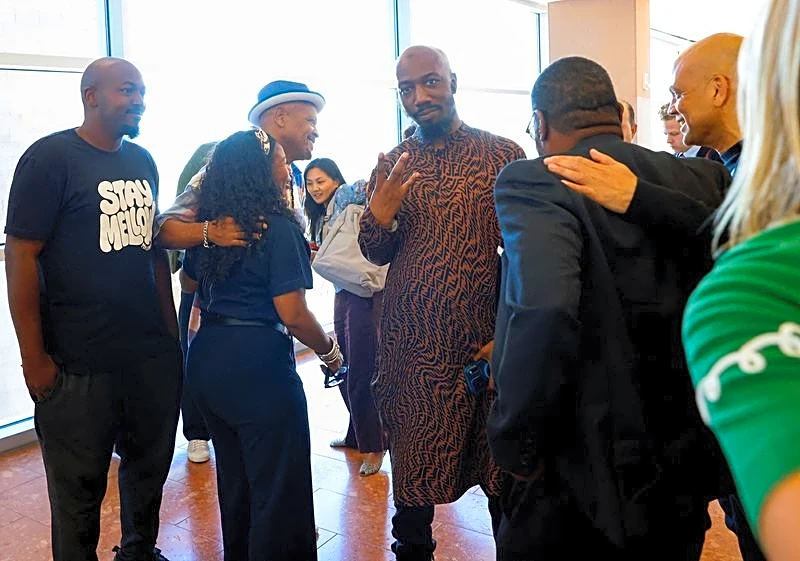
Still, Wayne Jones Sr., whose mother was killed, said thinking about Chaney's absence each day is a reason he doesn't want to see a death sentence.
“I really think that he should just sit and have to think about it year after year after year and just be miserable,” said Jones. “When I was younger, I probably was more prone to say, ‘kill him.’ But, at this point, I mean, he’s got, what, another 20, 30 years of appeals?”
Black people have comprised the “No. 1 numerical target” annually since the FBI began collecting data in 1991, said hate crime analyst Brian Levin of the California Association of Human Relations Organizations.
According to FBI data released in August, law enforcement agencies reported over 2,800 anti-Black hate crime incidents in 2025, nearly three times the number targeting Latinos. The FBI also reported a 7% decline in hate crime incidents from 2024 to 2025.
The Buffalo shooting and the 2015 Charleston, South Carolina, church shooting, in which a white gunman killed nine Black churchgoers, show how online radicalization also made them a terrorism matter.
“Unfortunately, he (Gendron) fits the pattern of young, mostly white males undertaking targeted massacres which are then justified by manifestos, which are also part of a continuing chain that references prior attacks often but seeks to encourage future ones,” Levin said.
Buffalo Common Council member Zeneta Everhart, whose son, Zaire, survived the shooting but still has shrapnel in his body, said hate crime enhancements might be the only deterrent.
“This is domestic terrorism,” Everhart said. “It is important we go after the death penalty in this case. But if he doesn't end up getting it, I know that justice will be served.”
Garnell Whitfield lost his 86-year-old mother, Ruth, in the shooting. He had no opinion on whether Gendron should be executed because “this is the federal government doing what they deem they have to do.”
He's spent the past four years honoring his mother's memory by working to address racial violence.
Whitfield said he hopes trial testimony reveals more about “the support that he (Gendron) might have had, the radicalization, social media and societal ills that caused people to hate and be violent that are inherent in our society” that preceded the killing.
“Those are the things that I care about,” he said.
___
Tang reported from Phoenix. Ed White in Detroit contributed.