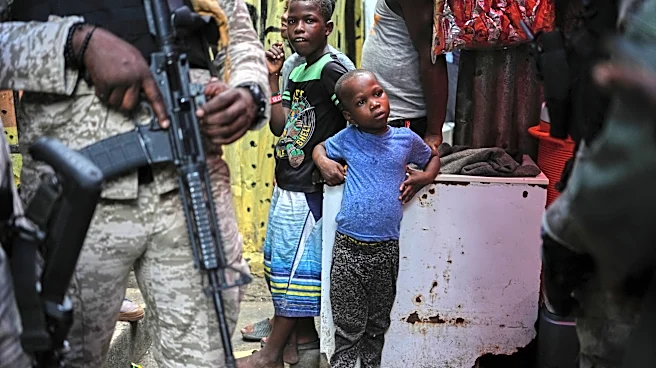






PORT-AU-PRINCE, Haiti (AP) — A new wave of gang violence in Haiti has forced hundreds of people to flee, leaving them scattered on Monday along a road leading to Haiti's main airport.
Monique Verdieux, 56 fled to the highway after watching armed men burning houses in her neighborhood. Her family scattered in different directions and she said she's not sure where they are.
“I am now sleeping in the street,” said Verdieux, noting it was unsafe to return.
The clashes between gangs erupted over the weekend across several northern neighborhoods in the capital, Port-au-Prince, pushing the displaced on a road leading to Toussaint Louverture International Airport.
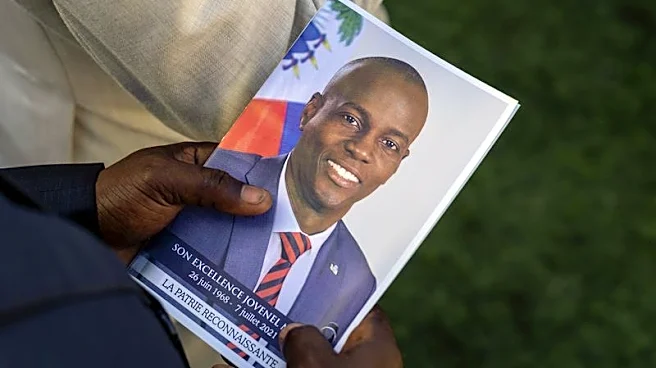
Gangs have overtaken more than 90% of Port-au-Prince since the assassination of President Jovenal Moïse in July 2021 at his home. Police say they have expanded their activities, including looting, kidnapping, sexual assaults and rape, into the countryside. Haiti has not had a president since the assassination.
For the past two weeks, Haitian rum maker Barbancourt and two of the nation's largest bottlers have warned about deteriorating security conditions near the Toussaint Louverture International Airport in Port-au-Prince, where operations are now severely restricted.
In a statement released Sunday, the companies said that the government's response to the crisis has been “largely insufficient,” and noted that the poor state of the roads leading to the airport makes it difficult for Haitian security forces to patrol the area.
“You cannot secure an airport if you allow the roads around it to degrade,” the statement read.
In April, the first foreign troops linked to a United Nations' gang suppression force arrived in Haiti to help quell ongoing violence.
The U.N. Security Council in late September approved a plan to authorize a 5,550-member force that has not fully arrived in the island nation.
A report published earlier this year by the International Organization for Migration found that gang violence had displaced more than 1.4 million people in Haiti, with approximately 200,000 of them now living in crowded and underfunded sites in the nation's capital.
___
Follow AP’s coverage of Latin America and the Caribbean at https://apnews.com/hub/latin-america