







BOGOTA, Colombia (AP) — The Andean Court of Justice, which interprets and enforces the laws of the Andean Community trade bloc, has admitted an unprecedented case against Peru over alleged failures to combat illegal mining, marking the first time the court will examine whether a member state has met its regional obligations in fighting illegal mining.
The lawsuit challenges the government’s repeated extensions of REINFO, Peru’s mining formalization
program created to help informal small-scale miners become legal. Critics say the repeated extensions have instead allowed illegal mining operations to continue under temporary legal protection.
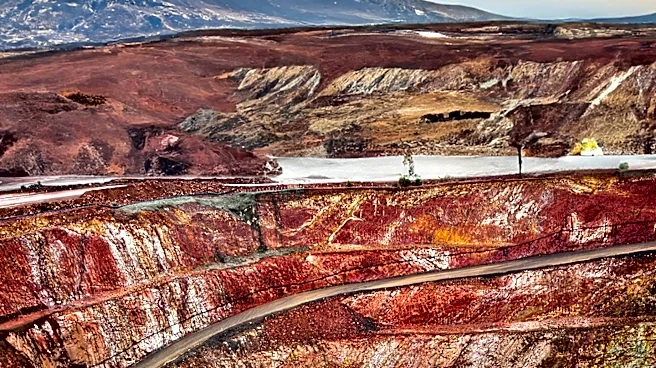
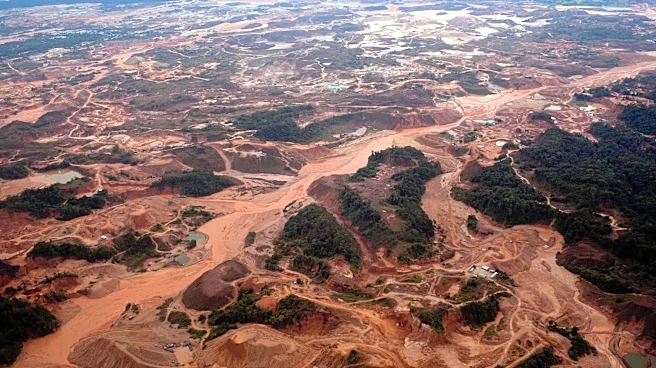
Illegal gold mining has become one of the Amazon’s greatest environmental threats, driving deforestation, mercury pollution of rivers and violence against Indigenous communities across the region. In Peru, the activity has expanded beyond the southern Madre de Dios region into other parts of the Amazon, including the Nanay River basin near the city of Iquitos.
The South American court admitted the case in an order dated July 15 and notified the parties on July 20, giving Peru 40 calendar days to respond. It has yet to rule on the plaintiffs’ request for precautionary measures, including temporarily suspending REINFO while the case proceeds.
The lawsuit was filed by an Indigenous and rural communities organization from Peru’s Nanay River basin, along with seven local residents of Peru’s Amazon, who argue the government has failed to strengthen measures against illegal mining, money laundering and related crimes despite obligations under Andean Community law. The Andean Community comprises Bolivia, Colombia, Ecuador and Peru.
The case stems from a 2025 decision by the General Secretariat of the Andean Community, the bloc’s executive body, which concluded Peru had failed to adequately strengthen measures to combat illegal mining and related crimes, including asset forfeiture mechanisms targeting illegal mining operations.
The secretariat also found Peru’s repeated extensions of REINFO were incompatible with the country’s obligations under Andean Community law. Environmental organizations and Indigenous groups argue successive extensions have allowed illegal mining to continue under the guise of formalization. The Peruvian government has said the extensions were necessary because thousands of miners have yet to complete the formalization process.
The Peruvian Ministry of Energy and Mines and the country’s Ministry of Environment did not respond to requests for comment by the time of publication.
Environmental lawyer César Ipenza, who represents the plaintiffs, described the case as unprecedented.
“This is the first time a person or organization has sued one of the Andean countries for failing to comply with obligations established under the Andean integration system,” he said.
While admitting the lawsuit is a procedural step, Ipenza said it already represented an important milestone because it meant the regional court would now examine whether a member state had failed to meet its obligations to combat illegal mining.
If the court ultimately rules against Peru and the country fails to comply with its judgment, the case could eventually carry economic consequences under the bloc’s legal framework, Ipenza said.
“Without a doubt, this is an important precedent,” he said. “It could lead the other countries to reconsider and understand that these obligations must be fulfilled.”
___
The Associated Press’ climate and environmental coverage receives financial support from multiple private foundations. AP is solely responsible for all content. Find AP’s standards for working with philanthropies, a list of supporters and funded coverage areas at AP.org.