






China and the United States are divided on many issues, from tariffs and technology to Taiwan. But there is one thing tying them together: fast food.
American restaurant and beverage chains are expanding rapidly in China, drawn by the potential customer pool in a country with four times the U.S. population. China's languishing economy and cutthroat industry competition, meanwhile, have Chinese chains trying their luck in the U.S., turning crumbs and straws
into a two-way cultural bridge between the two superpowers.
The bilateral trade in burgers and bubble tea is business- and consumer-led gastrodiplomacy in action, said Yaling Jiang, the founder of ApertureChina, a market research company with headquarters in Shanghai and London. In China, recent American arrivals like Popeyes and Five Guys are seen as a guilty pleasure, she said, while the increasingly international palates of Americans have created space for Chinese brands to serve as their nation's unofficial ambassadors.
“Consumerism builds a safe, introductory channel for contemporary Chinese culture and can be a great way to elevate China’s soft power,” Jiang said.
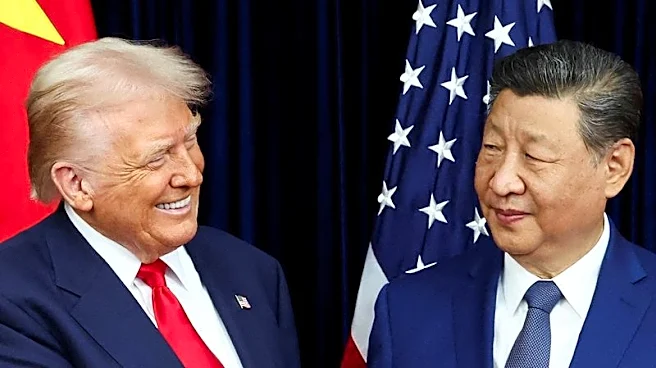
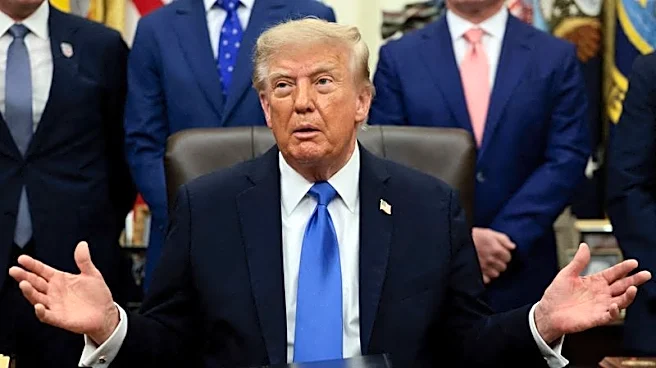
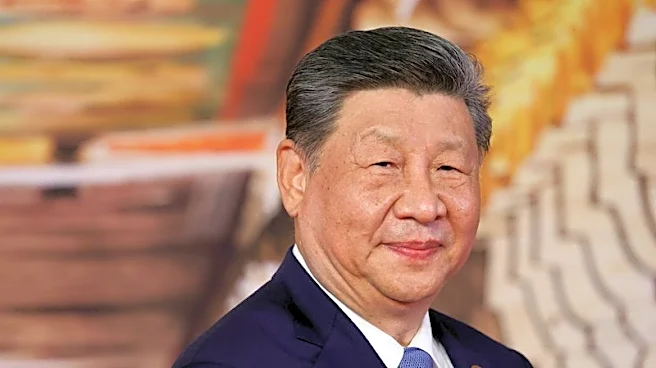
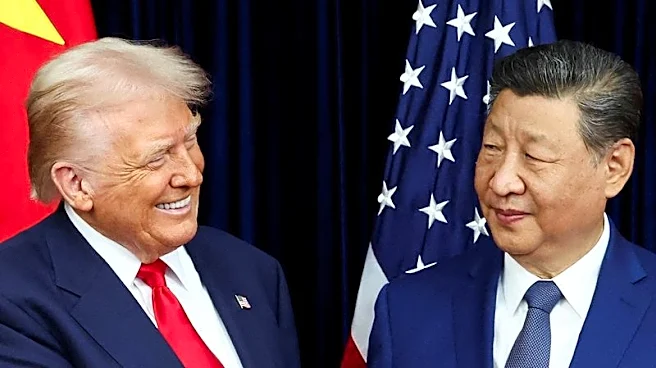
The White House has not revealed the menu for the state dinner that U.S. President Donald Trump is hosting for Chinese President Xi Jinping on Thursday. But a taste for a cheap, crowd-pleasing meal may be something the two leaders share.
In 2013, Xi made a rare public visit to a steamed-bun restaurant in Beijing. He waited in line and ordered a 21-yuan ($3) meal featuring six pork-and-scallion buns, vegetables, and a bowl of stewed pork liver and intestines. Trump’s love of fast food is legendary; he even manned a fry station at a Pennsylvania McDonald’s during his 2024 campaign.
Last month, Chinese customers lined up in the rain for the opening of the first Church’s Texas Chicken in Shanghai. Church’s plans at least 600 more across China. Wendy’s says it anticipates opening 1,000 restaurants there over the next decade.
Established players are deepening their reach as well. McDonald’s plans 1,000 new Chinese restaurants this year and 10,000 total by 2028. Burger King, which arrived in China in 2005, says it expects to triple its store count to 4,000 by 2035.
“Despite political tensions between the U.S. and China, Chinese actually still go crazy for American brands,” said Shaun Rein, founder and managing director of the Shanghai-based China Market Research Group.
KFC became the first major American fast-food chain to enter mainland China when it opened a Beijing restaurant in 1987. At the time, it was viewed as a premium destination worth taking a date to, Rein said. McDonald's and Pizza Hut arrived in 1990.
“McDonald’s and KFC were a beacon of health and hygiene compared to what you had in the rest of the market,” Rein said.
China is now KFC’s largest market by far. The Kentucky-born fried chicken chain counts about 13,000 restaurants in China, compared with around 3,750 in the U.S. American brands see room for further growth.
Much of China’s population lives in the smaller, inland cities where brands like McDonald’s and Starbucks are rolling out stores, said Sory Park, a project manager at China-focused market research and strategy firm Daxue Consulting.
That doesn't make China a cakewalk for foreign restaurant companies. Most American chains now rely on Chinese partners to find locations and share the financial risk. Earlier this year, a Chinese investment firm acquired a 60% stake in Starbucks' China operation after several years of falling store traffic.
American chains trade on their brand names and signature products, but many tailor their menus to appeal to Chinese customers. KFC restaurants in China, for example, serve french fries and Original Recipe chicken alongside custardy egg tarts and congee, a savory rice porridge.
“They need to operate like a Chinese company but deliver American menus that incorporate Chinese values, eating habits, and tastes,” Park said.
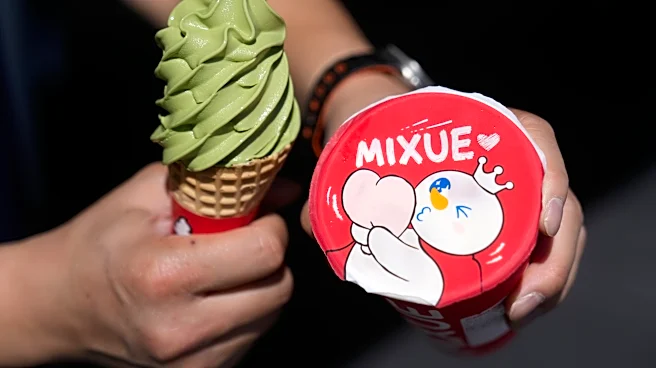
Mixue, one of the world’s largest fast-food chains with more than 53,000 locations, opened its first three U.S. stores in December. Mirroring the Shanghai crowd outside Church's Texas Chicken, New York customers waited in the cold to sample soft-serve ice cream, fruit teas and milk tea with toppings like coconut jelly and taro balls at a store in Herald Square.
Mixue has announced at least two dozen more planned locations across four states. At least nine other mainland Chinese chains have made their U.S. debuts since 2023, all but one specializing primarily in drinks and snacks. They include Heytea, with 40 U.S. locations, and Luckin Coffee, which overtook Starbucks as China’s biggest coffee brand and has 20 stores in New York.
Wallace, a chain founded in 2000, grew to more than 20,000 restaurants by selling American-style chicken and hamburgers in China. In California, where the second U.S. Wallace opened last month, the company tweaked its chicken sandwich recipe to appeal to American diners.
Before entering the U.S., many major Chinese food-and-beverage chains expanded in Southeast Asia. A real estate slump and weak consumer spending made growth harder to find at home. The average life span of China's 16 million restaurants and chains was expected to fall to 15 months last year, according to a U.S. government report.
The American restaurant industry is considerably smaller, with 1 million locations, according to the National Restaurant Association. Jiang, of ApertureChina, sees another advantage for Chinese brands: a social media trend called “Chinamaxxing,” in which Westerners adopt Chinese lifestyle habits or wellness practices.
Not every brand makes its origins clear. Wallace's U.S. website and social media pages do not mention the brand's Chinese ownership or headquarters in southeastern China’s Fujian province. The company didn’t respond to an email from The Associated Press.
American and Chinese chains alike have an appetite for opportunities across the Pacific. But Chinese brands remain largely unproven stateside. Even chains with thousands of locations elsewhere are testing whether novelty can translate into loyalty.
The U.S. is too lucrative a market to ignore, said Aaron Allen, founder of restaurant consulting firm Aaron Allen and Associates. It accounts for one-third of global restaurant revenue despite having only around 4% of the world’s population, he said.
“The grass is always greener somewhere else in the world,” Allen said.
While American brands can carry a premium image in China, many Chinese brands compete heavily on price. At a Mixue in Hollywood this week, a medium matcha latte cost $6.83; a nearby Starbucks sold the same drink for almost $1 more. Wallace sells three full-size chicken sandwiches for $10.
“The Chinese can build stuff cheaper and faster. Why would that not apply to food?” Allen said.
But Allen said Chinese brands could face customer backlash or higher tariffs if they undercut U.S. rivals with low-cost Chinese imports. Like other Chinese companies, restaurant brands also could face U.S. scrutiny over their collection and use of customer data, he said.
Luckin Coffee co-founder and CEO Jinyi Guo told investors in February that the U.S. “represents one of our important long-term opportunities” and the company was proceeding “with great patience and discipline.”
___
Durbin reported from Detroit. Chan reported from Hong Kong. Associated Press writer Fu Ting contributed from Washington.