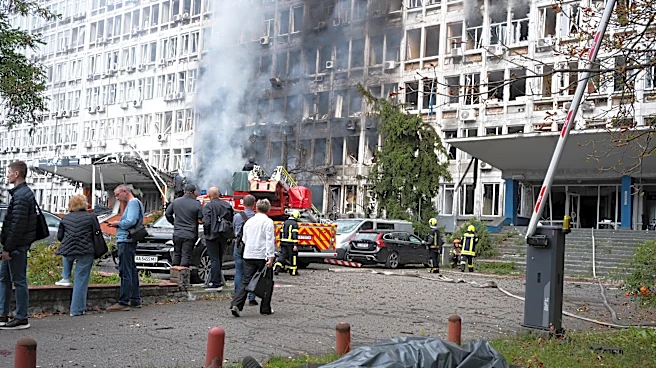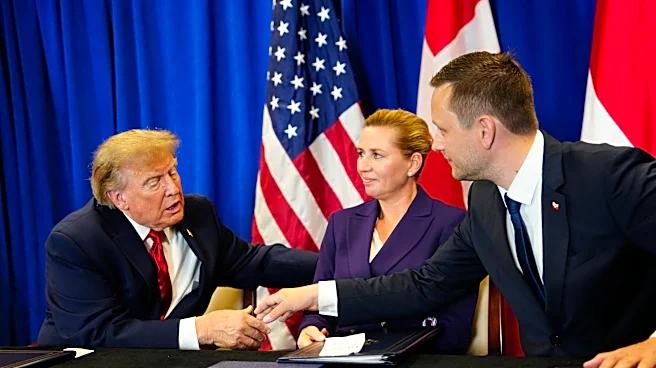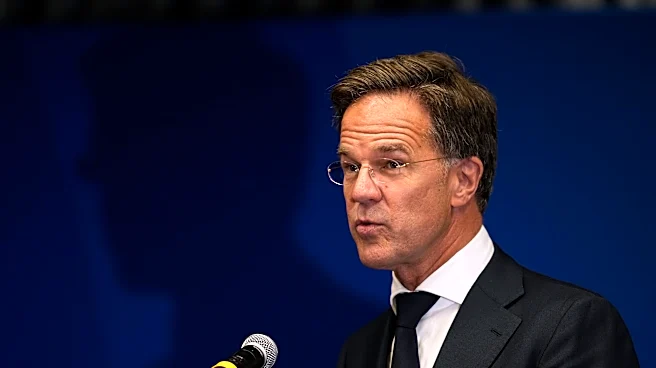





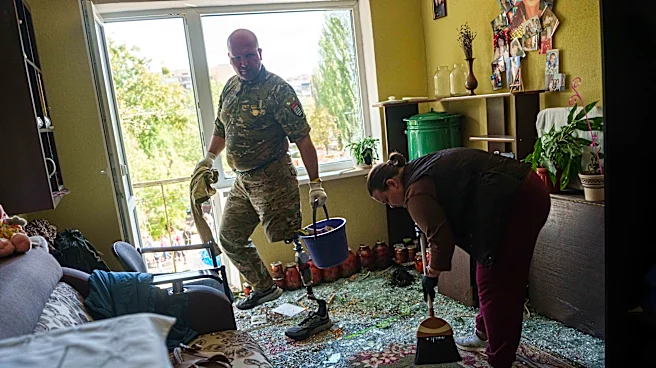
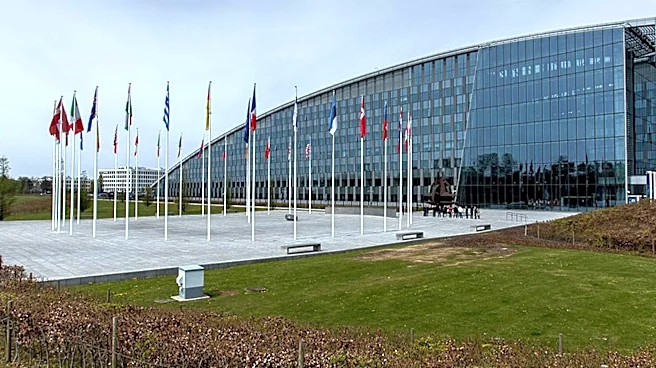
BRUSSELS (AP) — NATO is capable of handling sabotage and drone incidents in Europe and has good action plans in place to deal with them, the alliance's secretary general said Thursday as a Danish intelligence service warned Russia is expected to increase such attacks.
Secretary-General Mark Rutte said he believes the rising number of hybrid incidents in NATO countries shows that Russian President Vladimir Putin is losing the war in Ukraine, now in its
fifth year, and that the best way to respond is to give more weapons to the Ukrainian armed forces.
“All the response options are there, and we will use whatever we need,” Rutte said, speaking at a ceremony in New York marking the anniversary of the Sept. 11, 2001 attacks on the United States.
He said that citizens of the 32 NATO countries can remain calm. “Putin is in a bad place,” Rutte said. “He is not winning the war in Ukraine.”
In a new risk assessment released Thursday, the Danish Defense Intelligence Service said Russia is likely to step up its hybrid campaign — a term for the use of non-conventional hostile acts such as sabotage, cyberattacks, disinformation and an array of other methods — to pressure adversaries in the West and NATO.
“This could include destructive cyberattacks that cripple critical societal functions as well as sabotage attacks that carry a high risk of casualties,” it said.
“Russia has become more willing to take risks,” the agency said.
Hybrid attacks can aim to destabilize a country, test its defenses, strain resources, or influence public opinion — often in a way that makes it hard to identify those responsible.
An Associated Press interactive map tracking the incidents of hybrid attacks shows an escalation, from 59 in March 2025 to more than 200 at this point.
Polish Prime Minister Donald Tusk warned last week that Russia is planning hybrid strikes with drones or rockets on European countries supporting Ukraine, including Poland.
He said Russia will likely pretend the attacks are “accidental” in order to “paralyze or at least weaken the motivation of NATO countries” to rush to the defense of a member state coming under attack.
The Danish agency said there is “a low but growing risk that Russia will launch a limited military attack against one or several NATO countries bordering Russia,” but that this “could potentially take place in the coming months.”
The aim would be to divert European resources away from supporting Ukraine and sow division in NATO, the service said. At the same time, it noted there are “no indications that Russia will launch an outright invasion of one or several NATO countries.”
NATO and European Union officials have said that Russia's armed forces are too tied up in Ukraine and that no unusual military activity has been noted near European countries close to Russia.
U.S. Ambassador to NATO Matthew Whitaker said earlier this week that the number of incidents right now does not indicate a conflict might be imminent.
“I don’t think it’s at a volume that would mean that it’s the beginning,” Whitaker said on Tuesday in Iowa, where he attended a panel about NATO alongside Rutte.
“I don’t think that it’s in anybody’s interest to head towards a conflict,” he said. “I think one of the things that we have to be very careful (about) is overreacting to any sort of hybrid activity.”
“We haven’t reached that threshold,” he said.
___
Moulson reported from Berlin.