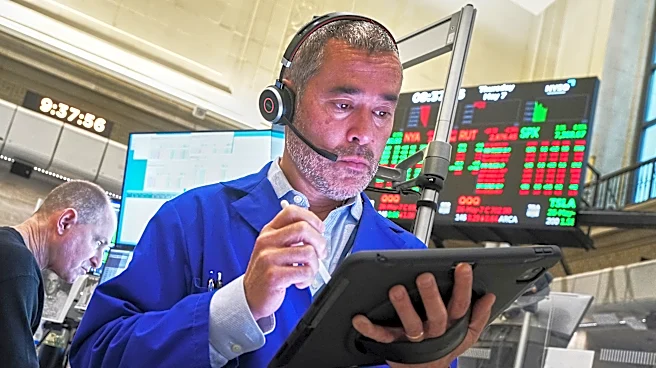


TOKYO (AP) — Global shares traded mostly lower Tuesday as optimism encouraged by a record rally on Wall Street clashed with anxiety about surging oil prices and a possible AI bubble.
France's CAC 40 slipped 0.6% in early trading to 8,006.60, while the German DAX dipped 0.8% to 24,148.77. Britain's FTSE 100 shed 0.5% to 10,219.65. U.S. shares were set to drift lower, with Dow futures down nearly 0.1% at 49,763.00. S&P 500 futures slipped 0.4% to 7,409.25.
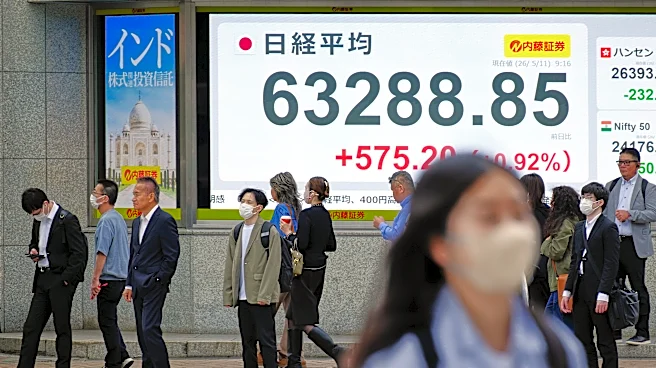
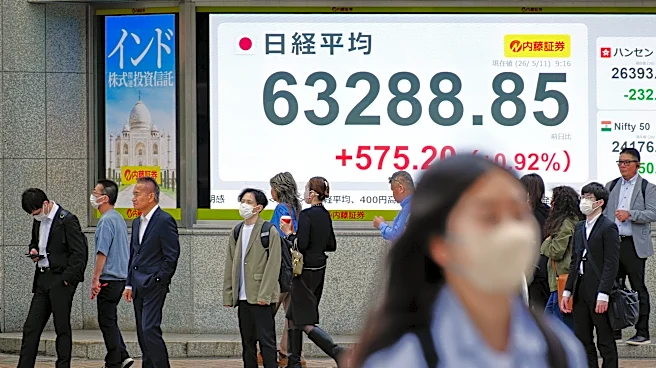
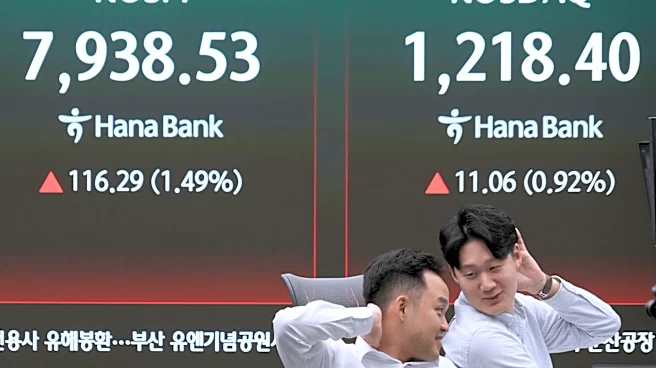
In Asia, Japan's benchmark Nikkei 225 added 0.5% to finish at 62,742.57. South Korea's Kospi dropped 2.3% to 7,643.15, in what analysts are categorizing as fallout from overreliance on fraying AI hopes.
“Global equities remain dangerously dependent on a tiny cluster of AI leaders, creating a rally structure that looks powerful on the surface but increasingly fragile underneath,” said Stephen Innes, analyst with SPI Asset Management.
He believes South Korea may be among the first major economies that will undergo what he called "the political redistribution phase of the AI boom.”
Australia's S&P/ASX 200 dipped 0.4% to 8,670.70. Hong Kong's Hang Seng lost earlier gains and fell 0.2% to 26,347.91, while the Shanghai Composite lost nearly 0.3% to 4,214.49.
Oil prices continued to rise, as the war with Iran threatened to drag on. Benchmark U.S. crude rose $2.90 to $100.97 a barrel. Brent crude, the international standard, climbed $2.61 to $106.82 a barrel.
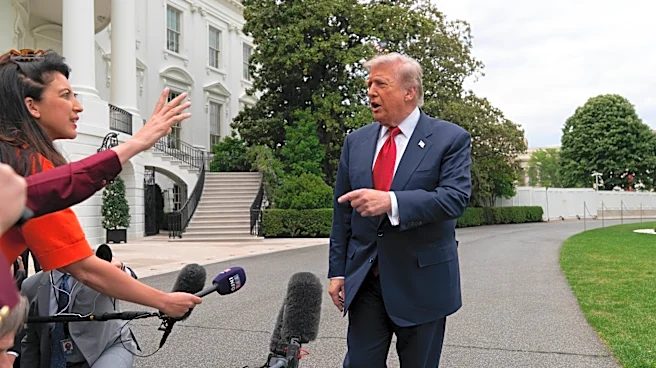
U.S. President Donald Trump described the U.S.-Iran ceasefire as on “life support” after rejecting Iran’s latest proposal to end the war. That raises the stakes for Trump’s trip this week to China. China is the biggest buyer of Iran’s sanctioned crude oil.
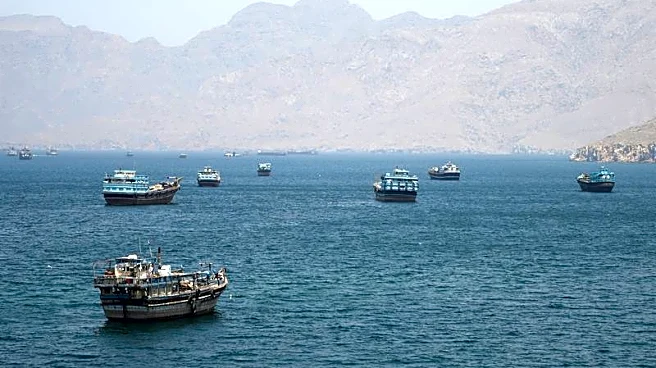
The war has already sent the price for a barrel of Brent racing up from prewar levels of roughly $70 and delivered inflation through the global economy. The war has shut the Strait of Hormuz and kept oil tankers stuck in the Persian Gulf instead of delivering crude to customers worldwide.
Still, some companies are reporting bigger profit than analysts expected, which means the U.S. economy is holding up even though households are feeling discouraged by expensive gasoline and tariffs.
In currency trading, the U.S. dollar rose to 157.62 Japanese yen from 157.12 yen. The euro cost $1.1747, down from $1.1787.
___
AP Business Writer Stan Choe contributed to this report.
Yuri Kageyama is on Threads: https://www.threads.com/@yurikageyama