





Leaders of more than 40 local, state and federal law enforcement agencies announced a wide-scale collaboration Monday to combat gun violence among groups of Somali youth that they say are affiliated with gangs.
The effort comes after several shootings across the Twin Cities metro in the past month, including a shooting at Eden Prairie High School’s homecoming football game earlier this month that injured two people, and a Bloomington shooting where
police found nearly 100 shell casings at the scene. No one was injured in the Bloomington case.
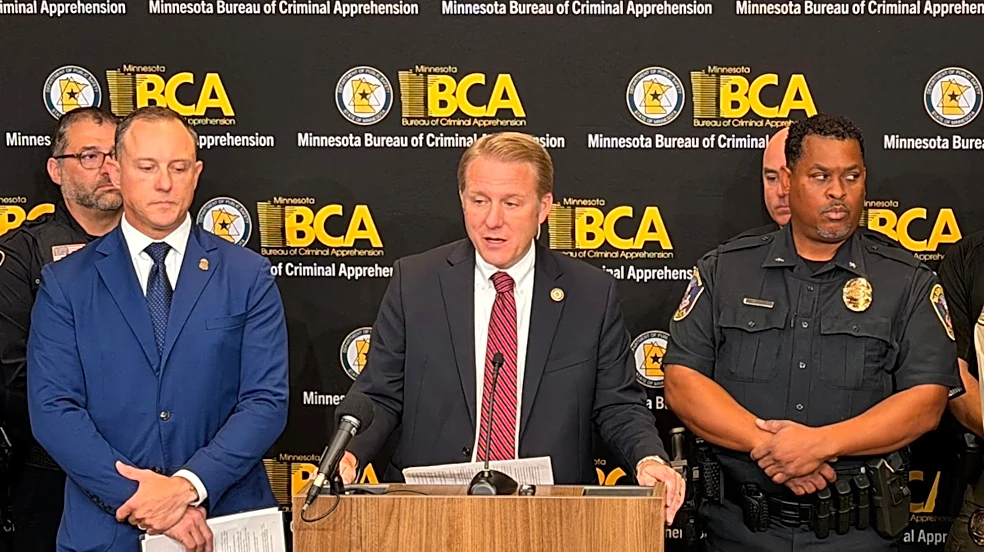
“When we see 100 rounds fired in Bloomington, that’s a problem, regardless of the number of people doing it,” said Minnesota Bureau of Criminal Apprehension (BCA) Superintendent Drew Evans, who was flanked by more than 40 law enforcement officials during a news conference Monday. “We want to get people off of that path, but we also want people to see that there are 40-plus individuals here that are going to work together and arrest people if they wish to commit crimes in our communities.”
While some law enforcement officials have dubbed the groups as “Somali American gangs,” Hennepin County Sheriff Dawanna Witt, Evans and Bloomington Police Chief Booker Hodges reiterated their plea to not judge the entire Somali community for the actions of a few.
“This past summer, you heard us talking about the Highs and Lows,” Witt said. “We weren’t calling them ‘the Black gangs.’ We were calling them the Highs and Lows, and they all just happened to be Black. Enough with the nonsense about directing anger, hate words, hateful acts toward an entire community.”
The collaboration will involve the gun and nonfatal shooting units of the Minneapolis Police Department, the St. Paul Police Department’s nonfatal shooting unit and the BCA’s Violent Crime Reduction Unit. It also includes the FBI; the Bureau of Alcohol, Tobacco, Firearms and Explosives (ATF); dozens of smaller police agencies across the Twin Cities metro area; and the Hennepin, Ramsey, Anoka and Dakota sheriff’s offices.
They’ll be using the Crime Gun Intelligence Center, an interagency intelligence hub that allows different jurisdictions to share firearm evidence.
The focus on gun violence among Somali youth began this past summer, when Ramsey County Sheriff Bob Fletcher attributed multiple shootings at graduation ceremonies to “Somali gangs.” He said about 300 youths spread across 12 distinct groups in Minneapolis and the metro area were responsible for the violence.
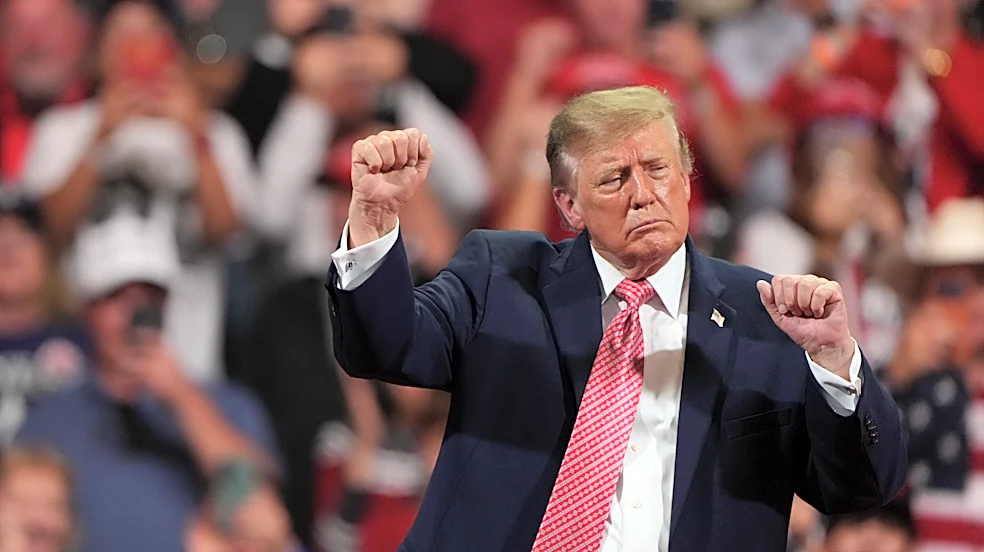
Fletcher’s comments were met with backlash from Somali community members, who said he was singling out Somalis and adding fuel to hateful rhetoric from rightwing agitators and President Donald Trump and his supporters.
A month later, Minnesota Attorney General Keith Ellison and Ramsey County Attorney John Choi sued two of the gangs, named “Muddy” and “The Ville,” to prevent their members from gathering at the Minnesota State Fair. They attributed a shooting outside the fair in 2024 and a large-scale brawl inside the fair in 2025 to Somali youth.
The issue has intensified in recent weeks, with several shootings prompting meetings between dozens of local, state and federal law enforcement agencies at BCA headquarters earlier this month. Officials said Monday that they were frustrated that local agencies could not easily share intelligence across jurisdictions when shootings required wide-scale, interagency collaboration.
“Our intent is to build strong criminal cases, disrupt cycles of retaliation and ultimately prevent the next shooting,” said Joe Persails, special agent in charge of the ATF’s St. Paul field office. “This initiative represents a coordinated commitment across all levels of law enforcement to protect the people who live, work and raise their families in the Twin Cities.”
The ATF brought in additional agents and dedicated one of its enforcement groups to exclusively investigate gang violence.
Christopher Dotson, special agent in charge of the FBI’s Minneapolis field office, told reporters that the federal Racketeering Influenced and Corrupt Organizations Act is “on the table,” which was designed to dismantle criminal groups by allowing prosecutors to charge an entire group. Federal prosecutors used the law earlier this year to indict and convict dozens of members of the Highs and Lows, two gangs based in north Minneapolis.
Witt said her office already has one analyst focused on violence committed by groups of Somali youth. Witt said she recently directed more task force resources toward the issue, which she said was instrumental in apprehending the alleged shooter at the Eden Prairie High School homecoming game earlier this month.
At Monday’s news conference, Witt announced the creation of the Hennepin Enhanced Enforcement Team, which includes detectives, officers, investigators and analysts from the sheriff’s office, Minneapolis police, University of Minnesota police and the ATF.
Three preexisting task forces – the Violent Offender Task Force, West Metro Drug Task Force and Hennepin County Auto Theft Task Force – will also provide resources to investigate gang-related violence, if needed, she said.
Several Somali American police officers from different local police agencies held a separate listening session Sunday night, where they rejected the use of the word “gangs” to describe the violence among Somali youth, calling it harmful. They also took questions from concerned parents.
They emphasized that parents should engage with their children and build trust before anything bad occurs. They also urged parents to pay more attention to their kids’ activities and whereabouts.
Fletcher told Sahan Journal after Monday’s news conference that he’s planning to organize multiple community meetings after the Nov. 3 election to continue discussions with the Somali community, and to avoid further politicization of the issue by candidates running for office. The first meeting will be focused on Somali mothers, he said.
“We have to get the moms empowered to know what their kids are doing,” Fletcher said. “We’ll make more progress on the community side once the politics of this midterm election are done.”
___
This story was originally published by Sahan Journal and distributed through a partnership with The Associated Press.