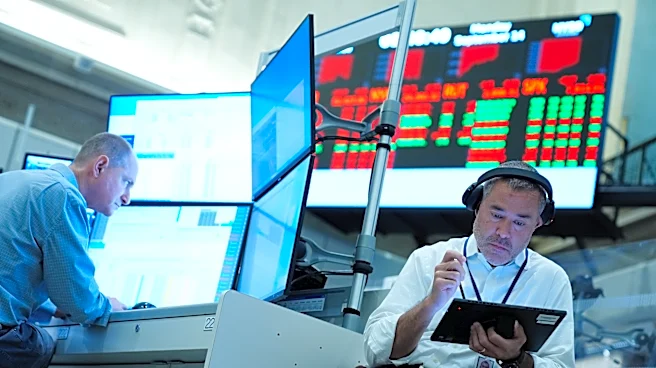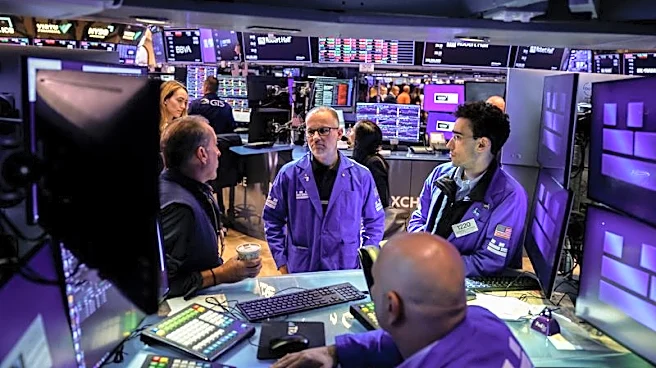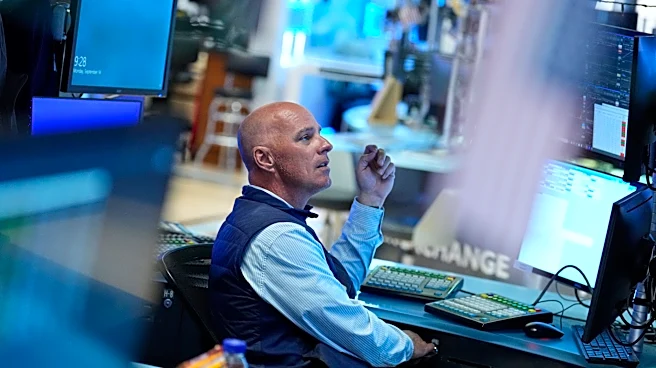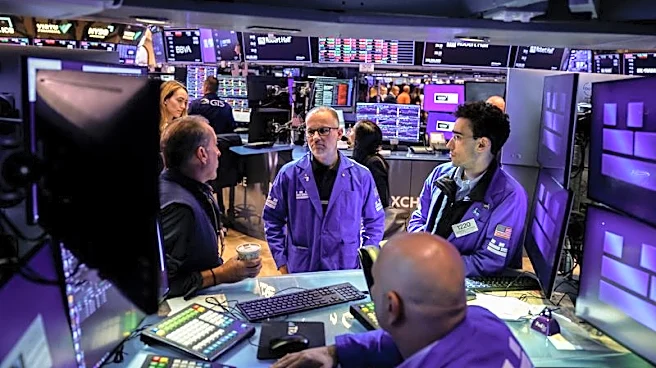







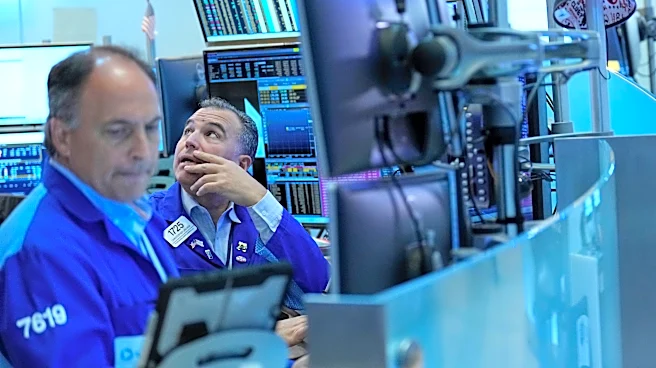
NEW YORK (AP) — A cooldown in oil prices is helping to release some of the pressure that’s built up on Wall Street, and U.S. stocks are ticking higher. The S&P 500 rose 0.1% early Friday and is on track to break a three-day losing streak marked by big swings caused by rising yields in the bond market. The Dow Jones Industrial Average edged up 80 points, and the Nasdaq composite rose 0.2%. Brent crude oil fell 2% toward $98 a barrel. The price of oil has
been yo-yoing on uncertainty about when the war with Iran will allow oil to flow freely again.
THIS IS A BREAKING NEWS UPDATE. AP’s earlier story follows below.
U.S. futures are rising as the bond market looks to be stabilizing following another bond sell-off that brought U.S. Treasury yields to their highest levels in years.
Futures for the S&P 500 climbed 0.3%, while those for the Dow Jones Industrial Average gained 0.2%. Nasdaq futures climbed 0.5%.
The Dow is off 0.6% for the week to date, which is pointing it toward its fourth straight losing week.
A global sell-off in the bond market has again added pressure to the stock market, as the yield on the U.S. 10-year Treasury reached its highest level since 2007. The U.S. 10-year Treasury eased slightly to around 5.18% on Friday, after rising above 5.20% on Thursday from around 5.11% Wednesday. Still, the 10-year Treasury is up 40 basis points since September, putting a squeeze on anyone who borrows money.
Government bond yields have been elevated as bond investors are demanding higher compensation under increasing risks and uncertainties, including growing inflationary pressure from the Iran war-driven energy shock and rising U.S. government debt.
ING Bank analysts wrote in a commentary this week that factors including elevated energy prices and inflation pressures are likely to continue to pressure U.S. 10-year Treasury yields higher.
Oil prices declined Friday as investors look for signs of the reopening of the Strait of Hormuz, the key waterway for global oil transport. Brent crude, the international standard, dropped 1.4% to $98.83 per barrel, remaining below the $100 mark although it’s still well above the roughly $72 a barrel level in late February before the start of the war. Benchmark U.S. crude fell 1.7% to $92.97 per barrel.
While many investors are also monitoring the meeting in Washington between U.S. President Donald Trump and Chinese President Xi Jinping, analysts said limited concrete progress has been made, although the two sides touched on topics including trade, artificial intelligence and the Middle East.
In Europe, Britain's FTSE 100 climbed 0.3% to 10,707.98. France's CAC 40 slipped 0.1% to 8,074.83, while Germany's DAX rose 0.6% to 25,417.28. Some Asian markets were mixed.
Markets in mainland China, Taiwan and South Korea were closed because of a holiday.
In other dealings, the U.S. dollar fell to 157.77 Japanese yen from 158.86 yen. The euro was trading at $1.1402, up from $1.1380.