

SEOUL, South Korea (AP) — Seoul has called for an official apology from Ukraine after President Volodymyr Zelenskyy revealed what it says was supposed to be a secret transfer of two North Korean prisoners of war to South Korea.
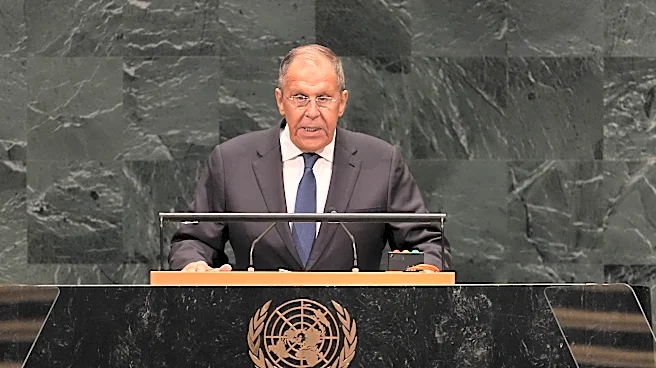
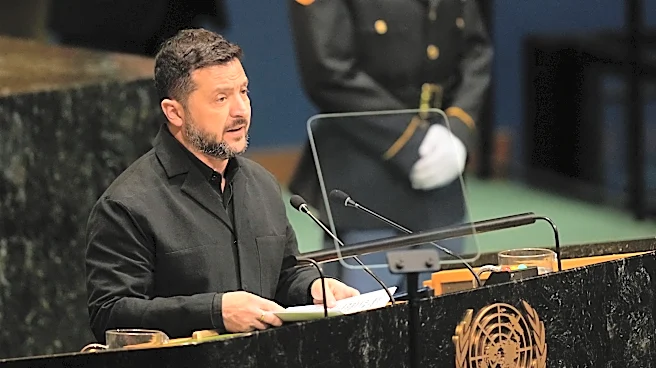
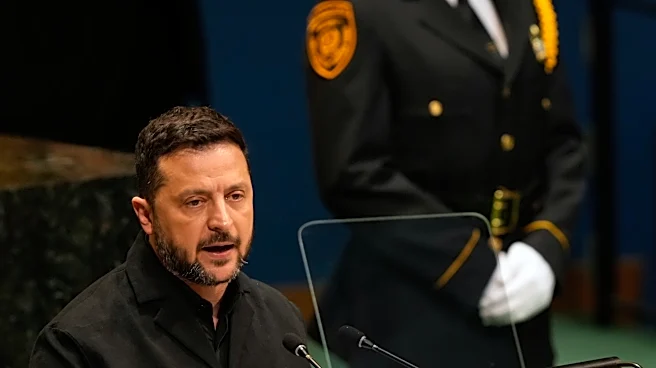
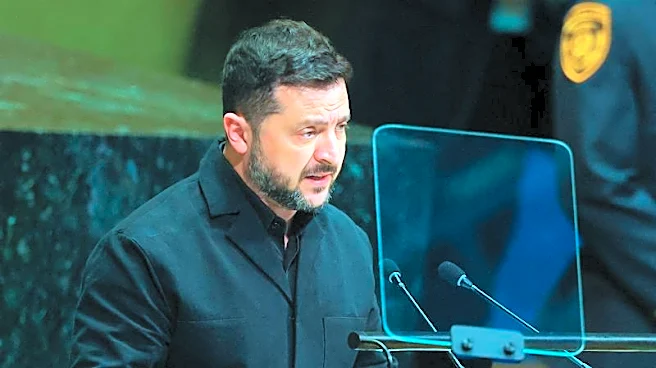
Zelenskyy told the U.N. General Assembly last week that Ukraine had recently sent the men to South Korea, after capturing them on a Ukraine-Russia battlefield in early 2025. The two are among thousands of North Korean soldiers
sent to support Russia’s war against Ukraine.
South Korean President Lee Jae Myung quickly accused Ukraine of violating a nondisclosure agreement about the transfer. Ukraine denied making such a deal.
Late Sunday, Seong Ghi-hong, a senior presidential adviser for Lee on public relations, expressed “strong regret” over Ukraine’s latest actions and demanded an official apology and explanation.
The South Korean Foreign Ministry on Monday summoned Ukraine’s ambassador to Seoul, Andrii Vieshkin, to protest what it described as Kyiv’s “unilateral disclosure” of the prisoners’ transfer and its false denial that the two countries had agreed to keep the matter confidential.
Vieshkin said he would convey Seoul’s position to his government, the ministry said in a statement. Repeated calls to Ukraine’s Embassy in Seoul seeking comment were unanswered.
Seong said that Ukraine’s “false” denial of the nondisclosure agreement was “an act that seriously undermines trust between the two governments and causes significant damage to friendly relations between the two countries.”
Seong said the agreement was reached because Seoul was concerned about the safety of the North Korean soldiers and their relatives in the North while Kyiv worried about possible domestic criticism for forfeiting an opportunity to exchange them for Ukrainian soldiers held in Russia.
While still in Ukraine, the two soldiers said in media interviews that they wanted to resettle in South Korea.
Seoul had called on Ukraine not to send them back to North Korea, where they could face persecution. The South legally regards the North as part of its territory and has a policy of accepting and financially supporting North Korean defectors.
More than 34,000 North Koreans have fled to South Korea since the end of the 1950-53 Korean War, mostly in the last three decades. Most were female civilians from the North’s poorer northern provinces. Defections by soldiers are uncommon.
In his U.N. speech, Zelenskyy didn't provide details about the transfer, but said that “one of them, when he realized he was going to be taken prisoner, tried to kill himself and he was shocked that fate didn’t let him die. This is how they raise people in the North.”
Some experts say Zelenskyy likely decided to expose the danger of North Korean involvement in the war as a way to attract bigger Western assistance.
Meanwhile, South Korea's liberal government worried that news of the transfer could trigger an angry response from the North and hurt efforts to resume diplomacy between Pyongyang and Washington.
A growing arms exporter with a well-equipped and U.S.-backed military, South Korea has provided humanitarian aid and other support to Ukraine while joining U.S.-led economic sanctions against Russia since its invasion in 2022.
However, Seoul has resisted calls by Kyiv and NATO to provide direct military support to Ukraine in line with a long-standing policy of not supplying weapons to countries actively engaged in conflict.
North Korea and Russia confirmed in April 2025 that their soldiers fought together to repel a Ukrainian incursion into Russia’s Kursk border region. South Korea, the United States and others say North Korea has also supplied artillery, ammunition and missiles to Russia in return for economic and military assistance.
South Korea’s intelligence service estimated last year that North Korea sent about 15,000 troops and 2,000 of them were killed.
Expanding cooperation with Russia has helped North Korea's leader, Kim Jong Un, push back against U.S.-led pressure and more assertively accelerate a nuclear weapons program. Last month, U.S. President Donald Trump scaled back a military drill with South Korea in an apparent bid to restart diplomacy with Kim, but North Korea has suggested the step wasn't enough to convince it to return to talks.
___
Associated Press writer Kim Tong-hyung contributed to this report.