






WASHINGTON (AP) — The largest monthly jump in gas prices in six decades caused a sharp spike in inflation in March, creating major challenges for the inflation-fighters at the Federal Reserve and heightening the political hurdles for the White House.
Consumer prices rose 3.3% in March from a year earlier, the Labor Department said Friday, up sharply from just 2.4% in February and the biggest yearly increase since May 2024. On a monthly basis, prices rose 0.9%
in March from February, the largest such increase in nearly four years.
It’s the first read on inflation to capture the effects of the Iran war. The spike in gas prices will stretch the budgets of many lower- and middle-income households as it erodes their incomes, making it harder to afford other necessities such as food and rent
Excluding the volatile food and energy categories, core prices rose 2.6% in March from a year earlier, up from 2.5% in February. And last month core prices rose a modest 0.2%, suggesting that rising gas prices haven't yet spread to many other categories.
A big question for now is how long the oil and gas price shock lasts and whether it will lead to a broader, long-lasting inflation spike, similar to what happened in the spring of 2022 after Russia invaded Ukraine. For now, economists say that it is unlikely the U.S. will see a widespread increase similar to a few years ago, when inflation topped 9%.
Despite a tenuous cease fire, little has changed in the Strait of Hormuz, a bottle neck where millions of barrels of oil typically pass daily.
“It’s painful in the near term,” said Michael Pearce, chief U.S. economist at Oxford Economics. “It’s going to get more painful in April,” when further gas price increases will lift inflation higher.
But Pearce said the impact may be shorter-lived than after the pandemic: “I think the conditions are much more like a short, sharp shock than what we saw in 2022.”
Pearce said that the impact could fade by later this year: "I think the conditions are much more like a short, sharp shock than what we saw in 2022.”
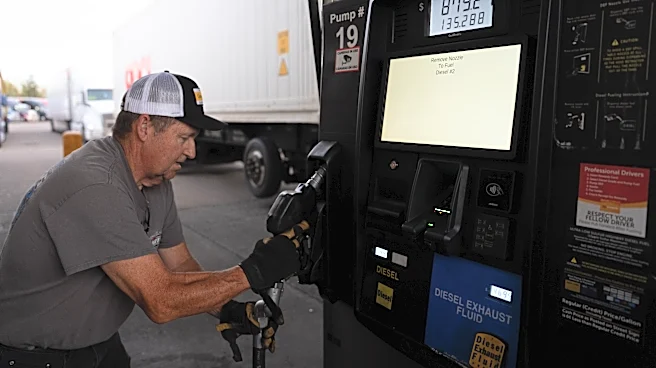
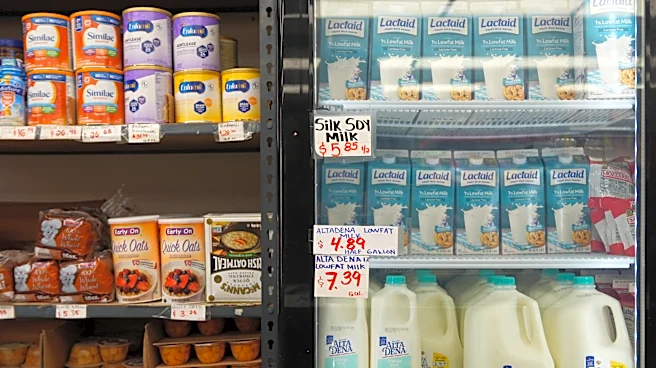
Last month, grocery prices slipped 0.2% and are up just 1.9% from a year earlier. Analysts do expect food prices to move higher in the coming months as soaring diesel prices make shipping more expensive.
Higher energy costs are “contributing to rising production costs across the food supply chain and could put upward pressure on grocery prices going forward,” said Andy Harig, a vice president at the grocery trade group FMI-The Food Industry Association. “As energy prices increase, the costs associated with producing and delivering food also rise.”
Clothing costs rose 1% in March from the previous month and are up 3.4% from a year earlier. Used car prices, however, fell 0.4% last month and down 3.2% from a year earlier.
The gas price shock stemming from the Iran war has shifted inflation’s trajectory, from a slow, gradual decline to a sharp increase further away from the Fed’s 2% target. As a result, the central bank will almost certainly postpone any cut in interest rates for months. Many Fed officials will look past the increase in headline inflation, however, and focus on core prices, which are likely to rise more slowly.
Gas prices are also a highly visible cost that has outsize impacts on consumer confidence and political sentiment. High prices had angered American voters before the war and the spike in prices for oil and everything that entails, from the pump to the grocery store, could make it more difficult for the president’s party to hold on to seats in both the House and the Senate in next year’s midterms.
Polling by the Associated Press-NORC Center for Public Affairs Research last month found that about six in 10 Republicans are at least “somewhat” concerned about affording gas in the next few months.
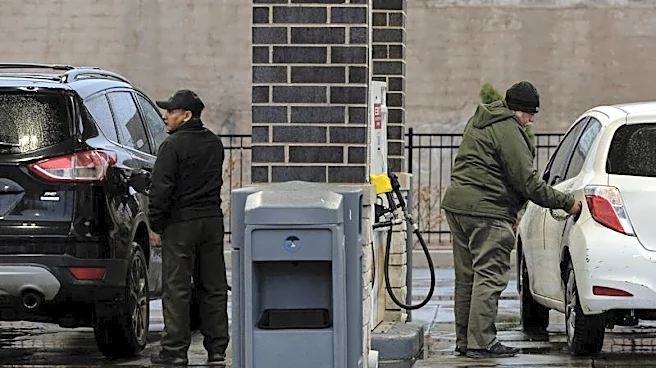
Gas prices averaged $4.15 a gallon nationwide Friday, up from $2.98 on the day before the war began and a hike of nearly 40%, according to motor club AAA.
Inflation reached a peak of 9.1% in June 2022, as COVID-19 snarled supply chains and several rounds of stimulus checks pushed up consumer demand. Prices soared for groceries, furniture, restaurant meals and many other goods and services.
This time, economists say the job market and consumer spending are weaker, and there are no large government stimulus checks being issued to spur demand. The unemployment rate is low, at 4.3%, but companies aren't scrambling to hire the way they were when the economy emerged from the pandemic, which led many firms to offer sharp pay increases to attract and keep workers.
Rapid pay increases and solid income growth helped consumers weather the higher prices that resulted from the pandemic's supply chain disruptions, and fueled spikes in demand that led many companies to raise prices further.
“That’s where this really differs, is that we aren’t seeing anywhere near the strength of demand,” Alan Detmeister, an economist at UBS, said. In 2021 and 2022, income growth “was increasing really strongly. We aren't seeing that now,” he added.
Detmeister thinks the better comparison will likely be to 1990-91, when higher oil and gas prices stemming from Iraq's invasion of Kuwait contributed to a recession, but didn't lead to a jump in inflation, in part because of weaker consumer spending.
The gas price spike's impact on inflation is, in some ways, similar to President Donald Trump's tariffs, in that their effect will depend largely on the size and duration of the increase.
Higher gas prices are tricky for the Fed because they can also slow growth by weighing on consumer spending, potentially causing layoffs. The Fed would typically cut its rate to encourage more spending if unemployment rises, while it raises rates to combat inflation.