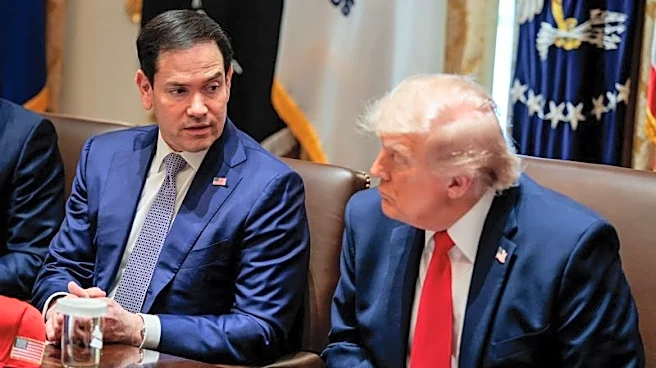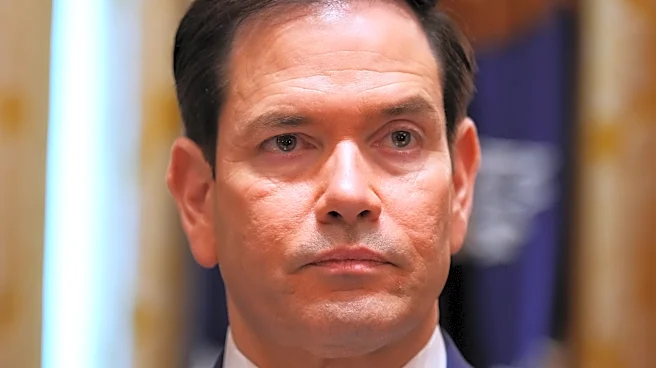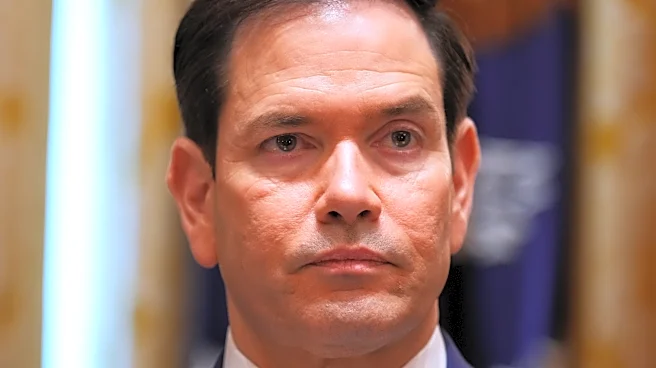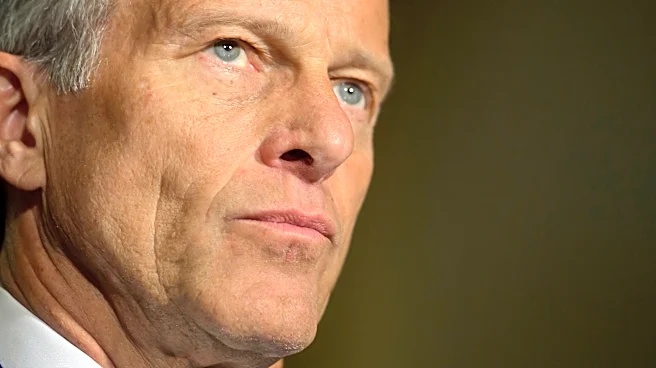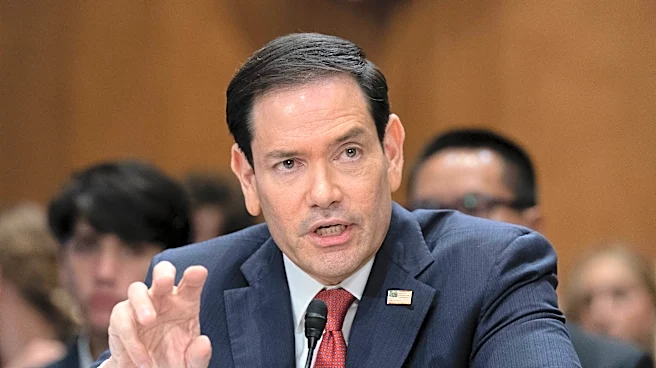

Secretary of State Marco Rubio will face more questions Tuesday about the Trump administration’s fragile or stalling diplomatic efforts around the world in the second of back-to-back hearings on Capitol
Hill for the first time since the Iran war began. He testified earlier that U.S. negotiators have seen signs that Iran’s new supreme leader has been engaged with negotiations despite not being seen publicly.
Meanwhile, Senate Republicans will meet Tuesday to discuss next steps after the Justice Department said it would comply with a court order pausing the implementation of a $1.776 billion settlement fund designed to compensate President Donald Trump’s political allies.
Trump has tapped Federal Housing Finance Director Bill Pulte to be the acting director of national intelligence to replace Tulsi Gabbard. Trump made the surprise announcement Tuesday on Truth Social.
The Latest:
Rubio is testifying for the second time Tuesday before lawmakers on Capitol Hill.
The stated reason is the State Department’s budget, but questions will likely veer into issues concerning the Iran war, the Trump administration’s campaign against drug cartels in Latin America and U.S. support for Taiwan.
The former Republican senator from Florida sat for well over two hours of questioning on Tuesday morning in front the Senate Foreign Relations Committee. In the afternoon, he’ll be testifying before a subcommittee of the House Committee on Appropriations.
Like the Senate hearing, the hallways outside the room included protestors. Some called Rubio a terrorist and told him to stop killing children in Gaza and Iran when he walked into the room.
Homeland Security Secretary Markwayne Mullin is slated to appear Tuesday in the Senate to answer questions about the agency’s budget, at a time of intense scrutiny about how the Trump administration is carrying out immigration enforcement and preparing for the World Cup.
The Senate is weighing legislation to fund immigration enforcement agencies through the end of Trump’s term in a maneuver that would bypass the need for support from Democrats, who have demanded restraints. The attempt has stalled over separate Republican opposition to a $1.776 billion settlement fund to compensate Trump allies who believe they have been politically prosecuted.
Mullin, who was tapped by Trump to lead Homeland Security after his predecessor Kristi Noem was fired, is appearing in the Senate Tuesday for the first time since his confirmation hearing in March. On Wednesday, he’ll testify in the House about the budget.
An investigation by KFF Health News and The Associated Press has found that hundreds of detainees across at least 33 states allege immigration detention facilities are failing to provide adequate medical care.
Detainees allege they didn’t receive medications on time — or at all — for conditions including high blood pressure, diabetes, depression, epilepsy, Parkinson’s and HIV. Requests for help went unanswered for weeks. Blood sugars rose. Infections festered. Cancers remained untreated. Detainees collapsed and had seizures.
U.S. jails and immigration detention centers have long struggled to meet the medical needs of the people in their charge. But the system is sagging under an influx of detentions since Trump returned to office: More than 75,000 immigrants were being detained by U.S. Immigration and Customs Enforcement as of mid-January, up from around 40,000 a year earlier.
KFF Health News and AP asked the Department of Homeland Security to respond to the findings six days before publication but it did not provide comment.
▶ Read more
The CMS administrator faced another question about the president’s more-than-annual physicals. The president went for the fourth known checkup of his second term last week.
“I think he likes the results,” Oz responded. “He aces the test every single day, and I do actually believe that he is curious to make sure everything is going in the right direction.”
His getting so many physicals was more of a sign of his “very meticulous” nature, Oz contended, because he “wants to know all the numbers” and stay on top of them.
Oz was repeatedly questioned about why Pulte is qualified for the role when he has no known experience with intelligence or national security.
He called Pulte “a great guy” and said, “I know him socially” but had not worked with him in his job.
When pressed, Oz said, “You’re asking me a question that’s not in my lane. I’m so focused on making sure Americans are healthy.”
He later said that he appreciated reporters want an answer but said, “I’m not going to be the one giving it to you.”
The CMS administrator, who is a physician by trade, says the almost 80-year-old president has “excellent” health, according to his medical records.
Trump went for another checkup at Walter Reed last week.
“That amount of energy and that amount of mental acuity does not exist in a vacuum,” Oz told reporters at the White House on Tuesday. Referring presumably to Trump’s physical body, Oz said: “you have to have a vessel to carry it.”
Trump in a social media post on Tuesday disputed that Iran has cut off communication with mediators, calling Iranian reports of a cessation in talks “false and erroneous.”
“The conversations between us have been going on continuously, including four days ago, three days ago, two days ago, one day ago, and today,” Trump said. “Where they lead, one never knows, but as I told Iran, ‘It’s time, one way or another, for you to make a Deal. You’ve been doing this for 47 years, and it cannot be allowed to go on any longer!’”
Fars and Tasnim, two semiofficial Iranian news agencies, reported earlier Tuesday that Iran had stopped communicating with mediators about extending a ceasefire in the war with the U.S. and Israel.
The CMS administrator announced during the White House press briefing that 160 new medications are being added to the government’s discounted drug website TrumpRx.
That brings the total number of drugs on the site to more than 750, Oz said.
The news comes two weeks after the Trump administration unveiled partnerships with various online pharmacies to add some 600 generic drugs to the platform.
Even with generics added, experts said the potential savings heavily depend on a patient’s situation. For the vast majority of Americans who have health insurance, using that coverage to get medications is cheaper than paying cash through TrumpRx.
Secretary of State Marco Rubio has wrapped up his hearing before the Senate Committee on Foreign Relations, which was his first before Congress since the Iran war began.
Rubio will face the House Appropriations Committee at 2 p.m.
Dr. Mehmet Oz is about to be in the spotlight. It’s a place where he’s already comfortable.
The heart surgeon and longtime daytime TV host, now running the Centers for Medicare and Medicaid Services, will lead Tuesday’s White House press briefing as the fourth administration official to stand in for press secretary Karoline Leavitt during her maternity leave.
Oz rose to prominence on Oprah Winfrey’s talk show before spinning off his own series, “The Dr. Oz Show,” in 2009. And though he now leads one of the Trump administration’s wonkiest agencies, he’s still found ways to use his camera showmanship to his advantage.
With social media videos and speeches around the country in recent months, he’s become one of the most public promoters of the administration’s efforts to fight healthcare fraud.
Sen. Jacky Rosen of Nevada called out her former senate colleague for being at a party while Vice President J.D. Vance led a delegation to Pakistan in April to meet with their Iranian counterparts.
Rubio was actually cage-side with Trump at a UFC event in Miami as the peace talks with Iran failed on the other side of the world.
“I just feel that’s embarrassing for us and it’s embarrassing for you,” Rosen said. “We confirmed you to be in the negotiations that are happening. And it’s just unthinkable to me that you are not you are missing high stakes negotiations or that you’re not involved. It’s sad.
In one of his more sharp rebukes, Rubio defended his absence.
“I was co-located with the president in the midst of a high stakes negotiation, so that I could immediately inform him about events occurring halfway around the world,” he said. “I was where I needed to be at that moment.”
Some Republicans are voicing skepticism about the qualifications of President Donald Trump’s choice to serve as the acting director of national intelligence.
“I don’t see any evidence of qualifications for that job, but as you know, the Senate doesn’t have a role to play in acting (appointments,)” Sen. John Cornyn of Texas said of Trump’s choice, Bill Pulte.
“I do not know Mr. Pulte at all. I do not know if he has any intelligence or military background. I don’t even know if he has a security clearance. I know nothing about him at all,” said Sen. Susan Collins, R-Maine.
Collins said she had not made a firm decision yet “because maybe there’s a lot in his background that is relevant to this important position.”
Sen. Bill Cassidy, R-La., said Pulte “doesn’t seem qualified.”
“Beyond his absence of apparent qualifications, maybe there’s something I don’t know about,” Cassidy said.
In a tense back-and-forth, Democratic Sen. Cory Booker and Rubio argued over who has the upper-hand in the more than two month war between U.S. and Iran.
The New Jersey lawmaker pointed to the unsteady ceasefire between Washington and Tehran, which has been further tested in recent days by back-and-forth attacks.
“We are the strongest nation on the planet Earth, and we’re in a stalemate with Iran,” Booker said to the secretary. “And now we’re begging to get back into a deal that you all trashed in the first place.”
“There’s no one begging,” Rubio responded, detailing what he called the dire situation of Iran’s economy. “I don’t know where you’re getting this perception that Iran is stronger.”
The secretary said he could not commit to Democratic Sen. Chris Coons to resettle more than 1,000 Afghans who assisted America’s war effort and relatives of U.S. service members to the U.S. as was promised under the Biden administration.
Rubio said the U.S. is in talks with multiple countries to take a few hundred of them in order to avoid sending them back to the Taliban where they will likely face reprisal.
Those individuals have been stranded at a U.S. base in Doha for the past year as the Trump administration’s immigration actions have left them in a limbo.
The refugees at Camp As-Sayliyah include Afghans who served as interpreters and with Special Operations Forces as well as the immediate families of more than 150 active duty U.S. military members.
Sen. Jeanne Shaheen, a Democrat from New Hampshire, questioned Rubio over last year’s U.S. withdrawal of funding from the global vaccine alliance Gavi amid the growing Ebola outbreak abroad.
In his response, Rubio said the State Department is taking matters into its own hands after letting Health Secretary Robert F. Kennedy Jr., a longtime anti-vaccine activist before entering office, have his say.
“The president had asked that we allow Secretary Kennedy to play a leading role on the Gavi decision because of his strongly held views with regards to vaccine safety and he wanted them to conduct some reforms,” Rubio said.
“We have certainly allowed him to play a leading role in determining what we’re going to do next but right now we are sort of at a stage where we are going to re-engage. We need to drive this to an outcome.”
Rubio said a U.S. arms deal to Taiwan is not under review right now because of pressure from China, although he said the Chinese almost always bring up the issue in discussions with the United States and Trump has described it as a great negotiating chip.
“They are constantly talking about Taiwan arms sales, but that in no way is what is holding up our decision making or the White House’s decision making,” Rubio said. “It is something the president will have to decide on the timing of when and how that is executed on. It’s been approved by Congress, it’s been noticed, the money is available.”
Rubio added that the U.S. recently sold arms to Taiwan in December.
“So there are a variety of reasons why these things don’t happen immediately,” Rubio said.
Van Hollen pressed Rubio on whether there’s any evidence to support his suggestion of a continuing link between Cuba and the Hamas and Hezbollah militant groups in the Middle East.
Van Hollen noted that a thorough review by the intelligence community under the Biden administration had concluded there was no evidence that Cuba was involved in state-sponsored terrorism.
Rubio pointed to Cuba’s historical support of leftist and Marxist groups in the Western Hemisphere. However, Rubio didn’t answer Van Hollen’s question about whether the current administration had found new evidence of Cuba being a state sponsor of terrorism. “Why would I need new evidence?” he said.
In a sharp diatribe against the status of U.S. foreign policy, Democratic Sen. Chris Van Hollen blasted Rubio and his boss, Trump, for the actions taken in the year and a half in office regarding aid and foreign intervention. The Maryland lawmaker specifically took aim at the U.S. and Israeli decision to strike Iran, accusing Trump of entering the war on behalf of Israel.
“Netanyahu said he’s been waiting 40 years to do this. It turns out he finally found a president who was both stupid and reckless enough to join him,” Van Hollen said.
He then detailed the war’s impact, including the death of 14 U.S. service members and thousands of civilians, and the increase in gas prices.
“Let’s face it, Mr. Secretary, the Trump foreign policy has become a dumpster fire,” Van Hollen added.
TotalEnergies is getting $1 billion — essentially a refund of its leases for offshore wind projects off New York and North Carolina — if the French company invests it in fossil fuel projects instead.
State attorneys general from Connecticut, Maine, Massachusetts, New Jersey, Rhode Island and Vermont joined New York on Tuesday in challenging the cancellation of the lease off of New York and the bulk of the payout.
“This administration cooked up a sham deal to pay a foreign energy company hundreds of millions of taxpayer dollars to abandon offshore wind and invest in oil and gas instead,” New York Attorney General Letitia James said in a statement. “We are fighting back to stop this illegal agreement that threatens to erase over a thousand union jobs and cheat millions of New Yorkers out of clean, affordable energy.”
The Interior Department did not immediately respond to a request for comment Tuesday.
▶ Read more
Detailing the fractured Iranian leadership, Rubio says U.S. negotiators have seen signs that Mojtaba Khamenei, who succeeded his father to become the country’s new supreme leader, has been engaged with negotiations despite not being seen publicly.
“I would imagine, given what’s happened to multiple leaders in that system, being very public is probably not something that’s recommended for them internally,” he said. “But that said, I think there are indications out there that he is increasingly engaging at some level, although all of his communications have been in writing and through intermediaries.”
Democratic Sen. Chris Murphy pushed Rubio to see what incentives, if any, Washington is willing to offer Tehran in exchange for a deal.
Rubio said that any sanctions relief would have to come after major concession on the nuclear issue and the enriched uranium.
“Will they receive relief just in exchange for reopening the strait?” Murphy asked.
Rubio responded, “No, that’s not been discussed. That’s not been offered.”
Democratic Sen. Tim Kaine of Virginia pressed Rubio on why the U.S. military’s targeting criteria for attacking alleged drug boats in Latin American waters do not include drugs on the boat. Kaine described it as “odd” before adding that he can’t share much more because the targeting criteria are classified.
Rubio pushed back, saying that every strike follow’s a legal officer’s determination on whether a strike is legal or not. Rubio also said that the U.S. military has “walked away from strikes” multiple times because they did not meet the targeting criteria.
The U.S. military has attacked dozens of boats in the Caribbean Sea and Pacific Ocean, killing roughly 200 people since early September. The Trump administration says the U.S. is at war with drug cartels, while many Democrats have questioned the legality and effectiveness of the strikes.
Sen. John Thune, a South Dakota Republican, says he’s trying to get more insight from the White House about the decision to make Bill Pulte the acting Director of National Intelligence.
“I’m trying to get more information about the current state of their thinking about that position,” Thune told reporters Tuesday.
Thune said if the White House wants to nominate the real estate scion and Trump loyalist to that position permanently, he would have “a lengthy road ahead of him.”
Asked if he has concerns about a weaponized DNI position, Thune said “we don’t need a weaponized DNI, we need professionals there.”
Senate Democratic Leader Chuck Schumer criticized Trump’s decision to tap his housing finance director as acting director of national intelligence, saying Bill Pulte is “a partisan thug with no experience in intelligence.”
Sen. Mark Warner, the top Democrat on the Senate Intelligence Committee, said in a lengthy statement that Pulte was picked because Trump “believes he will provide the narrative it wants, not the intelligence we need.” He warned that a pick like this leaves Americans “vulnerable to a terrorist attack.”
Rep. Jim Himes, the top Democrat on the House Intelligence Committee, said “it is critical that Pulte go through a full security clearance process before he walks into the building.”
Shortly after Pope Leo XIV issued his sweeping manifesto calling for robust regulation of artificial intelligence, the Instagram meme account Saint Hoax posted this reaction to its more than 3 million followers about the pope’s call to “disarm” AI.
Similar reactions to Leo’s first encyclical, “Magnifica Humanitas” (Magnificent Humanity), seem driven by a perception among young people that few political or global leaders are taking seriously the ramifications of AI’s rapid rise.
The pontiff reiterates throughout the roughly 42,300-word document that the church must engage in contemporary questions and challenges. For Leo, that has included rebuking certain policies, actions and leaders, including Trump and the ongoing war in Iran. Vice President JD Vance, a Catholic convert, invoked the “just war” theory in response. Leo’s encyclical calls this church teaching “outdated.”
“Humanity possesses far more effective and capable tools for promoting human life and resolving conflicts, such as dialogue, diplomacy and forgiveness,” Leo wrote.