
Shares were mostly higher Friday in Europe and Asia, while oil prices fell back from recent gains.
U.S. futures edged higher.
In early European trading, the German DAX rose 0.7% to 24,975.62, while the CAC
40 in Paris surged 0.8% to 7,789.91. Britain's FTSE 100 picked up 0.7% to 10,515.43.
The future for the S&P 500 was up 0.4%, while that for the Dow Jones Industrial Average gained 0.1%.
In Asian trading, Tokyo's Nikkei 225 closed nearly unchanged at 69,030.92.
The Shanghai Composite index edged 0.1% higher, while Hong Kong's Hang Seng rallied 1.6% to 24,152.44.
China is due to release its latest economic growth figures next week.
Australia's S&P/ASX 200 rose 0.6% to 8,716.60, while the Sensex in India added 1.2%.
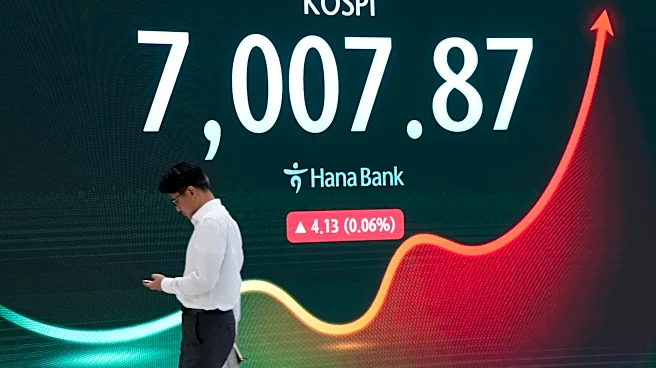
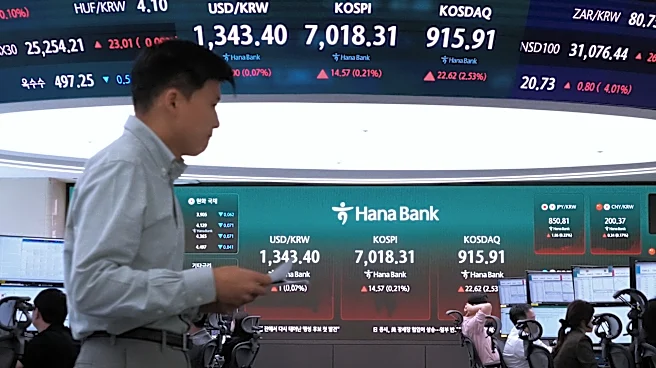
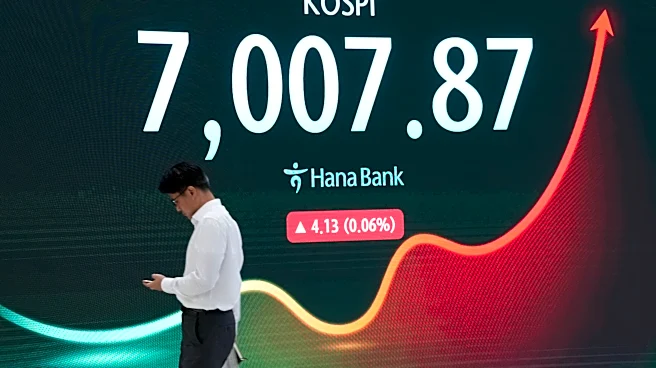
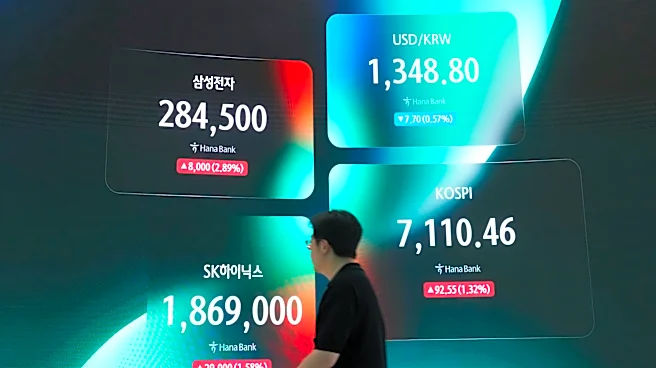
Markets were closed in South Korea and Taiwan.
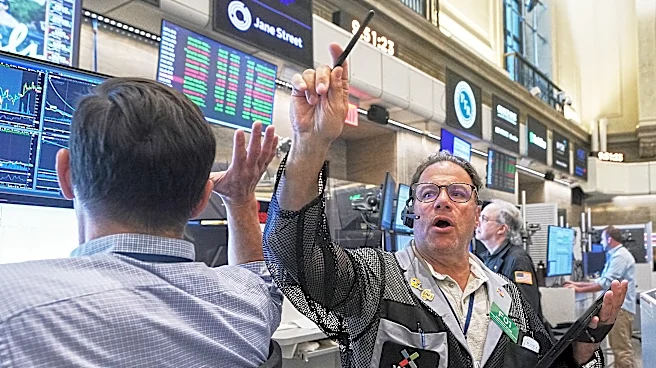
U.S. stocks were unsteady Thursday, as oil prices rose and bond yields jumped before receding later in the day.
“Equities remain within striking distance of record highs, but the backdrop has turned considerably less hospitable,” Steven Innes of SPI Asset Management said in a commentary.
The S&P 500 fell 0.5% for a second straight loss after setting an all-time high the day before. The Dow Jones Industrial Average added 0.1%, and the Nasdaq composite fell 1.3% as technology stocks took particularly hard hits.
Stocks felt pressure from a 4.1% rise in the price for a barrel of Brent crude oil, the international standard, to $104.28. It’s been pinballing between $96 and nearly $110 over the last month on uncertainty about when the war with Iran will allow the global energy industry to return to normal.
Brent got to nearly $106 in the morning before President Donald Trump sent its price veering after saying “productive discussions” are happening with Iran and that the U.S. military would not attack it before the upcoming U.S. elections in November.
Early Friday, Brent was down 1% at $103.28 a barrel, while U.S. benchmark crude oil was 0.8% lower, at $90.75 a barrel.
In the bond market, yields have been trading at their highest levels in years or even decades, threatening to slow the economy.
The 10-year Treasury yield initially rose to 5.35% early Thursday before falling back to 5.23%.
It dropped after the U.S. government said that it sold $22 billion in 30-year Treasury bonds at an auction with a high yield of less than 5.62%. That helped bring the 30-year Treasury yield down to 5.60% from 5.73% in the morning, which is a notable move for the bond market.
High debt loads have loomed over the market as the U.S. federal deficit climbed to nearly $2 trillion in the fiscal year that ended on Sept. 30.
In share trading, PepsiCo climbed 3.7% after it reported stronger profit and revenue for the latest quarter than analysts expected. But drops for several influential technology stocks overshadowed those gains.
Nvidia, the chip company that’s ridden the tidal wave of demand created by artificial-intelligence technology, fell 2.9%. Because it’s the largest stock by value on Wall Street, it was the heaviest weight on the S&P 500 even though other stocks had larger losses.
That included drops for other AI-related stocks. Broadcom lost 4.3% and Micron Technology slumped 4.8%.
AI stocks are under heavy pressure to report big growth to justify how expensive their shares have gotten due to the AI frenzy.
“What was once a broad, buy-anything-with-an-AI-label momentum trade is becoming a much tougher contest between balance-sheet strength and ambition,” Innes said.
In other dealings early Friday, the U.S. dollar rose to 158.37 Japanese yen from 157.89 yen. The euro was trading at $1.1228, up from $1.1211.